

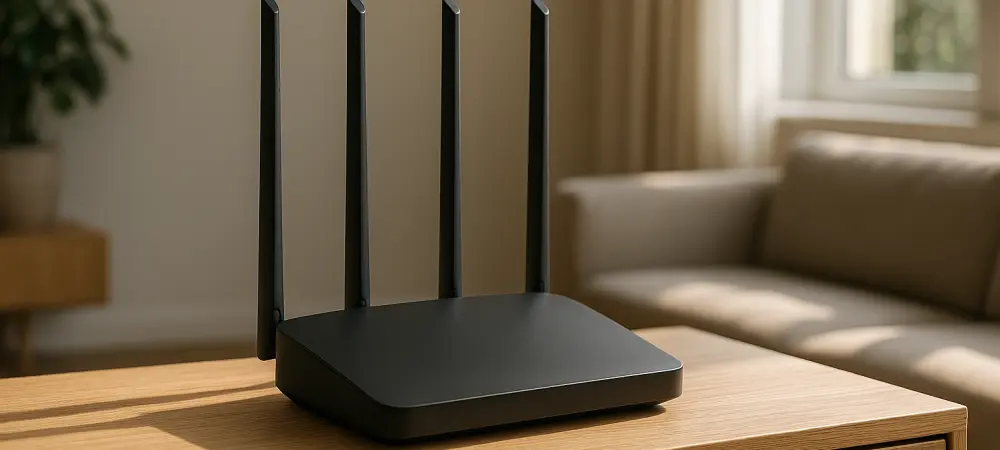
Contemporary households now regularly support between 60 and 80 connected devices, creating a density crisis that traditional routers struggle to manage effectively. The recent Australian rollout of TP-Link’s next-generation hardware represents a fundamental pivot in how the industry conceptualizes wireless connectivity. For over a decade, marketing efforts have prioritized theoretical peak speeds, often touting gigabit thresholds that few home environments could actually achieve. However, with the formal introduction of the Wi-Fi 8 standard, based on the IEEE 802.11bn specification, the focus has shifted toward the quality of the connection rather than the raw quantity of data transmitted. This transition acknowledges that while modern fiber connections provide ample bandwidth, the last meter of delivery remains the primary bottleneck for users dealing with complex physical layouts and electromagnetic interference. By centering the technology on reliability and behavioral intelligence, manufacturers are attempting to solve the frustrations of the modern digital home, where a dropped connection is far more disruptive than a slightly slower download speed. This analysis examines the technical and strategic nuances of this launch, highlighting how the industry is finally prioritizing user experience over laboratory benchmarks.
Technical Innovations for Real-World Stability
Enhancing Signal Integrity at the Network Edge
While the Archer 8 Ultra boasts an impressive aggregate throughput of 19Gbps, technical experts emphasize that raw speed is the least compelling aspect of the new standard. The real innovation lies in the StabilityEngine and how the hardware manages data under duress. The industry consensus is that Wi-Fi 7 already provides more than enough speed for the average user standing next to a router; the current challenge lies in maintaining that performance across an entire home. Wi-Fi 8 does not rewrite the laws of physics, as radio waves still struggle with brick walls, tiles, and metal. However, it introduces sophisticated techniques to preserve data integrity at the edge of a network’s range. Through Enhanced Long Range features and refined resource allocation, Wi-Fi 8 attempts to delay the inevitable degradation of a signal as a user moves further from the access point. By maintaining higher modulation schemes in marginal conditions, the technology ensures that the connection remains useful even when it is physically weak or obstructed by household infrastructure.
The implementation of these stability-focused features represents a departure from the brute-force approach of previous wireless standards. Instead of simply increasing the power of the broadcast, which often leads to more interference, the StabilityEngine uses predictive algorithms to anticipate signal fluctuations. This allows the router to adjust its transmission parameters in real-time, ensuring that data packets reach their destination without the need for constant retransmissions. In practical terms, this means a user streaming high-definition content in a distant bedroom will experience fewer buffering events, even if the signal indicator on their device shows less than full strength. The goal is to maximize the utility of the available spectrum at the periphery of the coverage area, where traditional routers typically fail. By optimizing the signal-to-noise ratio through advanced digital signal processing, Wi-Fi 8 provides a more resilient foundation for the diverse array of architectural challenges found in modern Australian suburban housing and urban apartments.
Managing Congestion and Spectrum Interference
A primary theme of the Wi-Fi 8 standard is the management of external interference, which has become a significant hurdle in densely populated areas. In urban and suburban environments, wireless networks do not exist in a vacuum; they compete for spectrum with dozens of neighboring routers, baby monitors, and microwave ovens. This competition often results in latency spikes and jitter, which disrupt real-time activities like gaming or video conferencing. To address this, Wi-Fi 8 introduces a higher level of coordination, often compared to an intelligent traffic management system for a multi-lane motorway. While previous standards focused on adding more lanes or making them wider, Wi-Fi 8 focuses on how traffic utilizes those lanes. It employs advanced Multi-Link Operation to make real-time decisions about which frequency path is most efficient at any given millisecond. The goal is to optimize the shared environment, ensuring that even in a crowded spectrum, a device can find a clear path for its data without being hindered by neighboring signals.
This intelligent coordination extends beyond simple frequency switching to include sophisticated spatial filtering and interference nulling. By identifying the specific patterns of competing signals, the Archer 8 Ultra can effectively carve out a clean channel for communication, even when the surrounding airwaves are saturated. This is particularly beneficial for latency-sensitive applications that require a steady heartbeat of data rather than large bursts of speed. Furthermore, the standard introduces better cooperation between access points to prevent self-interference in larger deployments. By dynamically adjusting the timing of transmissions, the hardware ensures that multiple devices can talk simultaneously without overlapping and causing data collisions. This shift ensures that the network remains responsive regardless of how many neighboring signals are present, providing a level of consistency that was previously reserved for wired Ethernet connections. This focus on environmental adaptation is what distinguishes the new standard from its predecessors in the race for wireless dominance.
Mesh Evolution and Device Management
Seamless Roaming and Mesh Coordination
For larger homes, the standalone router is often insufficient, leading to the rise of mesh networking as the preferred solution for comprehensive coverage. One of the most significant pain points for consumers is poor roaming—the tendency of a device to cling to a distant, weak access point rather than switching to a closer one. TP-Link’s upcoming Deco 8 platform aims to solve this through better coordination between mesh nodes, ensuring that the transition between coverage zones is entirely transparent. The technology adopts a grab before you let go approach, where a new connection is prepared and established before the old one is relinquished by the current node. This prevents the momentary drop in connectivity that often occurs when a user moves from one room to another. By synchronizing the state of the connection across the entire mesh fabric, the system ensures that the client device is always served by the strongest possible signal without any manual intervention from the user.
This transition is designed to be invisible to the user, preventing the freezing of video calls or streams as one moves between floors or rooms. This represents a shift from hardware-centric thinking to experience-centric thinking, where the success of the network is measured by the lack of user complaints rather than benchmark scores. By focusing on the handoff process, Wi-Fi 8 ensures that the promise of whole-home coverage finally matches the technical reality of modern life. The coordination between Deco 8 nodes also involves shared intelligence about the local radio environment, allowing the mesh system to redistribute traffic across different nodes if one becomes overly congested. For example, if a television in the living room is consuming significant bandwidth, the system can offload nearby mobile devices to a secondary node to maintain balance. This level of granular control over the roaming experience is a key differentiator, making the network feel like a single, unified entity rather than a collection of separate access points.
Scaling for the Internet of Everything
The volume of connected devices in the average home has reached a tipping point, with many households supporting dozens of smart gadgets simultaneously. Wi-Fi 8 is engineered with this scale in mind, improving efficiency rather than just capacity. By better scheduling radio activity, the standard allows the router to communicate more effectively with a massive array of clients without causing a total network slowdown. This is particularly important for homes where high-bandwidth laptops and low-power smart bulbs must coexist on the same frequency. Traditional routers often struggle when a high-speed device hogs the airtime, causing delay for simpler devices. Wi-Fi 8 utilizes more precise orthogonal frequency-division multiple access (OFDMA) techniques to slice the available bandwidth into smaller, more manageable units. This allows the router to talk to multiple low-bandwidth devices in the same transmission window that would previously have been reserved for a single device, greatly reducing the overhead and congestion in high-density environments.
An overlooked benefit of this improved scheduling is the impact on power consumption for the devices themselves. For battery-powered devices like tablets, smart locks, and environmental sensors, more efficient communication protocols mean the radio spends less time searching for a signal or negotiating a connection. When the router provides clear, predictable windows for communication, the client device can enter a low-power sleep state more frequently and wake up exactly when it needs to transmit data. This can lead to measurable improvements in battery life over time, which is a critical consideration as the number of wireless sensors in the home continues to grow. Consequently, Wi-Fi 8 serves not just the fastest devices in the house, but also the most energy-sensitive ones, creating a more sustainable ecosystem. This holistic approach to device management ensures that the network remains performant even as the Internet of Things continues to expand into every corner of the domestic landscape, from the kitchen to the backyard.
Market Implementation: Security and Migration Strategies
Security Gaps and the Client Ecosystem
As the number of devices grows, so does the security risk, particularly from unbranded or poorly secured IoT hardware that may lack regular updates. TP-Link addresses this through its HomeShield platform, which offers traffic classification and integrated parental controls to manage household digital safety. However, a critical analysis reveals a gap between consumer-grade and enterprise-grade security that remains a challenge for the industry. While Wi-Fi 8 improves the how of data transmission, the what and where of security still relies largely on cloud-based classification rather than local deep-packet inspection. This means that while the router can identify a suspicious device, the actual filtering and analysis are often handled off-site, which can introduce minor delays or privacy concerns for some users. There is an ongoing need for more granular, local control that allows users to isolate compromised devices from the rest of the network without requiring complex enterprise-level configuration.
A recurring point of caution in the rollout of this technology is the client ecosystem, as owning a Wi-Fi 8 router does not retroactively upgrade existing Wi-Fi 6 or 7 devices. The most significant benefits, such as Enhanced Long Range and the specific modulation improvements of the IEEE 802.11bn standard, require compatible hardware on both ends of the connection. This creates a phased transition where the headline features will only be realized as users gradually upgrade their phones and laptops over the next several years. Therefore, the immediate value of Wi-Fi 8 is highest for those building a network from scratch or upgrading from much older standards like Wi-Fi 5. For the average consumer, the benefits will manifest slowly as their device fleet evolves. It is essential for manufacturers to manage expectations, ensuring that users understand that the router is a foundation for future performance rather than an instant fix for all legacy hardware limitations. This reality underscores the importance of backward compatibility, which remains a core tenet of the new hardware’s design.
Strategic Implications for Consumers
The consensus among technical experts is that an upgrade to Wi-Fi 8 should be driven by necessity rather than novelty. If a current system is performing adequately and covering the necessary areas of a home, there is no immediate reason to switch to the latest standard. However, for users experiencing network exhaustion, characterized by frequent dropouts, high latency during peak hours, or performance degradation when multiple devices are active, Wi-Fi 8 offers a meaningful path forward. TP-Link’s strategy suggests they are targeting early adopters and power users first, with the Archer 8 Ultra serving as a flagship for the technology’s potential. As the market matures from 2026 to 2028, we can expect to see these reliability-focused features trickle down into more affordable mid-range products. This strategic positioning allows the company to test the effectiveness of the StabilityEngine in high-demand environments before a wider commercial release to the general public.
Ultimately, the launch of Wi-Fi 8 represents the maturation of the wireless industry toward a focus on quality of service rather than just raw speed. The speed race has reached a point of diminishing returns for the average consumer, who is more interested in a stable connection for their work-from-home setup or gaming rig than in achieving theoretical gigabit benchmarks. TP-Link’s ambition to make the Wi-Fi disappear into the background is a recognition that the best technology is that which works so reliably that the user forgets it exists. By focusing on interference handling, edge-of-range performance, and intelligent coordination, the new standard addresses the actual frustrations of modern digital life. For those living in crowded apartments or large houses with signal-blocking walls, the transition to Wi-Fi 8 provides a technical solution to the environmental challenges that have long plagued home networking. The focus has moved from how fast the network can go to how well it can behave under pressure.
Proactive Steps for Network Optimization
The introduction of Wi-Fi 8 provided a clear roadmap for users looking to future-proof their home environments. One of the most effective steps identified was the gradual replacement of aging client devices to align with the new standard’s capabilities, particularly for high-bandwidth tasks. Network administrators and tech-savvy homeowners prioritized the placement of the Archer 8 Ultra in central, unobstructed locations to maximize the benefits of the StabilityEngine. Furthermore, the use of dedicated IoT bands within the Deco 8 ecosystem allowed for the isolation of smart home devices, which successfully reduced the overhead on the primary data channels. It was observed that users who proactively managed their network segmentation through the HomeShield platform reported fewer security incidents and better overall performance consistency across their device fleet. These practical adjustments ensured that the hardware’s theoretical advantages translated into tangible improvements in daily connectivity.
In hindsight, the shift toward reliability-focused networking addressed the core infrastructure needs of the late decade. The focus moved away from simple hardware upgrades toward a more holistic view of the digital ecosystem, where software intelligence played as large a role as radio frequency power. Users found that by embracing the behavioral improvements of Wi-Fi 8, they could sustain more demanding applications without the constant need for troubleshooting or manual reboots. The industry’s move to prioritize stability over speed proved to be a successful strategy for managing the growing complexity of connected households. As a result, the technical community encouraged a balanced approach to adoption, where hardware upgrades were paired with optimized device management and updated security practices. This era of networking was defined by a transition toward invisible, autonomous systems that could adapt to their environment with minimal human intervention, setting a new standard for household digital infrastructure.