

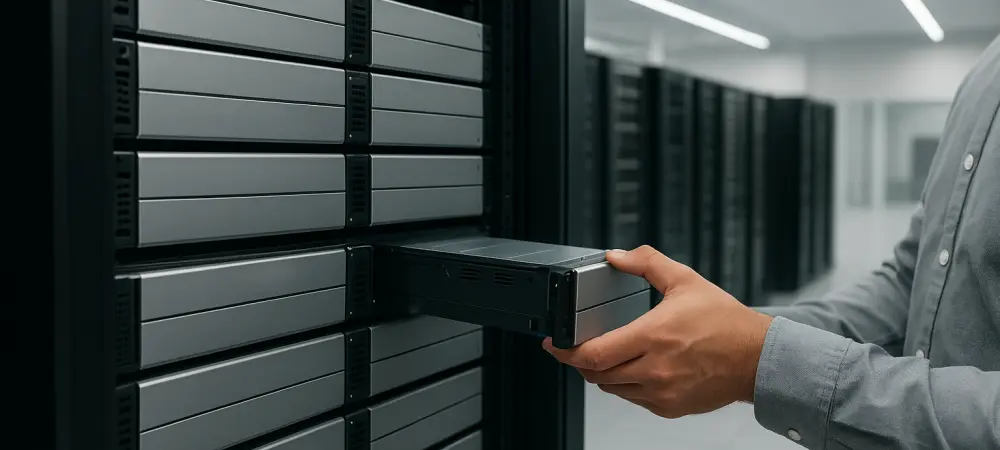
The massive scale of Toshiba’s planned output suggests that the storage industry is entering a period of heightened medium-term competitive pressure. This strategic move centers on a substantial investment in the Philippine subsidiary, Toshiba Information Equipment, Inc., where the company intends to nearly double its total nearline hard disk drive capacity by fiscal year 2027 relative to 2025 levels. By aggressively targeting the high-capacity segment, Toshiba is positioning itself to challenge the long-standing duopoly of Western Digital and Seagate Technology. The immediate consequence of this announcement was a sharp correction in the stock market, where shares of major competitors dropped by more than ten percent within a single day of trading. This volatility highlights a deep-seated investor anxiety regarding the stability of hardware margins in a market that could soon face an influx of massive supply. Such a significant increase in production capabilities from a third major player threatens to disrupt the equilibrium that has historically kept pricing structures predictable for enterprise-level consumers.
Market Dynamics and Competitor Sensitivity
Strategic Pivots: Navigating Financial Vulnerability
The restructuring of the storage sector has left its primary participants more exposed to supply-side fluctuations than at any other point in recent memory. Western Digital, for example, recently completed the significant spinoff of its flash memory business, effectively separating its SanDisk heritage to operate as a focused, pure-play hard disk drive manufacturer. While this allows for greater operational clarity, it also removes the financial safety net that the flash market once provided during downturns in mechanical storage demand. Consequently, any news of increased production capacity from a major rival like Toshiba acts as a direct threat to the core revenue streams of these specialized entities. Industry observers have noted that this specialization creates a high-stakes environment where internal efficiency and market share are the only levers available for survival. As the data center market continues to expand, the ability of these firms to maintain a premium on their hardware will depend on their agility in responding to Toshiba’s new volume.
Global Pricing Models: Terabyte Economics
Economic stability in the hard drive industry is traditionally measured through the narrow lens of terabyte-level pricing and the associated production costs. For manufacturers to preserve their gross margins amidst rising supply, they must drive down the cost per terabyte faster than the market-driven price per terabyte declines. This requires a relentless focus on engineering innovations, such as increasing the density of recording platters and improving the reliability of drive heads. While the initial market reaction to Toshiba’s expansion was one of panic, several seasoned financial analysts suggest that a price war is not a foregone conclusion. There is currently no verifiable evidence that Toshiba intends to utilize predatory pricing tactics or aggressive discounts to displace its rivals. Instead, the expansion appears to be a calculated response to the projected long-term storage requirements of global hyper-scalers, who demand predictable and high-volume hardware pipelines to sustain their expanding digital services.
Technological Evolution and Segmented Demand
Storage Hierarchies: The HDD and SSD Intersection
The technical distinction between mechanical hard drives and solid-state storage continues to define the architectural choices made by modern data center engineers. Although Toshiba’s current expansion is focused exclusively on magnetic storage media, the ripple effects extend to the enterprise flash market where Kioxia remains a dominant force. The relationship between these two technologies is primarily governed by the price gap, which dictates the total cost of ownership for massive data arrays. If Toshiba’s increased production volume leads to a meaningful reduction in the cost of high-capacity hard drives, it could delay the transition to solid-state drives for specific bulk storage tiers. Many organizations still rely on hard drives for cold storage or archival data that does not require the near-instantaneous access speeds of flash memory. However, for high-performance computing and real-time data processing, the demand for solid-state technology remains decoupled from the mechanical market, as the performance advantages of NAND flash are essential.
Future Infrastructure: AI and Cloud Requirements
The exponential growth of the artificial intelligence sector acts as the ultimate buffer against potential oversupply in the storage market. Current projections indicate that the hunger for data to train and sustain large language models will require a vast expansion of physical storage infrastructure between 2026 and 2028. This environment provides a unique opportunity for manufacturers to absorb additional capacity without necessarily triggering a collapse in hardware pricing. For incumbents like Seagate and Western Digital, the path forward involves accelerating the deployment of advanced technologies such as heat-assisted magnetic recording. By pushing the boundaries of physical storage limits, these companies aim to provide higher-capacity units that command a price premium and justify their position at the top of the storage hierarchy. The success of this strategy will depend on whether the global demand for cloud services continues to grow at a pace that matches the aggressive production schedules established by hardware manufacturers who are racing to keep up.
Strategic Roadmaps: Planning for Data Resilience
The shift in production dynamics within the storage sector necessitated a comprehensive reevaluation of long-term infrastructure planning. Investors and data center operators recognized that the arrival of increased capacity from Toshiba would eventually stabilize the supply chain, though it introduced short-term uncertainty in market valuations. To mitigate the risks of price volatility, major storage providers focused on diversifying their technological portfolios and enhancing the efficiency of their manufacturing processes. They prioritized the development of higher-density drives to ensure that the cost per terabyte remained competitive against the backdrop of increased global supply. Furthermore, the industry moved toward more collaborative procurement models with hyper-scale clients to ensure that production levels closely aligned with actual demand for AI-driven storage. These actions demonstrated a commitment to market stability and a focus on delivering value through innovation rather than through aggressive price reductions. The period of transition ultimately reinforced the essential nature of nearline storage.