

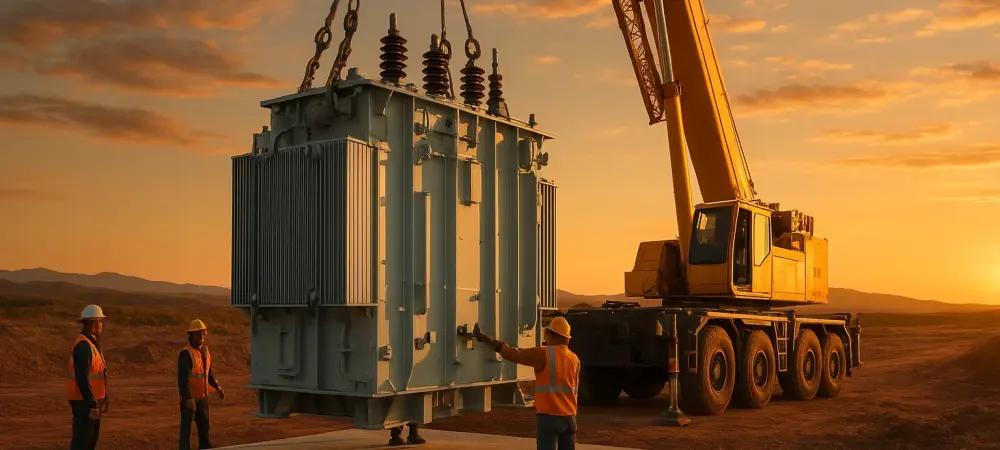
The frenzied race to secure physical footprints for artificial intelligence has effectively decoupled the value of a plot of land from its geographical location and tied it instead to the invisible currents of the electrical grid. This paradigm shift has turned once-ignored vacant lots into the most valuable assets in the global technology sector. As hyperscalers and specialized cloud providers scramble to keep pace with the computational requirements of large language models, the traditional metrics of real estate development are being tossed aside in favor of sheer electrical availability.
The intersection of real estate and energy has created a new class of property where valuation is determined by “power-ready” metrics rather than standard commercial demand. In a capacity-constrained world, land without a confirmed path to the grid is increasingly viewed as a liability, whereas sites with existing utility commitments are commanding unprecedented premiums. This trend has fundamentally altered how corporations approach their capital expenditures, forcing a transition from opportunistic buying toward a strategic, energy-first philosophy that treats the electrical substation as the true anchor of any development.
This analysis explores the evolving market dynamics of 2026, highlighting the statistical surge in infrastructure spending and the technical hierarchies that now dictate site selection. By examining regional benchmarks and the operational strategies used to mitigate utility delays, it provides a roadmap for navigating this complex environment. The discussion also addresses the strategic evolution of site selection, where speed to power has emerged as the ultimate differentiator in an industry where time is quite literally megawatts.
Market Dynamics and the Valuation of Power
The Statistical Surge in Infrastructure Investment
The scale of capital currently flowing into digital ground is staggering, with market data showing a 79% year-over-year increase in land purchases dedicated to data centers. In the first half of 2026 alone, developers and tech giants spent approximately $6 billion on land acquisitions, a figure that highlights the urgency of the current “land grab.” This surge is largely driven by the transition toward massive AI campuses that require hundreds of acres to accommodate the specialized cooling and power infrastructure necessary for next-generation chips.
As this competition intensifies, the concept of a “Power Premium” has become the primary factor in pricing. Land that possesses confirmed utility capacity can see its price skyrocket from a baseline of $4 million to over $6 million per acre in a matter of months. This valuation gap reflects the immense financial risk associated with power delays, as a site that cannot come online as scheduled represents billions in lost revenue for cloud service providers. Consequently, the presence of a “powered” designation has become the most sought-after label in the industrial real estate market.
Technical Hierarchy: Transmission Infrastructure and Valuation
Site valuation is further stratified by a technical hierarchy based on voltage capacity and the proximity of transmission lines. Analysis indicates a 2.4x price multiplier for sites with direct access to high-voltage infrastructure, specifically 230-kV or 500-kV lines. These high-capacity connections are prized because they reduce the need for extensive utility-side upgrades, which are often the primary cause of multi-year project delays.
Furthermore, existing high-voltage infrastructure offers significant regulatory and permitting advantages, often cutting the time required for environmental impact studies and public hearings. This has led to the definition of an 18-month “viability window” for site selection. If a property cannot be brought to a power-ready state within this timeframe, it is frequently deemed obsolete by top-tier developers, regardless of its location or fiber connectivity. Speed to market has become so critical that developers are willing to pay a massive premium today to avoid the uncertainty of the 2030s grid queue.
Real-World Applications and Strategic Maneuvers
Case Studies: Regional Benchmarks in Texas and Virginia
The Texas market provides a clear example of how power capacity is being explicitly priced into modern real estate contracts. In a landmark deal between Stream Data Centers and Plug Power, the transaction structure included a significant “contingent consideration” based on the final electrical load secured for the site. This model allowed the buyer to hedge against utility uncertainty while ensuring the seller was compensated for the difficult work of securing grid access. Such performance-based pricing is becoming the standard for large-scale acquisitions across the Sun Belt.
In contrast, the Virginia epicenter remains the most expensive and competitive market in the world. A recent $615 million acquisition in Loudoun County, where land costs averaged over $6.3 million per acre, demonstrates the lengths to which hyperscalers will go to remain in established hubs. Dominion Energy has taken an increasingly integrated role in these developments, purchasing land specifically for infrastructure support to ensure that the grid can keep up with the density of these mega-campuses.
Operational Mitigations: Campus Planning and Grid Access
To navigate these constraints, developers are increasingly turning to onsite power generation as a temporary bridge to overcome utility-side bottlenecks. This allows facilities to begin limited operations while waiting for permanent substation completion. However, this strategy requires even larger land footprints, as the land-to-power ratio has shifted to approximately 0.5 to 1 acre per megawatt. This increased spatial requirement has pushed developers to look for even larger contiguous tracts of land, further squeezing the available supply.
Strategic hedging against “power uncertainty” is also being reflected in the use of sophisticated financial guarantees. In many jurisdictions, developers must now provide multi-million dollar letters of credit or enter into ERCOT Batch Zero agreements just to secure a spot in the interconnection queue. These high entry requirements have begun to filter out speculative players, leaving the market to well-capitalized firms that can afford to carry the cost of land for years before a single server is installed.
Industry Perspectives and Expert Insights
The current state of the market has created a “chicken-and-egg” dilemma between utility providers and data center developers. Utilities are often hesitant to commit billions to grid modernization without proof that a project is fully funded and ready to build, while developers cannot finalize their funding without a power guarantee. To resolve this, the industry has seen a widespread adoption of “Take-or-Pay” agreements, which force developers to pay for a minimum amount of capacity regardless of their actual usage.
Expert opinions suggest that the era of “paper projects” is coming to an end. Strict interconnection queue requirements are being implemented to prioritize projects that have already secured land and environmental permits. This shift toward deep utility integration is now considered a prerequisite for project viability, as the grid becomes the ultimate arbiter of which technological innovations can actually be deployed at scale.
The Future of Data Center Land Acquisition
Looking ahead, the long-term impact of artificial intelligence will likely force a geographic redistribution of the digital economy toward new, energy-rich hubs. As traditional markets reach their breaking point, regions with access to nuclear, hydroelectric, or large-scale solar arrays will become the next frontiers for land acquisition. This shift will likely lead to the development of “sovereign AI” campuses located far from urban centers but directly adjacent to major power generation sources.
The looming power backlog of the early 2030s presents a significant challenge that could stifle technological growth if grid modernization does not accelerate. Rising land costs and the associated infrastructure expenses are already beginning to impact cloud service pricing, which may eventually lead to a tiered digital economy where high-performance computing is reserved for only the most profitable AI applications.
Conclusion: Adapting to the Energy-First Era
The transformation of data center land from a simple real estate asset into a critical component of energy procurement represented a fundamental shift in the digital infrastructure landscape. Speed to power acted as the ultimate competitive advantage, rewarding organizations that successfully integrated their site selection processes with long-term utility planning. The industry moved away from speculative acquisition toward a model defined by financial guarantees and technical readiness, ensuring that only the most viable projects reached fruition.
Stakeholders who prioritized collaborative grid modernization found themselves at the forefront of the digital economy’s next expansion phase. The integration of onsite generation and sophisticated contractual structures proved to be the only reliable path forward during a period of extreme capacity constraints. Ultimately, the need for a unified approach to infrastructure development became the primary takeaway for developers, as they learned that sustaining the momentum of digital innovation required a foundation built as much on electrical current as it was on solid ground.