

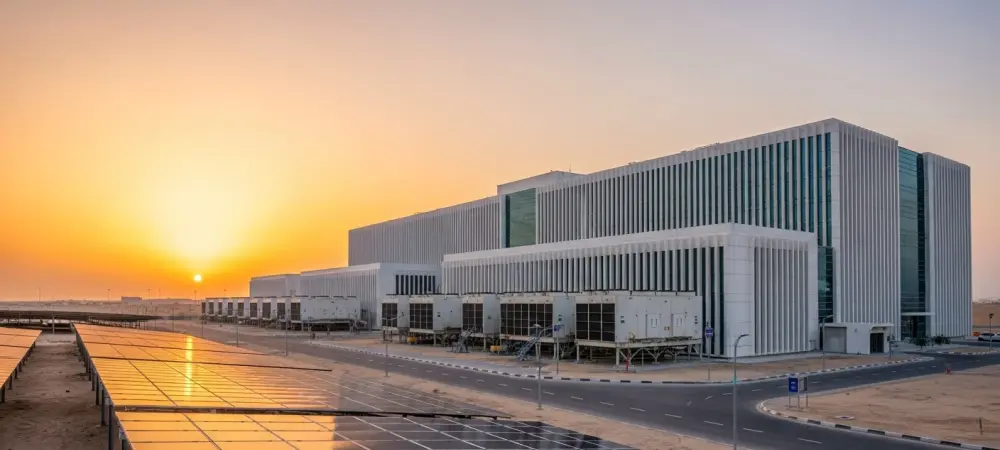
The transformation of the United Arab Emirates from a landscape defined by its hydrocarbon reserves to one anchored by massive silicon-driven infrastructure represents one of the most significant economic pivots in modern history. This shift is not merely a regional trend but a calculated move to secure a dominant position in the global digital economy. The central focus of the recent investigation into this sector examines how the nation has managed to transition from a business-centric regional hub into a primary global destination for data center investments. By analyzing the intersection of government policy, sovereign wealth, and technological demand, the study uncovers the mechanisms that allow a desert nation to support the high-density requirements of artificial intelligence and cloud computing.
At the heart of this research is the question of how a relatively small nation-state can compete with established digital giants in North America and Europe. The investigation addresses the challenges of rapid scalability, extreme environmental constraints, and the necessity of massive energy consumption. It highlights a strategic pivot where the emirates of Abu Dhabi and Dubai are no longer just looking to host regional data; they are actively seeking to become the “next-wave” markets for global hyperscalers. This involves a fundamental redesign of national infrastructure to prioritize low-latency connectivity and high-capacity compute power, ensuring the nation remains indispensable to the global flow of information.
The Strategic Shift Toward a Digital Powerhouse
The central theme of the current digital strategy involves a transition from traditional hosting services toward specialized artificial intelligence and sovereign cloud capabilities. This shift is driven by the realization that data is the new currency of the twenty-first century, necessitating a robust physical layer to support digital ambitions. The research explores how the country has leveraged its geostrategic location between Europe, Asia, and Africa to become a central node for international data traffic. This positioning allows the nation to capture a unique share of the global market, providing a bridge for digital services that require high availability and security.
A primary challenge addressed in the study is the balancing act between aggressive growth and operational sustainability. The UAE has set ambitious targets for its data center capacity, yet it must navigate the logistical hurdles of building in an arid climate. The research focuses on how the government has mitigated these risks through proactive policy-making and the creation of specialized economic zones. These zones provide the necessary land and power infrastructure to attract global tech giants, ensuring that the country remains a competitive alternative to traditional hubs that are currently facing land and power shortages.
Furthermore, the study delves into the specific requirements of AI-ready infrastructure. Unlike traditional data centers, AI workloads require significantly higher power densities and advanced cooling solutions. The research examines how the UAE has positioned itself as an early adopter of these technologies, facilitating partnerships that integrate hardware and software into a cohesive ecosystem. This strategy is designed to move the nation beyond being a mere landlord for servers, transforming it into a proactive participant in the development and deployment of global AI solutions.
Contextualizing the UAE’s Digital Evolution
The background of this research is rooted in a decade of diversification efforts aimed at reducing the national economy’s reliance on oil. This evolution has seen the UAE invest heavily in fiber connectivity and grid reliability, creating a foundation that supports a sophisticated digital society. The importance of this research lies in its ability to provide a blueprint for other emerging markets looking to fast-track their digital maturity. It explains why the UAE’s model—characterized by strong state involvement and high capital injection—has been particularly effective in a sector that is traditionally capital-intensive and slow to move.
Understanding this evolution is vital for global investors and policymakers as they navigate the changing landscape of international data sovereignty. The research highlights the broader relevance of the UAE’s progress to the field of global telecommunications and cloud computing. As more nations demand that their data be stored and processed within their own borders, the UAE’s success in building a “Sovereign AI” infrastructure provides a critical case study. This approach not only ensures data security but also fosters a local ecosystem of innovation that can drive long-term economic growth.
The relevance of this study also extends to the environmental and engineering sectors. The UAE’s ability to operate large-scale data centers in one of the world’s harshest climates offers valuable lessons in energy efficiency and industrial cooling. As global temperatures rise and the demand for compute power increases, the solutions developed in the UAE may become standard practices worldwide. This context positions the research as a forward-looking analysis of how technology can adapt to environmental challenges while still meeting the demands of a high-growth digital economy.
Research Methodology, Findings, and Implications
Methodology
The methodology for this research involved a comprehensive analysis of market benchmarks provided by industry leaders such as Cushman & Wakefield and Knight Frank. Data was gathered through a combination of quantitative tracking of capital investment and qualitative assessments of government policy frameworks. The research team monitored live capacity metrics, development pipelines, and land acquisition patterns across the primary emirates. By analyzing these data points, the study was able to project the growth trajectory of the market and identify the key drivers of capacity expansion.
In addition to market data, the investigation utilized case studies of major investment events, such as the $2.2 billion stake sale by E& in Khazna Data Center Holdings. This financial analysis provided insight into the level of investor confidence and the valuation of infrastructure assets within the region. The approach also included an evaluation of grid connection timelines and power availability, comparing the UAE’s operational efficiency with that of established European markets. This multifaceted methodology ensured a holistic view of the market, capturing both the technical and financial aspects of the digital transformation.
Findings
The findings reveal that the UAE has transcended its status as a regional outpost and is now ranked among the top emerging data center markets globally. A significant discovery is the overwhelming dominance of the colocation model, which accounts for approximately 95% of the total capacity in the country. Hyperscalers are increasingly choosing to lease space from third-party providers like Khazna and Equinix rather than building their own facilities. This trend is driven by a need for speed-to-market and capital efficiency, allowing global firms to scale their operations quickly in response to regional demand. Data indicates that the live capacity is on track to surpass 376 megawatts in the very near future, with a massive development pipeline set to expand this figure significantly by 2028. Abu Dhabi has emerged as a particularly strong contender for AI-grade capacity, offering large-scale campuses in zones like KEZAD and Masdar City. Meanwhile, Dubai continues to hold its position as a commercial hub, although it faces increasing constraints regarding land availability. The research also found that while the UAE offers superior grid reliability, its power costs—averaging $0.11 per kilowatt-hour—are higher than some of its regional neighbors, presenting a potential challenge for long-term price competitiveness.
Implications
The implications of these findings are profound for the regional digital landscape. The move toward “Sovereign AI” represents an $8 billion global opportunity by 2030, and the UAE is well-positioned to lead this sector. By developing localized AI infrastructure, the nation can ensure that sensitive data is processed within its borders, meeting strict regulatory requirements. This capability is expected to attract more high-value industries, such as fintech and healthcare, which require secure and high-performance compute environments. The success of the Microsoft-G42 partnership, which involves a 200 megawatt AI expansion, serves as a proof of concept for this strategy.
From a societal perspective, the growth of the data center industry acts as a catalyst for high-tech job creation and skills development. As the infrastructure matures, there will be an increasing demand for specialized engineering and management talent. This shift supports the national goal of building a knowledge-based economy. However, the findings also suggest that the UAE must address the “sustainability paradox.” While it hosts the world’s largest solar-powered data center at the Moro Hub, renewable energy still only makes up a small fraction of the total mix. To maintain its leadership, the country will need to integrate its vast solar potential more deeply into the data center grid.
Reflection and Future Directions
Reflection
Reflecting on the research process, the study encountered the inherent difficulty of gathering transparent data in a market characterized by high-stakes competition and private-sector confidentiality. However, by cross-referencing multiple sources and analyzing public infrastructure commitments, a clear picture of the market’s trajectory emerged. One of the most striking realizations was the speed at which the UAE has overcome the challenge of its climate. The engineering solutions implemented to manage high ambient temperatures have not only proved effective but have become a core part of the nation’s competitive advantage in the high-density AI space.
The study also highlighted the resilience of the UAE’s supply chain. Despite global disruptions that have increased lead times for critical electrical and cooling equipment by 50% compared to pre-2020 levels, the UAE has maintained a steady pace of development. This was achieved through strategic stockpiling and long-term procurement agreements between major operators and global suppliers. Areas where the research could have been expanded include a deeper dive into the specific water consumption rates of cooling systems, as water security remains a critical factor in the region’s long-term industrial planning.
Future Directions
Future research should focus on the integration of liquid cooling technologies, which are becoming essential for the next generation of AI chips that generate extreme heat. As power densities per rack continue to climb, the transition from traditional air cooling toward more efficient liquid-based systems will be a defining factor in operational success. Investigating how the UAE can implement these systems at scale will provide crucial insights for the next phase of infrastructure development. Additionally, more exploration is needed into the potential for subsea cable expansion in Fujairah to further bolster international redundancy.
Another vital area for exploration is the development of “Green AI” frameworks. As global corporations face increasing pressure to report their carbon footprints, the UAE has an opportunity to lead the way in carbon-neutral data processing. Future studies should examine the feasibility of dedicated solar farms for individual data center campuses and the role of battery energy storage systems in managing the intermittency of renewable power. These advancements would not only reduce the operational costs associated with high electricity prices but also enhance the UAE’s appeal to environmentally conscious global enterprises.
Final Perspective on the UAE’s Infrastructure Leadership
The investigation into the UAE’s digital infrastructure confirmed that the nation successfully navigated the complexities of building a world-class data center market. The findings underscored the effectiveness of the colocation-led model and the strategic importance of Abu Dhabi and Dubai as dual engines of growth. By prioritizing sovereign cloud and AI capabilities, the government created a resilient ecosystem that attracted billions in international capital. The study demonstrated that the combination of proactive policy and high-speed grid access provided a foundation that few other emerging markets could match.
This research contributed to the field by providing a detailed roadmap for infrastructure development in challenging environments. The insights gained from the UAE’s experience highlighted the necessity of aligning national economic goals with the technical requirements of global hyperscalers. To sustain this leadership, the next phase of development must focus on increasing the share of renewable energy within the grid and adopting cutting-edge cooling technologies. By addressing these remaining hurdles, the UAE will ensure its continued role as the primary gateway for the Middle East’s digital future, setting a standard for the global industry.