

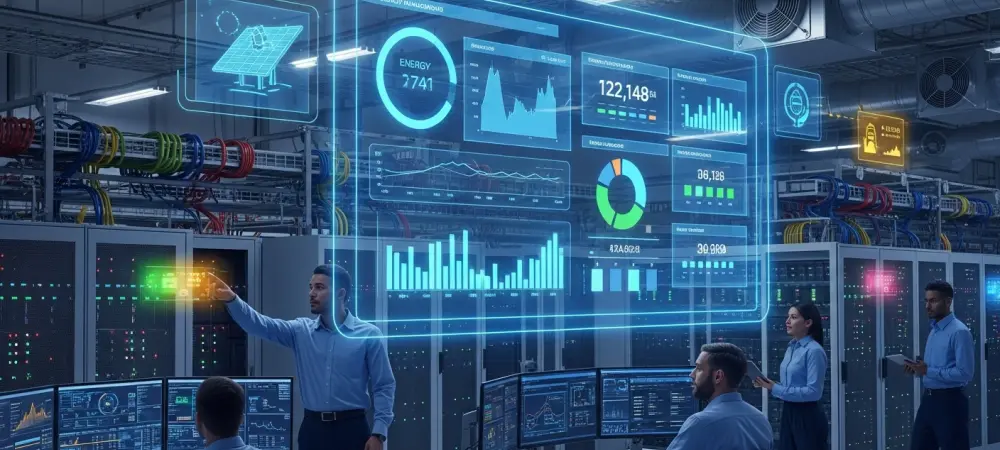
The global appetite for high-performance computing has reached a point where the electricity consumed by data centers is no longer a mere operational overhead but a significant factor in national energy security. As the deployment of generative models and complex neural networks accelerates, the industry is witnessing a shift where power availability dictates the pace of technological progress. This analysis explores how the sector is responding to these pressures by abandoning traditional, manual oversight in favor of autonomous, AI-driven energy orchestration. By moving toward a model of continuous optimization, facility operators are attempting to bridge the gap between skyrocketing digital demand and the physical limitations of existing electrical grids.
The Shift from Legacy Infrastructure to High-Density Computing
The transition from standard web hosting to high-density AI processing has fundamentally altered the thermal and electrical profile of the modern data center. In previous years, facilities were designed to handle steady, predictable workloads that allowed for generous margins of error in cooling and power distribution. However, the current landscape is defined by massive, localized power spikes that occur when large-scale models are trained or queried. These fluctuations place immense stress on hardware and necessitate a move away from the “always-on” cooling philosophies of the past, which are proving to be both expensive and environmentally unsustainable in the face of modern requirements.
Moreover, the physical constraints of older buildings are becoming a primary bottleneck for expansion. Retrofitting legacy sites to support liquid cooling or high-voltage power delivery requires a level of precision that human operators cannot achieve through manual monitoring alone. This evolution from static to dynamic environments marks a critical turning point; it highlights the reality that the infrastructure must now be as agile as the software it supports. As the industry moves forward from 2026, the success of a facility will be measured by its ability to handle these volatile density requirements without compromising the integrity of the local power ecosystem.
The Role of Intelligent Automation in Resource Optimization
Revolutionizing Thermal Management Through Predictive Cooling
Heating, ventilation, and air conditioning systems remain the most significant non-compute consumers of power, often draining resources that could otherwise be allocated to processing. Traditional cooling methods rely on fixed setpoints that lead to “over-cooling,” where energy is wasted to maintain temperatures far lower than necessary for hardware safety. AI-driven platforms are disrupting this inefficiency by utilizing sensor networks to create real-time thermal maps. These systems analyze airflow patterns and server temperatures to adjust cooling output with surgical precision, ensuring that cold air is directed exactly where it is needed during peak processing events.
This shift toward predictive cooling does more than just lower the monthly utility bill; it serves as a critical tool for hardware preservation. By smoothing out temperature fluctuations and preventing the formation of “hot spots,” intelligent automation reduces the mechanical stress on sensitive components. This proactive approach allows facilities to operate closer to their thermal limits with confidence, maximizing the efficiency of every watt of electricity. In a market where every percentage point of Power Usage Effectiveness counts, the move from reactive thermostat-based cooling to anticipatory AI modeling represents a major leap in operational maturity.
Breaking Down Data Silos for Unified Operational Visibility
A persistent barrier to true efficiency has been the fragmentation of data across different facility management departments. Historically, the teams overseeing electrical switchgear, mechanical cooling, and IT server health operated in isolation, using disparate software tools that rarely communicated. This lack of interoperability meant that an optimization in one area might inadvertently cause a spike in another. Modern Integrated Building Management Systems are now solving this problem by aggregating these “silos” into a single, cohesive data architecture. This unified view allows managers to see the direct correlation between a specific software workload and the corresponding surge in power and heat.
When these disparate streams are synthesized, the data center begins to function as a single organism rather than a collection of independent parts. This visibility is essential for meeting the increasingly stringent transparency requirements imposed by regulatory bodies and environmental stakeholders. By leveraging machine learning to identify hidden correlations between power distribution and compute output, operators can uncover “low-hanging fruit” for efficiency gains that were previously masked by fragmented reporting. The goal is no longer just to keep the lights on, but to ensure that the entire facility infrastructure responds in unison to the demands of the digital load.
Addressing Grid Volatility and Decentralized Power Challenges
The relationship between data centers and the public power grid is undergoing a radical transformation as facilities move from being passive consumers to active participants. With the integration of intermittent renewable sources like wind and solar, the grid has become more volatile, requiring large-scale users to be more flexible in their consumption. Advanced facilities are now utilizing grid-interactive technologies and large-scale battery storage to buffer their demand. This allows a data center to draw power when it is abundant and clean, while switching to stored energy or reducing non-essential loads during periods of grid stress.
This evolution refutes the common misconception that data centers are purely a drain on public resources. Through AI coordination, these facilities can actually act as stabilizing pillars for the modern decentralized energy grid. By participating in demand-response programs, data centers help prevent blackouts and reduce the need for carbon-heavy “peaker” power plants. This strategic alignment with utility providers not only improves the reliability of the facility itself but also fosters a more resilient energy environment for the surrounding community, proving that digital growth and grid stability are not mutually exclusive.
Future Horizons: The Transition to Autonomous Data Centers
The coming years will likely witness the emergence of the fully autonomous data center, where human intervention is reserved for high-level strategy rather than day-to-day tuning. We can anticipate a landscape where machine learning models manage the entire energy lifecycle, from procurement of renewable credits to the micro-adjustments of liquid-to-chip cooling loops. Technological breakthroughs in photonics and low-latency power switching will further reduce the energy tax associated with moving data within the facility. As governments move toward mandating real-time carbon intensity reporting, the ability to automate these complex compliance tasks will become a prerequisite for maintaining a license to operate.
Actionable Strategies for Enhanced Energy Resilience
To thrive in this increasingly resource-constrained market, stakeholders should prioritize several key initiatives. First, there must be an immediate investment in bridging the gap between IT and facility data; creating a “single source of truth” is the only way to enable the AI tools necessary for optimization. Second, operators should move toward modular infrastructure designs that can be scaled or upgraded without a total system overhaul, allowing them to adapt to the rapid cooling requirements of next-generation hardware. Finally, businesses must treat energy as a dynamic variable—shifting non-time-sensitive workloads to periods of low grid demand to capitalize on cheaper, cleaner electricity.
Securing a Sustainable Digital Future through Innovation
The transformation of data center energy management reflected a broader industry realization that the old methods of unconstrained consumption were no longer viable. By the middle of this decade, the integration of AI into the very fabric of facility operations had become the standard rather than the exception. Leading organizations moved beyond the simple goal of maintaining uptime and began to view energy resilience as a core competitive advantage. These strategies allowed the sector to support the massive computational needs of a global economy while simultaneously addressing the urgent pressures of grid stability and environmental responsibility. The focus shifted toward a holistic model where every component of the data center, from the chip to the cooling tower, functioned in a state of intelligent, automated harmony.