

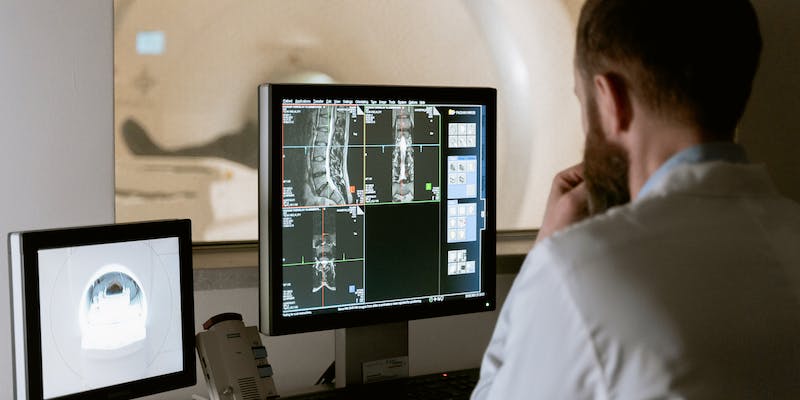
In recent years, the field of musculoskeletal radiology has witnessed an increasing need for artificial intelligence (AI) to support and complement the work of radiologists. With the ongoing trend of increased imaging rates and decreased acquisition times, AI tools have emerged as valuable resources in providing more optimized and efficient workflows. In this article, we will delve deeper into the role of AI in musculoskeletal radiology, exploring its potential benefits, challenges, and the necessary collaboration between AI researchers and clinical radiologists.
The Increasing Need for AI in Musculoskeletal Radiology
As technology advances, there has been a rapid increase in imaging rates and a corresponding decrease in acquisition times. With this trend, musculoskeletal radiologists are faced with the challenge of handling a larger volume of images while maintaining accuracy and efficiency. AI tools can help address this challenge by automating certain aspects of image analysis and reducing the workload of radiologists.
AI tools offer numerous benefits in musculoskeletal radiology. They can assist in the triage of cases, prioritizing urgent ones that require immediate attention. AI algorithms can also aid in detecting and segmenting musculoskeletal structures, helping radiologists save time during interpretation. Furthermore, AI has the potential to enhance image reconstruction techniques and improve image quality, leading to more accurate diagnoses.
The role of AI in musculoskeletal radiology
AI can play a crucial role in assisting with fundamental concepts and image acquisition in musculoskeletal radiology. For instance, AI algorithms can help optimize imaging protocols, suggesting the ideal parameters for different musculoskeletal examinations. By improving image acquisition techniques, AI can enhance the overall quality and diagnostic value of the images.
AI tools can assist radiologists in the interpretation of musculoskeletal images by providing automated detection and segmentation of anatomical structures, lesions, and abnormalities. This can aid in accurate diagnosis and reduce the potential for oversight or discrepancies. AI algorithms can also integrate clinical and imaging data, providing comprehensive information to guide treatment decisions.
Outcome Prediction and Disease Prognostication
AI has significant promise for more complicated tasks in musculoskeletal radiology, such as disease prognostication and long-term prediction of clinical outcomes. By leveraging machine learning algorithms and big data analysis, AI can help predict the progression of musculoskeletal conditions, enabling early intervention and personalized treatment plans. This potential could boost the utility of imaging and allow the field to move closer to precision medicine.
Challenges and obstacles in implementing AI in therapeutic settings
Before AI can be used in therapeutic settings, it requires large, high-quality datasets for training and validation. Multi-institutional collaboration will be crucial for the compilation of such data sets. However, challenges arise due to discrepancies in imaging procedures, making it difficult to standardize data collection.
The successful implementation of AI in musculoskeletal radiology necessitates close collaboration between core AI researchers and clinical radiologists. Clear communication channels, data-sharing agreements, and standardization of imaging protocols are essential for the seamless integration and effectiveness of AI in practice. Overcoming these challenges requires concerted efforts from various stakeholders.
Collaboration between AI researchers and radiologists
To harness the full potential of AI in musculoskeletal radiology, close collaboration and ongoing communication between AI researchers and radiologists are paramount. Radiologists’ clinical expertise can guide the development of AI algorithms, ensuring they are tailored to the specific needs of musculoskeletal imaging. This collaboration will help bridge the gap between AI technology and clinical practice.
For AI to be successfully implemented in clinical settings, it is essential to establish trusted and reliable AI-supported data acquisition methods. Radiologists should have confidence in the accuracy and validity of the AI-generated results. Through rigorous validation and iterative refinement, AI tools can gain the trust and acceptance of the radiology community.
Implementation and Integration of AI in Clinical Practice
After overcoming the challenges and establishing reliable AI solutions, the integration of AI in clinical practice can begin. AI-based tools can enhance the workflow of musculoskeletal radiologists by automating repetitive tasks, prioritizing urgent cases, and providing additional insights for accurate diagnosis and treatment planning. This can lead to improved efficiency, reduced errors, and better patient outcomes.
Once successfully implemented, a broad range of AI-based solutions can enhance the workflow of musculoskeletal radiologists. These solutions can include AI-powered image reconstruction algorithms, automated anomaly detection, and predictive analytics. By streamlining processes and reducing human errors, radiologists can focus more on complex cases and delivering high-quality patient care.
Potential benefits of AI beyond routine practice
Effectively incorporating AI into the routine practice of musculoskeletal radiology can have potential business applications. AI can help optimize resource allocation, improve operational efficiency, and facilitate cost-effective patient management. It has the potential to enable radiology departments to deliver better services, while minimizing expenses.
The integration of AI can bring about new educational opportunities in musculoskeletal radiology. AI-powered platforms can provide interactive learning experiences, allowing radiologists to enhance their knowledge and skills. By utilizing AI algorithms, radiologists can engage in virtual training simulations and gain proficiency in image interpretation and diagnosis.
The incorporation of AI in musculoskeletal radiology can also lead to significant research advancements. AI algorithms can aid in the analysis of large datasets, identifying patterns and correlations that may not be apparent to human observers. This can contribute to the development of new insights and improve our understanding of musculoskeletal diseases and their treatment.
AI holds great promise in the field of musculoskeletal radiology. While challenges exist, the collaboration between AI researchers and radiologists, coupled with the successful implementation of AI in clinical settings, can revolutionize the field. AI tools can optimize workflows, enhance accuracy, and improve patient outcomes. With careful integration and ongoing development, AI will not replace radiologists but rather enable them to provide better care and facilitate advancements in musculoskeletal radiology.