

With the explosive growth of AI demanding unprecedented amounts of power, the relationship between data centers and the energy grids they rely on is being fundamentally rewritten. Nowhere is this more apparent than in Texas, where new legislation is forcing a high-stakes reckoning. To navigate this complex new landscape, we’re joined by Dominic Jainy, an IT professional whose work at the intersection of AI, infrastructure, and policy provides a critical perspective. We’ll explore the seismic financial and operational shifts facing data center developers, the emerging dynamic of data centers as “grid players,” and how a new era of energy discipline is dawning, not just in Texas, but across the nation.
Texas has shifted significant grid interconnection costs, including a minimum $100,000 screening fee, to large-load users. How does this “pay your own way” model change the financial calculus for new data center projects? Please walk us through the new economic realities.
It completely upends the traditional model. For years, large facilities enjoyed what you might call a “cushy ride,” where much of the cost of grid expansion was socialized. Now, with SB6, the full weight of that cost is being placed squarely on the shoulders of the large-load customer. That flat $100,000 screening fee is just the entry ticket. Beyond that, operators must prove site control and financial commitment, and they will likely be on the hook for any substantial transmission upgrades their facility requires. This means the initial capital expenditure for a new project in the ERCOT region has skyrocketed. It forces a much more sober, disciplined approach to planning, as the economic viability of a project is now directly tied to the true cost of its power infrastructure from the very beginning.
With new rules requiring remote-disconnect capabilities and the potential for ERCOT to direct the use of on-site generation during emergencies, how must data center operators adapt their operational playbooks? What specific technologies and strategies are now essential for ensuring both compliance and uptime?
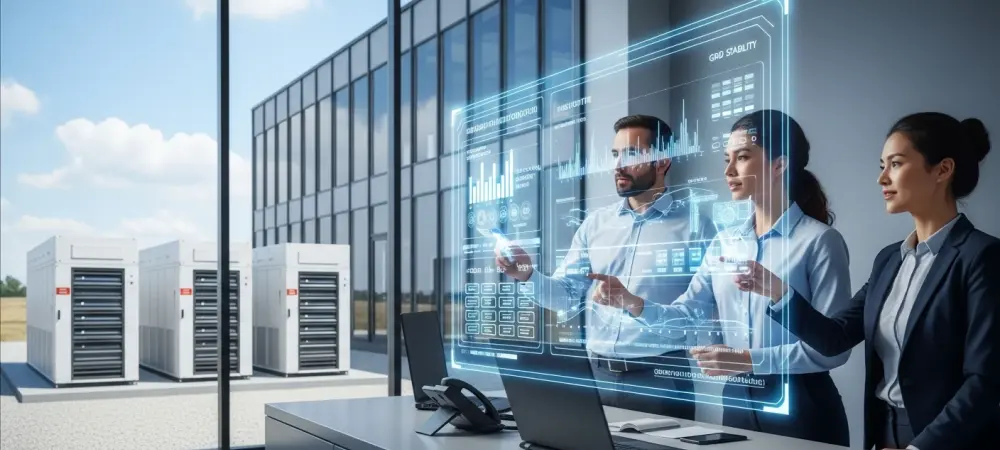
The playbook has to evolve from being purely internally focused to being grid-aware. It’s no longer enough to just keep the servers running. For any new connection after December 31, 2025, operators must build in remote-disconnect capabilities. This is a profound shift; it means the grid operator, ERCOT, can effectively flip a switch on your facility during a severe emergency. Furthermore, you must disclose your on-site generation if it can cover at least 50% of your load, and be prepared for ERCOT to direct you to use it during a crisis. Operationally, this requires sophisticated energy management systems that can seamlessly switch between grid power, on-site generation, and even battery storage, while also having clear protocols for executing load curtailment with the precision of a surgeon to protect the most critical workloads.
Some experts suggest data centers are increasingly willing to become “better grid players” to secure the power they need for AI-driven growth. Based on your conversations, what does this partnership look like in practice, and what specific demand-response services are they most prepared to offer?
It’s less of a burden and more of a strategic necessity. The demand for power is so intense that data centers realize they can’t just be passive takers anymore. In practice, this partnership means actively participating in new demand-response and reliability services that are being established. It’s a negotiation. The data center says, “We have flexible load and on-site generation. We can curtail non-critical processes or inject power back into the grid when you’re in a firm load-shedding emergency.” In return, they gain a more favorable position in the queue to secure the massive, multi-megawatt connections they need. They are essentially trading flexibility for capacity, turning their power infrastructure from a cost center into a strategic asset for grid stability.
While Texas is getting attention, other states are also imposing new rules on large power users, some even more restrictive. How is this national trend influencing data center site selection, and what are the key regulatory differences operators should watch for in other high-demand regions?
Texas is the canary in the coal mine, but it is absolutely not alone. The sheer volume of requests for power is forcing utilities and regulators everywhere to react. We’re seeing other states and utility districts institute their own restrictive rules, sometimes requiring enormous upfront payments to reserve capacity. This makes site selection a far more complex and high-stakes game. Operators now have to perform deep regulatory due diligence, looking beyond just the price per kilowatt-hour. They need to analyze the legislative landscape, the financial stability of the local utility, and the potential for future rule changes. A region that looks attractive today could become prohibitively expensive or restrictive tomorrow, so understanding that long-term regulatory risk is now paramount.
Historically, large facilities often contracted for far more power than they consumed, sometimes using only 50-60% of their reserved capacity. In what ways do these new regulations create a more disciplined and efficient approach to energy planning for the entire industry?
These regulations are a direct response to that historical inefficiency. When a data center reserves a massive block of power, the utility has to build and maintain the capacity to deliver it 24/7, whether it’s used or not. When actual consumption hovers around 50% or 60%, the utility is left with stranded assets, and the cost of that unused capacity often trickles down to residential ratepayers. By shifting the full cost of interconnection and introducing stricter rules, SB6 forces developers to be far more realistic and precise in their power forecasting. You can no longer afford to over-provision by a huge margin. It drives a more thoughtful, right-sized approach to infrastructure, which ultimately benefits everyone by ensuring the grid is built out more efficiently.
What is your forecast for data center power procurement over the next five years?
I foresee a dramatic shift from simple procurement to strategic energy integration. The era of just signing a contract for a huge block of power and treating the utility like a vending machine is over. Over the next five years, data center operators will become much more sophisticated energy players. We will see them acting like mini-utilities themselves, with integrated on-site generation, battery storage, and advanced software to manage their load in real-time. Power procurement will involve complex contracts that include not just energy consumption but also grid services, demand response commitments, and direct investments in renewable generation. Success will no longer be measured just by uptime, but by a facility’s ability to be a flexible, reliable, and symbiotic partner to the grid.