

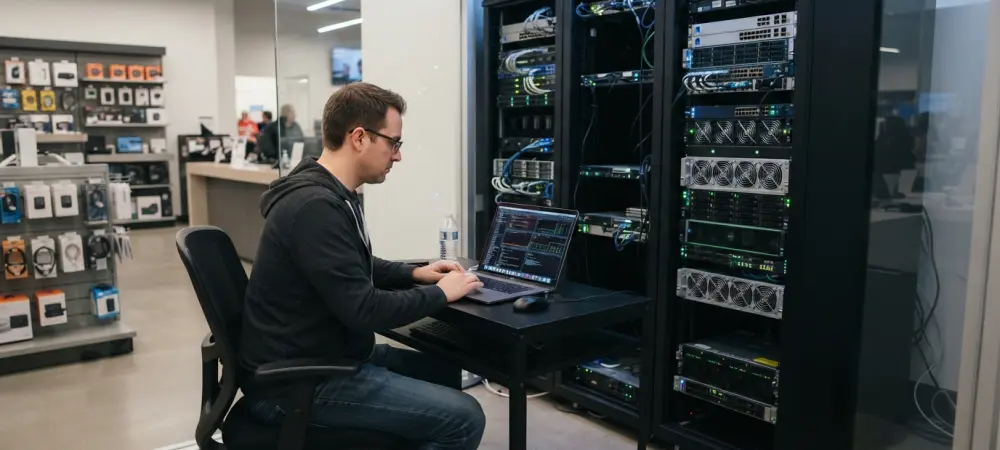
The retail giant is developing a software-driven management platform to oversee the computing systems running across more than 5,000 global stores. This strategic pivot marks a significant departure from established norms as Tesco, the leading grocery retailer in the United Kingdom, moves to modernize its vast edge computing estate. The initiative surfaced through a recent recruitment drive for a Head of Software Engineering based in Bengaluru, tasked with architecting a scalable management layer to handle maintenance and monitoring for this massive infrastructure. By opting for Proxmox, an open-source virtualization platform, the company is positioning itself at the forefront of a growing movement away from traditional, proprietary software suites. This transition is not merely a technical upgrade but a response to shifting dynamics in the software licensing market. The goal is to ensure that the retail operations remain resilient and cost-effective, regardless of the scale or location of the individual storefronts involved in the rollout.
The Financial Friction: Navigating Licensing Disputes
The decision to migrate was precipitated by a deepening rift between the retailer and VMware, which has escalated into a complex legal battle scheduled to persist through 2027. Central to the dispute is an allegation from the retailer that the virtualization provider demanded a staggering 175 percent price increase during contract negotiations. This financial pressure reflects broader industry anxieties following Broadcom’s acquisition of VMware, which has seen numerous enterprises re-evaluating their long-term commitments to the platform. While the retailer maintains that its existing perpetual licenses should grant it continued support and upgrade paths, the provider has argued that the specific legacy versions required for the edge estate are no longer in production or supported under new frameworks. This stalemate has forced a radical rethink of the company’s dependency on a single vendor, leading to the search for alternatives that offer greater control over long-term operational expenditures.
Beyond the immediate financial implications, the friction illustrates a widening gap in how major corporations view the value of traditional virtualization contracts in the modern era. Other global entities, such as the industrial giant Siemens, have found themselves in similar clashes over licensing terms, suggesting that the tension is systemic rather than isolated. In contrast, some large-scale organizations like FedEx and NTT Docomo have recently opted to sign long-term agreements to remain within the flagship cloud ecosystem, highlighting a fragmented market. For a business operating at the scale of a global grocer, the risks associated with unpredictable licensing costs are substantial enough to justify the overhead of a complete platform migration. By moving toward a more transparent and open-source model, the enterprise is effectively de-risking its operations against future price hikes that could compromise the thin margins inherent in the retail industry.
Technical Viability: Implementing Open-Source Solutions at the Edge
Adopting Proxmox for such a critical component of the business signifies a maturation of open-source virtualization tools that were once considered niche options. The Austrian-developed platform has recently expanded its appeal to the enterprise sector by introducing robust, 24/7 technical support, addressing a major barrier for risk-averse IT departments. For a retail edge environment, the necessity for a highly programmable and API-driven infrastructure is paramount to ensure rapid deployment across thousands of physical locations. Proxmox provides the flexibility required to manage diverse workloads in environments where local hardware resources might be constrained or network connectivity is intermittent. This technical agility allows the engineering team to build a bespoke management layer that integrates seamlessly with existing monitoring tools, providing a level of customization that is often difficult to achieve with the rigid structures of proprietary alternatives.
The transition strategies implemented by the retail leader focused on a hybrid approach to maintain stability across different segments of the infrastructure. While the edge operations shifted toward open-source flexibility, industry observations indicated that the core data center workloads were likely transitioned to Microsoft Hyper-V to ensure compatibility with enterprise-grade backend services. This dual-track strategy provided a clear template for other large organizations seeking to escape vendor lock-in without sacrificing the stability of their primary processing hubs. Management successfully demonstrated that diversifying the virtualization layer could yield significant cost savings while simultaneously improving the scalability of the global store network. Looking ahead, the move established a precedent for prioritizing software-defined independence. Organizations were encouraged to conduct thorough audits of their current licensing agreements and explore the technical readiness of open-source alternatives to foster a more resilient and adaptable IT landscape.