

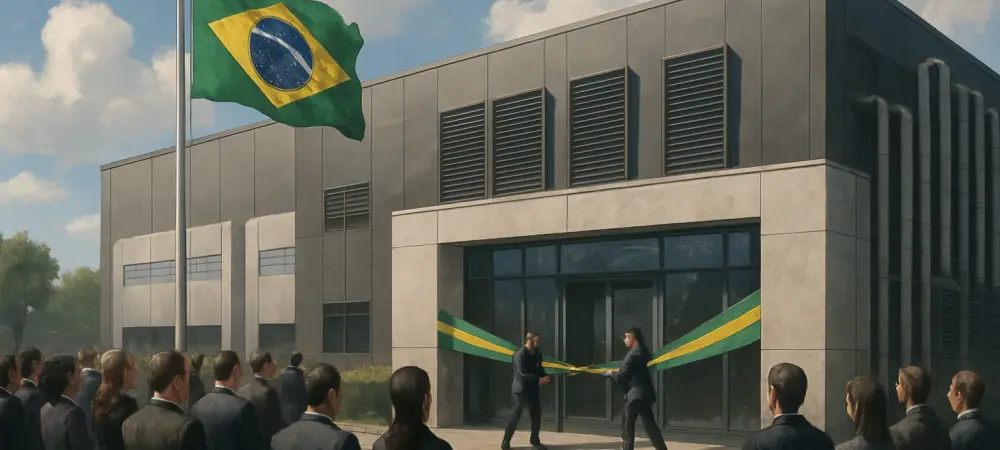
In a world where digital demands are skyrocketing due to the proliferation of artificial intelligence and data-intensive applications, Brazil is emerging as a key player in the global data center landscape with the recent launch of a massive new facility in Fortaleza, Ceará, by Tecto Data Centers, a leading Brazilian operator. This state-of-the-art data center, unveiled during a high-profile event in the state capital, represents a significant milestone in the country’s journey toward becoming a hub for technological innovation. Attended by prominent figures such as Brazil’s Minister of Communications and top executives, the inauguration highlights the strategic importance of this infrastructure to both the region and the nation. As digital transformation accelerates, this development signals Brazil’s readiness to meet the challenges of a data-driven future with robust and scalable solutions.
Expanding Digital Horizons in Brazil
A New Benchmark in Fortaleza’s Tech Landscape
The newly launched facility in Praia do Futuro, Fortaleza, spans an impressive 13,000 square meters and is designed to deliver a total capacity of 20MW at full build-out. Already operational in its first phase, it provides 4MW of capacity, with the ability to house up to 100 racks per 300 square meter room at an average power density of 10kW per rack. This setup caters to the high-demand computing needs of modern enterprises, positioning the data center as a critical asset for businesses seeking reliable infrastructure. Tecto has invested approximately R$550 million (about US$97 million) in this multi-tenant project, and the securing of an anchor tenant reflects strong market confidence in its potential. This development not only boosts Fortaleza’s status as a tech hub but also showcases Tecto’s commitment to addressing the growing appetite for digital services in Brazil.
Strategic Importance of Regional Growth
Beyond its technical specifications, this facility marks Tecto’s third and largest infrastructure in Fortaleza, highlighting the company’s aggressive expansion strategy within Brazil. The choice of Fortaleza is no accident; the city’s strategic location offers connectivity advantages, making it an ideal spot for data center operations. During the launch event, Tecto’s leadership emphasized Brazil’s unique strengths, such as abundant clean energy resources and a well-integrated energy system, which enhance the country’s appeal for tech investments. With Latin America currently accounting for just a small fraction of global data center capacity, Brazil’s geopolitical neutrality further positions it as a promising destination for future growth. This project is a testament to how regional developments can contribute to national ambitions in the tech sector, paving the way for broader economic impacts.
Tecto’s Vision for the Future
Building a Robust National Network
Tecto Data Centers is not limiting its ambitions to Fortaleza alone; the company is actively expanding its footprint across Brazil and beyond. With an existing presence in Rio de Janeiro through a single data center, plans are underway for new facilities in Porto Alegre, Rio Grande do Sul, and São Paulo. A particularly ambitious project in Santana de Parnaíba, São Paulo, aims to deliver a staggering 200MW of capacity, with operations expected to commence within the next couple of years. Internationally, Tecto operates two data centers in Barranquilla, Colombia, and holds investments in subsea cables and extensive terrestrial fiber networks across the region. This comprehensive approach to infrastructure development reflects a deep understanding of the interconnected nature of modern digital ecosystems, ensuring that Tecto remains at the forefront of meeting escalating data demands.
Positioning Brazil as a Global Data Hub
The broader implications of Tecto’s initiatives were a focal point during the launch event, where executives articulated a vision of Brazil as a global leader in data processing. The country’s favorable conditions, including access to sustainable energy and a stable geopolitical environment, create a compelling case for attracting international tech investments. As digital economies worldwide become increasingly reliant on robust infrastructure, Brazil stands to gain from this trend by leveraging its unique advantages. The rapid escalation of data needs, driven by technological innovations like AI, underscores the urgency of such projects. Reflecting on the inauguration, it became evident that Tecto’s efforts had already begun to reshape perceptions of Brazil’s role in the global tech arena, setting a foundation for transformative growth in the years that follow. Moving forward, stakeholders must focus on sustaining this momentum through strategic partnerships and continued investment in cutting-edge infrastructure to solidify Brazil’s position on the world stage.