

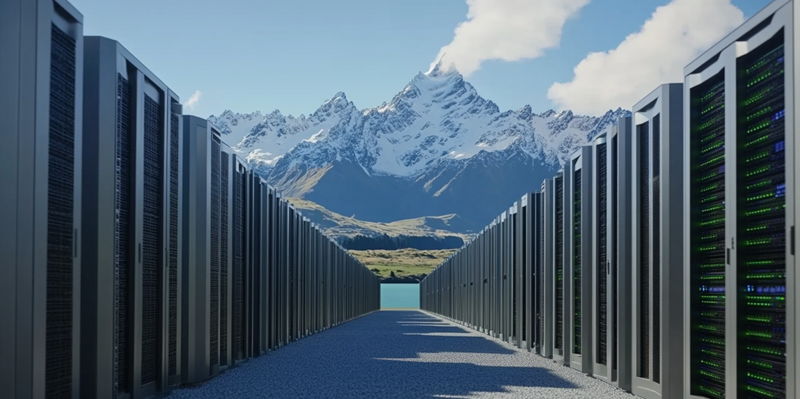
New Zealand’s data center landscape is undergoing a significant transformation, led by T4 Group, a pioneer in decentralizing data centers to enhance national resilience and sustainability. The company’s innovative approach is focused on mitigating risks associated with natural disasters and ensuring that critical digital infrastructure is both resilient and environmentally sustainable. As the nation’s digital needs grow, the traditional concentration in Auckland, home to nearly 90% of the country’s data centers, presents substantial risks. Auckland’s geography, being prone to natural disasters like earthquakes, floods, and volcanic eruptions, highlights the urgency for a strategic shift.
The Need for Decentralization
In recent years, New Zealand has seen excessive reliance on Auckland for its data storage needs, posing significant vulnerabilities due to the region’s susceptibility to natural disasters. The growing realization of these risks has driven T4 Group to take proactive measures by acquiring land in Invercargill, located on the South Island, for the construction of the nation’s first Tier IV data center. This move is designed to disperse the data center infrastructure across diverse geographical areas, thereby reducing the impact of localized disasters in Auckland.
Decentralizing data centers is not just about avoiding disasters but is also critical for enhancing national resilience. It ensures that a single catastrophic event does not disrupt the entire country’s data access. The shift to decentralization allows for a more balanced digital load management across the country, improving the efficiency and reliability of data services. This forward-thinking approach is not only a necessity for disaster preparedness but also for the stable and secure operation of New Zealand’s digital infrastructure long-term.
Emphasizing Resilience and Risk Mitigation
Auckland sits on floodplains and near volcanic fields, a combination that, along with its power reliability issues, makes it a high-risk area for data centers. The potential for seismic events like the Alpine Fault 8 (AF8) earthquake, which carries a significant probability of occurring within the next 50 years, underscores the need for an urgent reassessment of where data facilities should be located. T4 Group’s initiative to establish data centers in less vulnerable regions like Invercargill is a strategic move aimed at ensuring the continuity of New Zealand’s digital infrastructure during such calamities.
This strategic dispersion of data centers is pivotal for bolstering national resilience. By adopting a geographically diverse infrastructure, T4 Group ensures that New Zealand’s data centers will remain functional even if one area is hit by a natural disaster. It sets a new benchmark for other data center operators, illustrating the importance of geographical diversity in infrastructure deployments. This approach not only amplifies the robustness of the country’s digital backbone but also promotes a paradigm shift towards long-term, risk-informed planning.
Commitment to Genuine Sustainability
While many data center operators in New Zealand make grand claims about sustainability, T4 Group goes beyond mere greenwashing by committing to transparent and actual sustainable practices. The prevalent usage of carbon credits and vague environmental promises by some operators is often criticized as insufficient. T4 Group distinguishes itself by planning to utilize renewable energy sources. For instance, by deploying solar power across their locations, the company aims to minimize its reliance on non-renewable energy and reduce its carbon footprint authentically.
T4 Group’s approach includes leveraging the latest technologies to optimize energy consumption, incorporating advanced cooling systems, and using energy-efficient hardware. These measures ensure their data centers operate with maximum sustainability. The company’s commitment to real environmental responsibility places it in a league of its own within an industry often scrutinized for its high energy demands. By setting a high bar for energy use optimization, T4 Group leads the way in responsible digital infrastructure development, ensuring that sustainability is not just a buzzword but a core operational principle.
Overcoming Power Challenges
The electricity supply scenario in Auckland is complex and inadequate for the growing demands of data centers. With approximately 13% of the power coming from brown energy sources, achieving true sustainability has been a challenge. Reliability issues concerning long-term power supply further complicate this landscape. T4 Group addresses these challenges head-on by locking in current energy prices for its customers until 2028, ensuring cost stability while pursuing energy efficiency through cutting-edge technological solutions.
By focusing on extensive use of renewable energy, particularly in regions like Invercargill, T4 Group leverages the cooler climate and high availability of renewable energy sources. This approach not only aligns with their sustainability goals but also provides a model for balancing the power demand and supply effectively. The company’s strategic choices in energy management underscore the importance of integrating renewable sources with technological optimization to build sustainable and future-ready digital infrastructure.
Upholding Data Sovereignty
Data sovereignty has become a critical focal point in ensuring that digital data is stored, processed, and governed by local laws. T4 Group emphasizes this aspect by ensuring that all its data operations remain under New Zealand jurisdiction, which inherently enhances data privacy and security. This commitment is pivotal in safeguarding local data from exposure to foreign jurisdictions through international treaties like the Patriot Act, Foreign Intelligence Surveillance Act, and CLOUD Act.
Industries that deal with highly sensitive information, such as finance, healthcare, and government, stand to benefit immensely from T4 Group’s approach. By ensuring data sovereignty, the company alleviates concerns surrounding international data privacy laws and reinforces national control over digital assets. This focus not only bolsters the security framework around New Zealand’s sensitive data but also sets a high standard for other operators in managing data with utmost responsibility.
Readiness for AI and Future Technologies
New Zealand’s data center sector is experiencing a transformative shift, spearheaded by the T4 Group. As a leader in decentralizing data centers, T4 Group aims to enhance national resilience and sustainability. Their innovative approach addresses the vulnerabilities posed by natural disasters, ensuring that essential digital infrastructure remains robust and eco-friendly. With the nation’s digital demands expanding, the historical concentration of data centers in Auckland, which houses nearly 90% of the country’s facilities, poses significant risks. Auckland’s geography makes it susceptible to natural disasters such as earthquakes, floods, and volcanic eruptions, underscoring the need for a strategic change.
The T4 Group’s strategy focuses on distributing data centers more evenly across the country. This decentralization effort not only reduces the strain on Auckland but also spreads out the risk, making the overall infrastructure more resilient. Additionally, by diversifying locations, the initiative supports environmental sustainability, as new data centers can incorporate state-of-the-art green technologies.
This shift is crucial not only for disaster risk mitigation but also for meeting the growing digital needs of a modern society. The T4 Group envisions a future where New Zealand’s data infrastructure is both secure and sustainable, setting a new standard for how data centers should be planned and managed. By leading this transformation, T4 Group is positioning New Zealand as a global leader in resilient and environmentally friendly data infrastructure.