

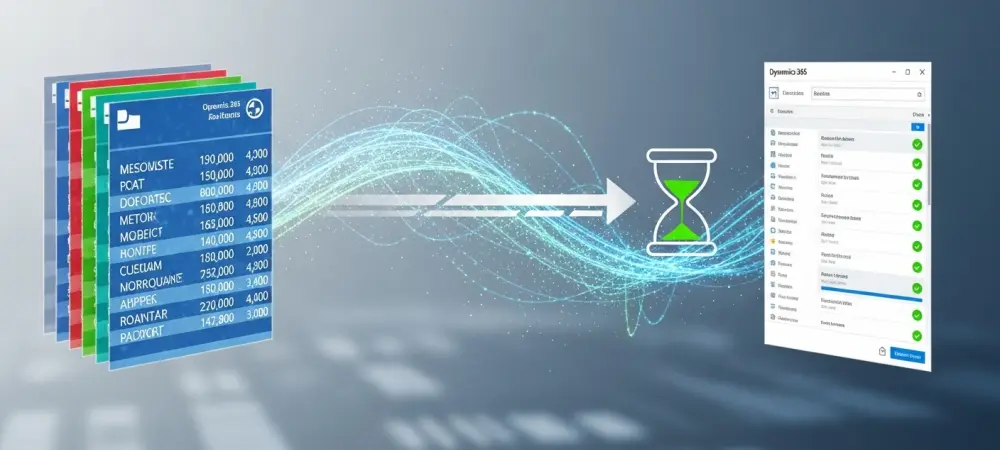
The relentless pressure of the fiscal calendar often turns the final days of the month into a chaotic race against time for finance professionals who are drowning in endless spreadsheets. As organizations grow more complex, the volume of digital transactions accelerates, making the traditional approach to bank reconciliation feel increasingly unsustainable. The modern accounting department requires a shift toward intelligent automation to maintain accuracy without sacrificing the well-being of the team or the integrity of the data. By adopting advanced technological solutions, businesses can transform a historically tedious chore into a streamlined, high-value strategic operation.
Modern finance leaders recognize that the gap between bank statements and internal ledgers represents a critical point of vulnerability. When this gap is managed through manual intervention, it introduces risks that range from simple keystroke errors to significant oversight of fraudulent activity. Dynamics 365 Finance and Supply Chain Management offers a sophisticated framework for Advanced Bank Reconciliation, providing the tools necessary to bridge this divide. This system does not merely record data; it orchestrates a symphony of automated matching and intelligent validation that redefines the standards of financial accuracy.
Does Your Month-End Close Feel More Like an Endurance Test Than a Routine Financial Process?
The closing cycle frequently exposes the structural weaknesses within a company’s financial workflow, particularly when teams rely on heroic individual efforts to meet deadlines. Many controllers find themselves supervising a process where staff members spend dozens of hours cross-referencing bank statements against general ledger entries, a task that offers little intellectual reward. This exhaustive effort often leads to burnout, as the repetitive nature of manual matching drains the mental energy required for more complex financial analysis. Consequently, the month-end close becomes a period of dread rather than a standard milestone of corporate health.
Beyond the human cost, the time-intensive nature of manual reconciliation delays the availability of crucial financial reports. When the finance team is stuck in the weeds of transaction matching, stakeholders are left waiting for the insights needed to make informed decisions about investments or operational changes. This lag can be particularly detrimental in fast-paced industries where market conditions shift rapidly and liquidity management is paramount. A prolonged closing cycle ultimately obscures the current financial position, forcing leadership to rely on outdated information while the reconciliation marathon continues in the background.
The High Cost of Sticking With Traditional Reconciliation Methods
Continuing with legacy reconciliation processes often results in a hidden tax on the organization through lost productivity and increased error rates. While manual methods might seem “free” because they do not require new software investments, the reality involves substantial costs in the form of labor hours and the high price of correcting mistakes. Every manual entry carries a statistical probability of error, and in a high-volume environment, these small discrepancies can aggregate into significant financial headaches during an audit. The cumulative impact of these inefficiencies often far exceeds the cost of modernizing the financial tech stack.
Furthermore, traditional methods lack the scalability required to support business growth in the current economic landscape. As a company expands its operations or enters new markets, the number of bank accounts and transaction types typically increases, putting even more strain on a manual system. This rigidity creates a bottleneck that can prevent the finance department from supporting broader organizational goals, such as mergers or international expansions. Without a flexible and automated foundation, the finance function remains reactive, constantly struggling to keep pace with the very growth the company is working to achieve.
Core Capabilities of Dynamics 365 Finance and Supply Chain Management
At the heart of a modernized financial department lies the ability to ingest and process bank data with minimal human intervention. Dynamics 365 Finance and Supply Chain Management provides a robust engine designed to import various electronic bank statement formats, such as ISO 20022 or BAI2, directly into the system. This capability eliminates the need for manual data entry, ensuring that the raw information from the financial institution is precisely what the ERP system analyzes. By creating a direct pipeline for digital bank data, the system establishes a single version of truth that serves as the basis for all subsequent reconciliation activities. The platform also utilizes a sophisticated matching rule engine that allows organizations to define specific criteria for pairing bank transactions with internal records. These rules can be configured to look for exact matches in amounts and dates, or they can involve more complex logic, such as matching a single bank deposit against multiple customer payments. This flexibility ensures that the system handles the nuances of different transaction types, from simple wire transfers to complicated credit card settlement batches. By automating the bulk of the matching process, the system allows the finance team to shift their focus toward exceptions that truly require professional judgment.
The Strategic Shift From Manual Data Entry to Financial Oversight
Moving away from the mechanics of data entry empowers finance professionals to take on the role of strategic advisors within the organization. When the burden of transaction matching is removed, accountants can spend their time investigating the root causes of discrepancies rather than simply identifying them. This shift toward oversight allows for a deeper understanding of banking fees, timing differences, and potential process gaps in the accounts receivable or payable departments. Instead of being record-keepers, the finance staff becomes a group of analysts who provide valuable feedback on how to optimize cash management.
Moreover, the increased visibility provided by automated reconciliation leads to more proactive management of the company’s liquidity. Real-time or daily reconciliation provides an accurate view of the cash position, enabling treasury teams to make better decisions about short-term investments or debt repayments. This level of insight is impossible to achieve when reconciliation is a once-a-month activity performed in arrears. By transforming reconciliation into a continuous process, the organization gains a competitive advantage through superior capital allocation and a more resilient financial structure.
A Step-by-Step Framework for a Successful System Configuration
A successful implementation begins with a thorough audit of current banking relationships and the specific formats used by each financial institution. It was essential for organizations to verify that their bank accounts in the system were aligned with the physical accounts and that the correct currencies were assigned. This initial preparation ensured that the foundation was solid before any automated rules were applied. Without this clarity, even the most advanced matching engine would struggle to produce accurate results, as it would be working from a flawed baseline. Once the accounts were established, the next phase involved the detailed configuration of the matching rule sets and reconciliation matching groups. Teams defined the hierarchy of rules, starting with the most restrictive criteria to ensure high-confidence matches first, followed by broader rules to capture the remaining items. This phased approach helped minimize false positives and ensured that the automation behaved logically. By refining these rules over several cycles, organizations achieved a high rate of automated matching, which significantly reduced the workload during the actual closing process.
The final stage of the framework focused on the establishment of clear procedures for handling exceptions and the continuous monitoring of the system’s performance. It was critical to define who was responsible for reviewing unmatched items and how those discrepancies should be documented and resolved. This governance structure ensured that the automation remained a tool for efficiency rather than a source of confusion. Regular reviews of the matching success rates allowed the team to fine-tune the configuration, ensuring that the system evolved alongside the business and continued to deliver maximum value over the long term.
The transition to Advanced Bank Reconciliation proved to be a pivotal moment for finance departments aiming to modernize their operations. Organizations that embraced these automated tools moved beyond the limitations of manual processes and discovered new efficiencies that strengthened their financial integrity. By prioritizing intelligent configuration and strategic oversight, these teams successfully reduced the stress of the month-end close while gaining deeper insights into their cash flow. The shift toward a more automated future provided a sustainable path for managing complex financial data with confidence and precision.