

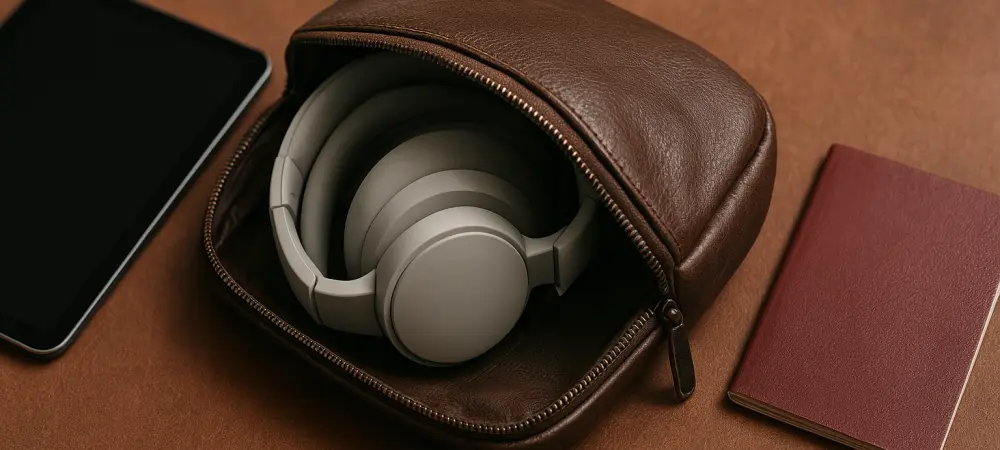
The pursuit of high-fidelity audio historically demanded a significant financial sacrifice, yet the recent democratization of sophisticated signal processing has fundamentally altered the consumer landscape. The Sony WH-CH730N enters the market as a definitive statement on how much technology can be packed into a mid-range chassis without compromising the core auditory experience. While flagship models often serve as the testing ground for experimental features, the WH-CH730N acts as a refined distillation of what the modern listener actually requires: longevity, stability, and intelligent noise management. This device does not merely mimic its more expensive counterparts; it establishes a new standard for the “flagship-lite” category, balancing essential high-end functionality with a price point that invites a broader audience into the Sony ecosystem. By prioritizing internal processing power and battery efficiency over premium external materials, the hardware reflects a strategic shift toward utility and performance in a crowded marketplace.
Evolution of Sony’s Mid-Range Audio Technology
The lineage of the WH-CH series has always been defined by a focus on weight reduction and accessibility, but the current iteration represents a significant technical leap. Historically, mid-range headphones were often viewed as “stripped-down” versions of premium products, lacking the sophisticated silicon necessary for effective noise cancellation or audio upscaling. However, the development of the Integrated Processor V1, which has trickled down from the flagship XM series, has changed the fundamental principles of the WH-CH730N. This integration allows for faster processing of environmental noise and more nuanced control over the internal audio signal, bridging the gap between entry-level hardware and professional-grade performance. The context of this evolution is a market where consumers no longer accept subpar audio just because they are paying a lower price.
Within the broader technological landscape, the WH-CH730N functions as an alternative for those who find the industrial design of the top-tier models either too cumbersome or too costly for daily wear. The technology has transitioned from being a simplified audio output device to a comprehensive personal environment controller. By utilizing more efficient manufacturing processes and focusing on software-based enhancements rather than expensive magnesium or leather materials, the manufacturer has been able to maintain a competitive edge. This evolution toward software-defined hardware means that the headphones can be updated and refined over their lifecycle, ensuring that they remain relevant even as newer codecs or connection standards emerge.
Core Technical Specifications and Performance
Advanced Driver Integration and Audio Processing
At the heart of the WH-CH730N are the 30mm dynamic drivers, which have been specifically engineered to provide a high-frequency response that belies their compact size. While larger drivers are often associated with better bass, the smaller 30mm units allow for a more rapid diaphragm movement, which translates to a cleaner and more precise treble range. This is particularly vital when combined with the Digital Sound Enhancement Engine (DSEE), an algorithmic tool that seeks to restore the high-frequency data lost during digital compression. By analyzing the incoming audio stream in real-time and predicting the missing spectral components, the DSEE ensures that even low-bitrate streams from standard streaming services retain a sense of air and clarity that would otherwise be absent.
The sound profile of these headphones is intentionally energetic, designed to cater to the rhythmic demands of modern electronic, pop, and hip-hop genres. Out of the box, the tuning emphasizes a robust low-end that provides a physical sensation of depth without bleeding into the mid-range frequencies where vocals reside. However, this factory setting is just a baseline; the true power of the hardware is unlocked through software-based EQ tuning. By adjusting the ten-band equalizer within the companion app, a user can transform the restricted soundstage into something much more expansive. This flexibility is what makes the technical integration successful, as it allows the hardware to adapt to varying acoustic preferences rather than forcing a singular, rigid audio signature on every listener.
Connectivity and Power Management Systems
The implementation of Bluetooth 6.0 in the WH-CH730N represents a major milestone for mid-range portables, providing a level of connection stability that was previously elusive in this price bracket. This new standard offers enhanced data throughput and reduced latency, which is essential for both high-quality audio streaming and synchronization during video playback. Furthermore, the inclusion of multi-point connectivity allows for a seamless transition between two active devices, such as a smartphone and a tablet. The logic behind this system ensures that the headphones can intelligently prioritize audio sources—for instance, automatically switching from a music stream on a laptop to a phone call on a mobile device—without requiring manual intervention or reconnection. Perhaps the most significant technical achievement is the battery life cycle, which ranges from 50 hours with active noise cancellation enabled to a staggering 75 hours when it is turned off. This efficiency is the result of optimized power management chips that reduce the current draw during idle periods and maximize the energy density of the internal lithium-ion cells. In the portable electronics market, where daily charging has become a burdensome norm, the ability to go for over a week without needing a power outlet is a transformative feature. It reflects a shift in engineering priorities, where the reduction of “range anxiety” for audio products becomes a primary selling point, especially for users who prioritize reliability over the aesthetic prestige of flagship materials.
Current Market Trends and Consumer Shifts
The audio industry is currently witnessing a massive shift toward “pro-sumer” features in budget-friendly hardware, a trend that the WH-CH730N exploits effectively. Modern consumers are increasingly literate in technical specifications, seeking out features like transparent hearing modes and adaptive noise control that were once exclusive to the elite tiers. This demand has forced manufacturers to move high-end signal processing software into more affordable units. The importance of a comprehensive app ecosystem, such as Sony Sound Connect, cannot be overstated in this context. It turns a static piece of hardware into a customizable tool, allowing users to define exactly how much ambient noise they want to let in or how the physical buttons on the ear cups should behave.
Moreover, there is a growing trend toward “lifestyle integration,” where headphones are expected to be as comfortable for a ten-hour flight as they are for a quick trip to the gym. This shift has led to the prioritization of lightweight composites and ergonomic padding that reduces pressure on the temporal bone. The consumer no longer views headphones as a separate accessory but as a consistent part of their daily attire. Consequently, the availability of diverse color palettes and foldable designs has become as important as the frequency response curves. The market is moving toward a middle ground where the distinction between “entry-level” and “premium” is defined more by the tactile quality of the materials than by the actual intelligence of the internal components.
Real-World Applications and Use Cases
For the daily commuter, the WH-CH730N provides a practical solution to the persistent problem of low-frequency urban noise. The active noise cancellation system is specifically tuned to target the constant hum of engines, tires on pavement, and the ventilation systems found in subways and trains. By generating an anti-phase signal that cancels out these rhythmic drones, the headphones allow the user to maintain lower volume levels, thereby protecting long-term hearing health while providing a more relaxing transit experience. The transparency mode further enhances this utility, enabling the listener to hear gate announcements or traffic sounds with a single button press, ensuring safety and awareness without the need to remove the headset.
Beyond the commute, the technology finds unique applications in the professional and academic spheres. The introduction of “Background Music Mode” is a specific software innovation aimed at students and remote workers who require a non-intrusive audio environment to maintain focus. Unlike standard playback, this mode adjusts the equalization to minimize sharp peaks and distracting transients, creating a sonic blanket that aids concentration rather than competing for the user’s attention. Additionally, the four-microphone array ensures that video conferences and phone calls are handled with high speech intelligibility. In an era where remote collaboration is the standard, having a headset that can isolate the user’s voice from background chatter is no longer a luxury but a fundamental requirement for productivity.
Technical Constraints and Market Obstacles
Despite the impressive array of features, the WH-CH730N faces several technical hurdles that remind the user of its mid-tier status. The most notable omission is the lack of high-bitrate codecs like LDAC, which prevents the device from delivering truly “lossless” wireless audio. While the AAC and SBC support is sufficient for the majority of streaming users, the absence of a high-resolution pipeline remains a barrier for those who have invested in high-fidelity music libraries. This is a calculated trade-off to keep costs down and battery life high, but it remains a point of contention in an industry that is moving rapidly toward spatial and high-definition audio standards.
Another obstacle is the absence of automated wear detection sensors. In the current market, many competitors at similar price points include sensors that automatically pause playback when the headphones are removed. The lack of this feature on the WH-CH730N feels like a missed opportunity for a device so heavily focused on software intelligence. Furthermore, while the active noise cancellation is excellent at handling low-end drones, it struggles significantly with high-frequency, unpredictable sounds like nearby conversations or the clatter of a coffee shop. These limitations are a direct result of using a mid-tier ANC processor compared to the dual-chip systems found in the flagship models. Finally, the heavy reliance on plastic in the construction, while beneficial for weight, does raise questions regarding the long-term durability of the hinges and headband under heavy daily use.
Future Trajectory of Accessible Audio Tech
Looking toward the horizon, the trajectory of devices like the WH-CH730N suggests a future where AI-driven noise suppression becomes the standard for all price brackets. We can expect that from 2026 to 2028, the focus will shift from simple phase-inversion noise cancellation to more complex neural networks that can identify and isolate specific voices or environmental sounds in real-time. This would allow for a much more natural-sounding transparency mode and more effective isolation of high-frequency disturbances. As energy efficiency continues to improve, the goal of a 100-hour battery life on a single charge is no longer a fantasy but a likely benchmark for the next generation of mid-range portables. The democratization of high-fidelity audio is the long-term impact of this technological trend. As high-performance components become cheaper to produce and software upscaling becomes more sophisticated, the gap between “budget” and “audiophile” equipment will continue to shrink. This shift will likely force flagship models to innovate in more exotic areas, such as haptic feedback or integrated augmented reality audio, while the mid-range becomes the primary volume driver for the industry. The WH-CH730N is a precursor to this shift, proving that the average consumer can now access a level of audio quality and functional intelligence that was entirely inaccessible just a few years ago.
Final Assessment and Summary
The Sony WH-CH730N successfully navigated the complex balance between cost-efficiency and technical prowess. By delivering a battery life that outperformed nearly every flagship on the market, it addressed a primary pain point for the mobile user. The integration of Bluetooth 6.0 and the DSEE upscaling engine provided a stable, high-quality foundation for a variety of media, while the Sony Sound Connect app offered the necessary tools for users to personalize their acoustic environment. Although the noise cancellation did not reach the absolute silence of the industry-leading models, it proved more than competent for the typical challenges of commuting and office work.
The hardware demonstrated that premium materials were not a prerequisite for a premium experience. The lightweight, foldable design emphasized portability and comfort, making the headphones a reliable companion for long-term use. While the absence of LDAC and wear sensors marked the clear boundaries of its mid-range positioning, the overall value proposition remained incredibly strong. The WH-CH730N functioned as a bridge, bringing advanced processing and intelligent features to a segment of the market that previously had to settle for far less. It stood as a testament to the idea that in the modern audio landscape, software optimization and strategic engineering could compensate for the constraints of a more accessible price point.