

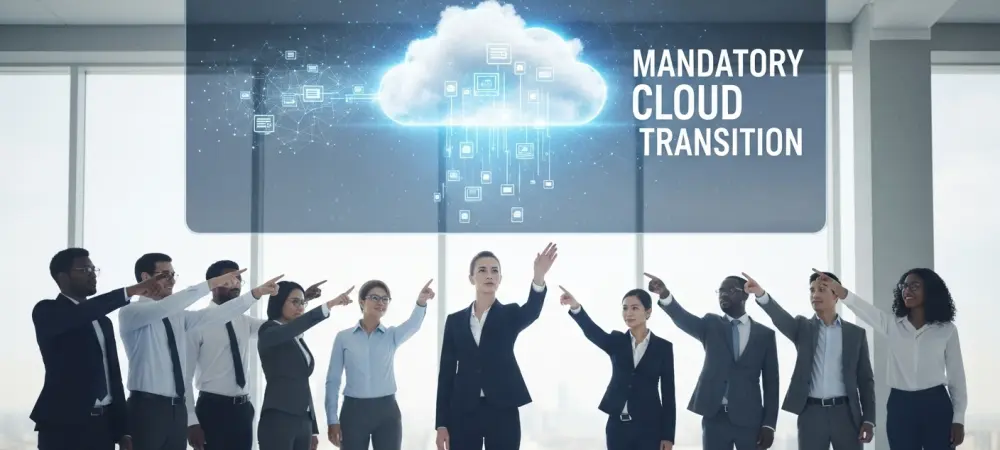
The ground beneath the feet of enterprise technology leaders is shifting, not from a gradual erosion of choice, but from a decisive, vendor-driven push that is fundamentally reshaping corporate IT strategy. For years, the move to the cloud was presented as an option, a strategic decision weighed by businesses based on their unique needs for security, performance, and control. That era is definitively over. The balance of power has tipped, and many organizations are now discovering that their most critical software is on a one-way track to the cloud, with or without their immediate consent. This isn’t a transition guided by customer demand; it’s a mandate dictated by vendor economics, and it forces a critical reevaluation of risk, cost, and digital autonomy.
This industry-wide pivot was recently crystallized by the actions of Epicor, a major provider of enterprise resource planning (ERP) software for the manufacturing and distribution sectors. The company announced a formal sunset period for its on-premises versions of key products like Kinetic and Prophet 21. The message was unambiguous: to access future innovation, features, and long-term support, customers must migrate to the company’s multi-tenant software-as-a-service (SaaS) platform, hosted on Microsoft Azure. This move by a respected industry player serves as a stark case study for a much broader trend, where the choice of deployment is no longer a choice at all.
The Great SaaS Squeeze
The vendor-driven push toward a SaaS-only model is rooted in a compelling business case for the software companies themselves. Maintaining and supporting multiple on-premises versions of a complex application is an immense drain on resources. Each customer can have a unique configuration, a different update schedule, and a distinct hardware environment, creating an exponential support challenge. Centralizing all customers on a single, cloud-native codebase allows vendors to slash these operational costs, streamline security patching, and drastically simplify the support matrix.
Furthermore, this unified model acts as an accelerator for innovation. Pushing out new features, bug fixes, or advanced AI-powered analytics becomes a seamless, centrally managed process rather than a complicated rollout across thousands of disparate customer sites. For vendors like Epicor, the transition to a recurring revenue model built on subscriptions is the ultimate goal. It provides predictable income, higher business valuations, and a more direct relationship with the end-user. From a vendor’s perspective, mandating the cloud is not just a strategic preference; it is an economic and operational imperative.
A Tale of Two Perspectives
While the logic for vendors is clear, the reality for their customers is often fraught with anxiety and unforeseen complications. The forced migration to the cloud represents a significant loss of control. Organizations that deliberately chose on-premises solutions for specific reasons—such as stringent data sovereignty requirements, the need for ultra-low latency in manufacturing processes, or deep integrations with legacy systems—are now being told that their carefully constructed architecture is obsolete. The decision-making power over their core infrastructure is effectively transferred to the vendor.
This power shift introduces a new set of dependencies and risks that many businesses are unprepared for. They are now reliant on the vendor’s chosen cloud provider, its security protocols, and its schedule for maintenance and updates. The hidden costs of this transition extend far beyond subscription fees. Customers must now grapple with potential performance issues if the SaaS data center is geographically distant, navigate new compliance landscapes, and accept that they can no longer self-manage an outage or roll back a problematic update. What constitutes efficiency for the vendor often translates directly into new operational hurdles for the buyer.
An Architect’s View on Forced Migrations
From the front lines of technology consulting, this trend is a recurring source of client distress. For one long-time manufacturing client, for whom ERP reliability is the absolute bedrock of their operation, Epicor’s mandate was not seen as a step toward modernization but as an unwelcome disruption. Their concerns were not theoretical. Major cloud outages in recent years have served as powerful reminders that SaaS is not a magical cure for risk. When a hyperscale cloud provider experiences downtime, it can paralyze thousands of businesses simultaneously, leaving individual customers with no recourse but to wait.
This reality challenges the vendor narrative that the cloud is inherently more reliable and secure. While it may be true for a vendor managing a unified platform, it concentrates risk for the customer. The ability to control one’s own environment, isolate it from external threats, and manage recovery independently is a strategic asset that is surrendered in a mandatory SaaS model. The anxiety felt by businesses is therefore not a resistance to change but a rational response to the introduction of new, and in some ways greater, systemic risks into their critical operations.
A Strategic Playbook for the Mandated Move
When a core software provider eliminates its on-premises option, enterprises must shift from a passive consumer to an active negotiator and strategist. The first step is to scrutinize compliance and data residency with exacting detail. Organizations must demand contractual transparency about where their data will be stored and processed. They need to ask if the vendor’s environment supports sovereign cloud options for regulated industries and get explicit confirmation that all compliance obligations will be met, with defined penalties for failure.
Second, performance and latency must be rigorously tested before any migration. Averages provided by the vendor are insufficient; businesses should conduct real-world benchmarks that simulate their specific workloads from their actual user locations. For operations that depend on near-instantaneous data processing, such as automated shop-floor systems, even minor delays can cause significant disruption. Demanding performance-based service-level agreements (SLAs) is no longer a luxury but a necessity.
The new support model also requires thorough evaluation. While centralized support can be efficient, it removes the customer’s ability to perform immediate triage. Key questions must be answered: What are the guaranteed response times for critical incidents? What escalation paths are available when an upgrade breaks a vital integration? How does the vendor handle disaster recovery, and what are the stated recovery time objectives (RTOs) and recovery point objectives (RPOs)? These terms must be clearly defined in the contract.
Finally, every organization needs an exit strategy. If a vendor’s SaaS offering cannot meet essential requirements, exploring alternatives is critical. These could include managed private clouds, solutions from competing providers, or even open-source platforms. Even for those proceeding with the migration, it is vital to negotiate contractual guarantees that ensure data can be retrieved in a standard, usable format. This preserves the option to move to a different provider in the future, preventing a complete lock-in to a single vendor’s ecosystem.
The industry-wide mandate toward the cloud, exemplified by vendors like Epicor, marked a definitive turning point. It was a bet that the allure of simplicity and SaaS-enabled innovation would outweigh customer concerns about control and concentrated risk. For the businesses caught in this transition, the new reality demanded a heightened level of diligence, from intense contract negotiations to a newfound willingness to challenge their long-standing technology partners. The success of this forced evolution went not to those who moved fastest, but to those who were best prepared to defend their operational integrity in a world where choice was no longer a given.