

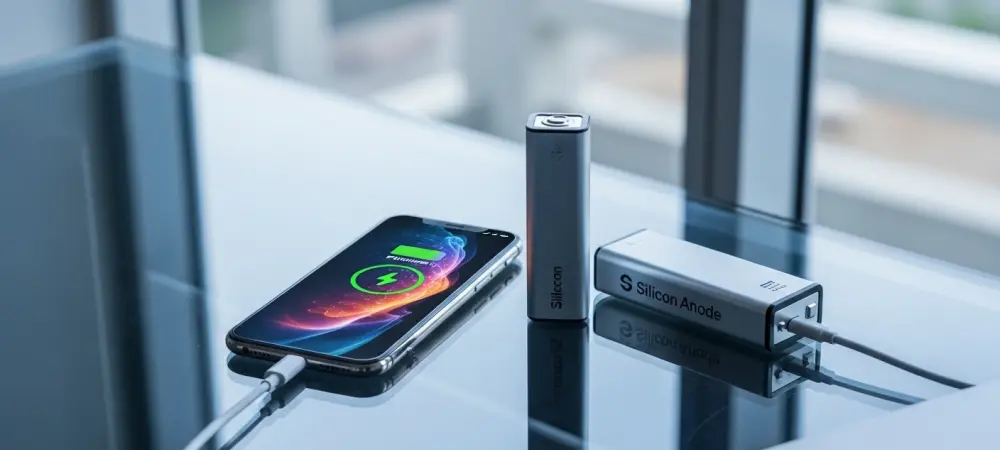
The relentless advancement of smartphone technology often outpaces the evolution of the batteries that power them, creating a critical bottleneck that new innovations are only now beginning to address. As our devices demand more energy for brighter screens and more powerful processors, the search for a superior power source has led to a pivotal confrontation between the established champion and a promising new contender.
An Introduction to Smartphone Power Technologies
For years, the graphite-anode Lithium-Ion (Li-ion) battery has been the undisputed industry standard, powering nearly every mobile device. It is a mature, reliable technology that has served the industry well. However, its developmental plateau has opened the door for high-performance alternatives, most notably the Silicon Anode battery. This emerging technology promises a significant leap in energy storage, as demonstrated by its implementation in advanced devices like the Vivo X200T.
This shift is not merely an incremental upgrade; it is a necessary evolution. The insatiable energy demands of modern flagship smartphones, with their sophisticated processors, high-refresh-rate displays, and complex camera systems, require a fundamental advancement in battery technology. The difference between a traditional Li-ion cell and a next-generation Silicon Anode battery directly impacts how long a user can enjoy their device on a single charge, making it a cornerstone of the user experience.
Core Technology Showdown: A Feature-by-Feature Analysis
The practical differences between these two chemistries become clear when examining their performance metrics. The Vivo X200T, with its cutting-edge power cell, serves as an excellent benchmark to illustrate the tangible advantages that Silicon Anode technology offers in energy capacity, charging speed, and long-term resilience compared to its conventional counterpart.
Energy Density and Physical Capacity
The most significant advantage of a Silicon Anode battery lies in its superior energy density. Silicon can theoretically hold over ten times more lithium ions than graphite, allowing manufacturers to pack more power into the same physical space. This is showcased perfectly in the Vivo X200T, which features a 6,200mAh semi-solid state battery, a capacity that comfortably exceeds the typical 5,000mAh ceiling found in many flagship phones using traditional Li-ion batteries.
In contrast, conventional Lithium-Ion technology is approaching its theoretical limit for energy density with graphite anodes. Consequently, achieving a higher capacity often requires a physically larger and heavier battery cell, forcing manufacturers into a difficult compromise between device longevity and sleek, lightweight design. This innovation plateau has been a major hurdle in mobile device engineering.
Charging Performance and Heat Management
Silicon Anode batteries are also engineered to handle faster charging protocols more effectively. The Vivo X200T demonstrates this with its impressive 90W wired and 40W wireless charging speeds. To combat the battery degradation that can result from such rapid power delivery, it incorporates innovative features like bypass charging, which powers the phone directly during intensive tasks like gaming, thereby reducing heat buildup and preserving the battery’s health.
While modern Lithium-Ion batteries are certainly capable of fast charging, managing the resulting heat remains a primary concern. The heat generated during rapid charging cycles is a leading cause of long-term capacity loss. Smartphone manufacturers often rely on complex internal cooling systems and sophisticated software optimizations to mitigate this degradation, a challenge that Silicon Anode designs aim to solve more directly.
Longevity and Cycle Stability
Historically, the Achilles’ heel of silicon anodes has been their physical instability. During charging, silicon expands and shrinks dramatically, which can cause the anode material to crack and lose its electrical connection, leading to rapid performance decay. The semi-solid state design implemented in the Vivo X200T is specifically engineered to mitigate this swelling issue, aiming for an operational lifespan that surpasses earlier silicon concepts.
Lithium-Ion technology, being mature and well-understood, offers predictable degradation patterns. It is a stable and reliable choice, but it is not immune to aging. Over hundreds of charge and discharge cycles, every conventional Li-ion battery inevitably loses a portion of its original capacity. This is a known limitation that manufacturers have managed through software but have not been able to eliminate at the chemical level.
Technical Challenges and Market Adoption Hurdles
Despite its promise, the path to widespread adoption for Silicon Anode technology is paved with significant challenges. The primary technical hurdle is managing the massive volume expansion—up to 300%—that silicon undergoes during charging. This physical stress can pulverize the anode, severely shortening the battery’s life. Furthermore, the complex manufacturing processes and higher material costs have largely confined this technology to premium devices like the Vivo X200T.
Conventional Lithium-Ion batteries face a different set of obstacles. Their main limitation is the ceiling on energy density, which makes substantial gains in battery life difficult without increasing the phone’s size and weight. Additionally, the industry’s reliance on materials like cobalt raises ongoing supply chain and ethical concerns. While safety has improved significantly, the inherent risk of thermal runaway associated with liquid electrolytes, though rare, still exists.
Conclusion: The Verdict on Next-Generation Power
The comparison reveals a clear technological trajectory. Silicon Anode batteries, as exemplified by the power cell in the Vivo X200T, offer a definitive advantage in energy density, translating to longer device usage and greater capacity within a standard form factor. In contrast, traditional Lithium-Ion remains the proven, cost-effective, and dependable industry standard that continues to power the majority of devices on the market.
This distinction leads to practical recommendations for consumers. For power users, tech enthusiasts, and anyone who prioritizes maximum battery life and cutting-edge features, a smartphone equipped with a Silicon Anode battery like the Vivo X200T presents a superior choice. For mainstream or budget-conscious buyers, devices with traditional Lithium-Ion batteries continue to offer excellent and reliable performance, representing a mature and more affordable technology.
Looking ahead, while Lithium-Ion technology will undoubtedly continue its reign in the mass market for the near future, the advancements seen in Silicon Anode batteries signal a clear and promising direction. This emerging technology is steadily paving the way to become the new standard for high-performance electronics, promising a future where our devices last longer and charge faster than ever before.