

The Foldable Market Braces for a Showdown
The foldable smartphone market, long pioneered and dominated by Samsung, is on the cusp of a seismic shift. Recent reports suggest the company is preparing to launch a new device, tentatively dubbed the Galaxy Z ‘Wide Fold’, which abandons the tall, narrow design of its predecessors for a more compact and wider form factor. This isn’t just another product iteration; it’s a calculated, preemptive strike aimed directly at a ghost competitor: Apple’s rumored iPhone Fold. This article will explore the strategy behind Samsung’s pivot, analyze the industry-wide trend toward pocketability, and evaluate whether this new approach is enough to secure Samsung’s leadership against the inevitable arrival of a foldable from Cupertino.
From Novelty to Mainstream: The Evolution of Samsung’s Foldable Strategy
To understand the significance of the ‘Wide Fold’, one must look at Samsung’s journey. The original Galaxy Fold was a marvel of engineering that introduced a new category, but its design came with compromises, particularly its narrow cover screen. Subsequent Galaxy Z Fold models refined this formula, establishing the “book-style” foldable as a premium productivity device. While commercially successful, this tall and thin design has often been criticized for its awkward one-handed usability when closed, feeling more like a remote control than a conventional smartphone. This consistent feedback has created a clear opening in the market for a foldable that prioritizes a more traditional and comfortable front-screen experience, setting the stage for a necessary evolution in design philosophy.
A Strategic Pivot to a Wider Form Factor
The ‘Wide Fold’ Gambit: A Closer Look at the New Design
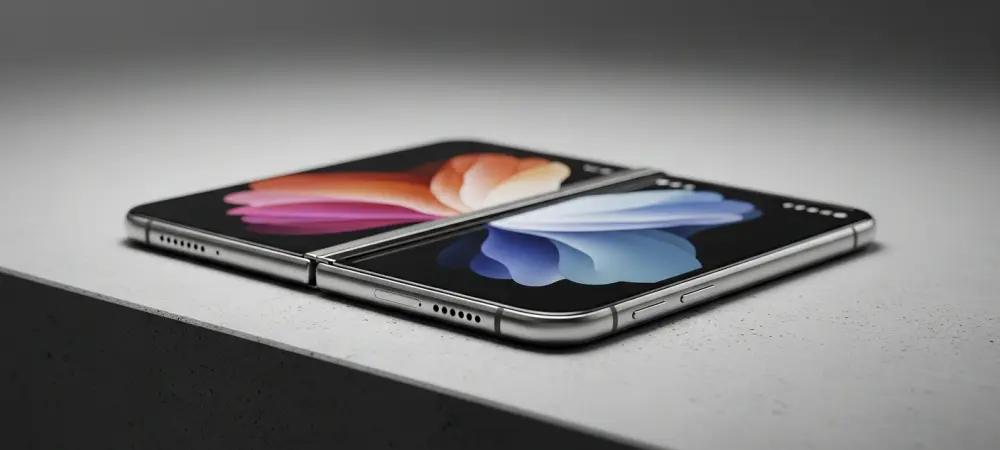
The Galaxy Z ‘Wide Fold’ represents a fundamental rethinking of what a book-style foldable should be. According to industry sources, the device is slated to feature a 5.4-inch cover display and a 7.6-inch internal screen with a more traditional 4:3 aspect ratio. This design makes the device significantly wider and shorter when closed, creating a user experience much closer to a standard smartphone. Samsung’s confidence in this new direction is underscored by its reported initial production target of around 1 million units. While less than half the volume of its primary Z Fold and Z Flip flagships, this figure indicates a serious market entry, positioning the ‘Wide Fold’ not as a niche experiment, but as a core part of its future foldable lineup.
A Market in Motion: The Industry-Wide Pivot to Pocketability
Samsung is not innovating in a vacuum. The move toward a wider, more pocketable form factor reflects a broader industry trend. Competitors like Oppo, with its Find N series, have already demonstrated the appeal of a more compact book-style foldable that feels like a familiar smartphone when shut. The ‘Wide Fold’ appears to be Samsung’s direct answer to this emerging preference, acknowledging that the initial tall-and-narrow design may not be the definitive form factor for all users. By developing a device that aligns with this new dynamic, Samsung and other Android manufacturers are collectively preparing the market for the next phase of foldable competition, one where everyday ergonomics are just as important as the large internal display.
Preemptive Strike: Outmaneuvering Apple Before the First Shot
The most critical factor driving Samsung’s strategy is the looming presence of Apple. Rumors consistently suggest that Apple’s first foldable will also adopt a wider, more compact design, similar to the one Samsung is now pursuing with the ‘Wide Fold’. Samsung’s move can therefore be seen as a brilliant preemptive strike. By launching a refined, wider foldable first, the company aims to define the “ideal” form factor in the minds of consumers before Apple even enters the ring. This strategy attempts to neutralize one of Apple’s key advantages—its ability to enter a mature market with a highly polished product—by setting a new standard on its own terms and forcing Apple to compete on a field that Samsung has already cultivated.
The Future of Foldables: A Two-Pronged Market
The introduction of the ‘Wide Fold’ could signal the beginning of a market split. We are likely to see the book-style foldable category bifurcate into two distinct product lines: large, productivity-focused devices like the traditional Galaxy Z Fold, and smaller, lifestyle-oriented models like the ‘Wide Fold’ and the anticipated iPhone Fold. This diversification will broaden the appeal of foldables to a wider audience, catering to different needs and preferences. As Apple’s entry legitimizes the category for a new wave of consumers, the competition will intensify, forcing manufacturers to innovate not just on hinge technology and screen durability, but on creating distinct user experiences tailored to these diverging form factors.
Defining the Next Standard
Samsung’s plan to launch a ‘Wide Fold’ is a multi-layered strategic maneuver. It directly addresses the primary usability critique of its existing Fold lineup, aligns with a clear industry trend toward more compact designs, and, most importantly, serves as a direct challenge to Apple’s anticipated entry into the market. For consumers, this signals an exciting evolution where foldable phones become less about the novelty of the fold and more about delivering a superior, uncompromising user experience in both open and closed states. The key takeaway is that the foldable war is moving beyond engineering prowess and into the realm of ergonomic philosophy.
The Battle for the Perfect Form Factor Has Begun
In conclusion, Samsung’s ‘Wide Fold’ is more than just a new phone; it’s a declaration of intent. By proactively shifting its design strategy, Samsung is not waiting to react to Apple but is actively shaping the future of the foldable landscape. The question is no longer if foldable phones are the future, but which form factor will reign supreme. While an iPhone Fold will undoubtedly be a formidable competitor, Samsung’s aggressive, forward-thinking approach with the ‘Wide Fold’ may give it the crucial head start it needs to defend its throne in the category it created. The stage is set for a fascinating battle, and the winner will be the one who best convinces consumers what a foldable phone should truly feel like.