

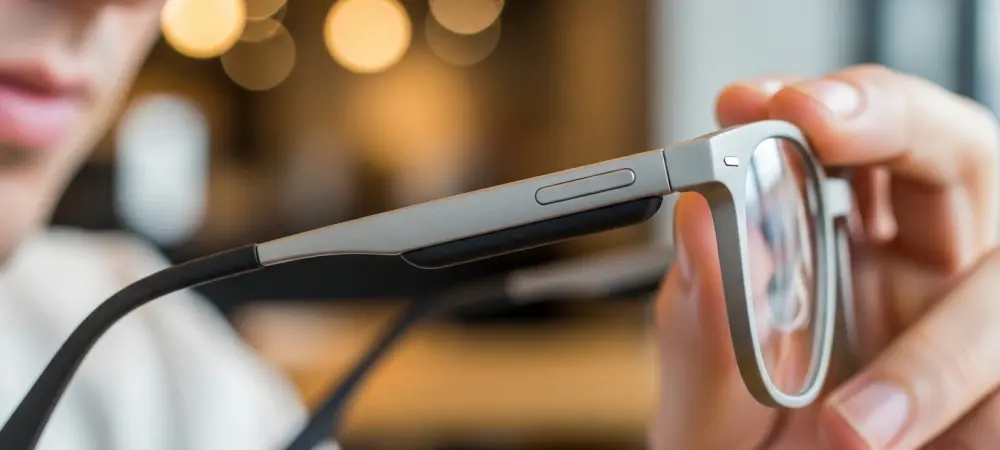
The relentless pursuit of convenience in personal technology has finally turned its attention toward the one accessory many people cannot live without: their prescription glasses, merging them with the open-ear audio that has become increasingly popular for staying aware of one’s surroundings.
A Two-in-One Solution for Daily Wear
This review assesses the Xiaomi Mijia Smart Audio Glasses as a practical accessory that skillfully combines prescription-ready eyewear with an integrated open-ear audio system. The central question is whether this €199 device serves as a worthwhile investment for daily glasses wearers looking to streamline their tech and replace separate earbuds with a single, unified solution. The evaluation prioritizes its performance as a functional audio accessory over any pretense of being a feature-rich “smart” device with augmented reality or other advanced capabilities.
The objective here is to determine if the execution of this hybrid concept justifies its price tag and the minor compromises inherent in such a design. Rather than competing with high-fidelity headphones or advanced smart glasses, Xiaomi’s offering aims for a specific niche: the user who values a minimalist setup for casual listening and calls throughout the day. Its success, therefore, hinges on how well it integrates these two essential functions into a cohesive and comfortable experience.
Unpacking the Design and Core Features
Upon first glance, the glasses impress with a premium titanium frame that contributes to a high-quality build and feel, weighing in at just over 34 grams. The design remains sleek and understated, featuring slim 5mm temples that house the electronic components without adding excessive bulk. Key physical attributes include swappable lenses that come standard with 25% blue light blocking and are ready to be fitted with prescription lenses by an optician. Furthermore, an IP54 rating provides welcome resistance against dust and light splashes, making them a durable choice for daily wear.
Beyond the core hardware, the glasses incorporate several unique functionalities. A built-in audio recording function, activated via a long press on the temple, allows for capturing ambient sounds or phone calls directly from the device. Wear-detection sensors offer another layer of convenience, automatically playing or pausing media when the glasses are put on or taken off. These features are managed through reliable and responsive touch controls located on both temples, providing an intuitive user interface. The package is completed with a faux leather carrying pouch, a microfiber cleaning cloth, and a proprietary magnetic charger that cleverly connects to both temples and consolidates into a single USB-C port for charging.
Performance in Everyday Use
In practice, the audio performance is best described as adequate for its intended purpose. The open-ear speakers deliver clear sound for podcasts, audiobooks, and phone calls in quiet to moderately noisy environments. However, for music lovers, the sound quality will likely be underwhelming, as it lacks the deep bass and dynamic richness required for high-fidelity listening. The volume is sufficient for personal use but may struggle to overcome loud ambient noise.
Connectivity, on the other hand, is a strong point. Utilizing Bluetooth 5.4, the glasses maintain a solid and stable connection and conveniently support dual device pairing, allowing for seamless switching between a laptop and a smartphone. Comfort is generally good for all-day use, although the glasses are noticeably heavier than standard prescription frames, a trade-off for the integrated technology. The companion Xiaomi Glasses app is functional but basic, offering essential customization for gesture controls and a place to access audio recordings. Finally, battery life meets expectations, delivering up to 13 hours of playback on a single charge, with a full recharge taking approximately one hour.
Key Strengths and Weaknesses
The device’s primary advantage lies in its excellent build quality and stylish, minimalist design, which do not scream “tech gadget.” This subtlety, combined with the sheer convenience of having audio readily available without blocking the ears, makes for a compelling user experience. The unique audio recording function and reliable dual-device connectivity further elevate its utility, offering practical features that are genuinely useful in day-to-day scenarios.
However, the glasses are not without their disadvantages. The most significant is the mediocre audio performance, which is simply not suitable for audiophiles or anyone seeking an immersive music experience. While comfortable, the added weight compared to traditional eyewear is a factor to consider. Moreover, the “privacy mode,” intended to reduce sound leakage, is of questionable effectiveness at higher volumes, meaning those nearby might overhear your calls or music. Lastly, the product lacks any advanced smart features like a built-in camera or display, firmly positioning it as an audio accessory rather than a next-generation smart device.
Summary and Final Recommendation
The Xiaomi Mijia Smart Audio Glasses are a well-executed and practical accessory that successfully achieves the core purpose of integrating everyday eyewear with convenient audio. They represent a focused and mature approach to the smart glasses category, prioritizing function and form over a long list of experimental features.
While they do not compete with high-end earbuds on sound quality or with other smart glasses on advanced capabilities, their value is found elsewhere. It lies in their premium construction, thoughtful design, and the seamless convenience they offer. These glasses are recommended for individuals who prioritize a minimalist setup and situational awareness over cutting-edge technology and superior audio fidelity. They are a polished solution for a specific need.
Is This the Right Accessory for You
This product is ideally suited for daily glasses wearers who are also casual audio listeners. This includes professionals who take frequent calls and want their hands and ears free, or individuals who enjoy listening to podcasts and background music during their commute or at their desk without being isolated from their surroundings.
Before making a purchase, it is crucial to manage expectations. You are investing in a convenience-oriented device, not a high-performance audio system or a feature-packed smart gadget. The added weight compared to standard glasses and the reliance on a proprietary charger are minor but important factors to take into account for long-term daily use. If these compromises seem reasonable for the benefit of a simplified, two-in-one accessory, then these glasses could be an excellent addition to your daily carry.