

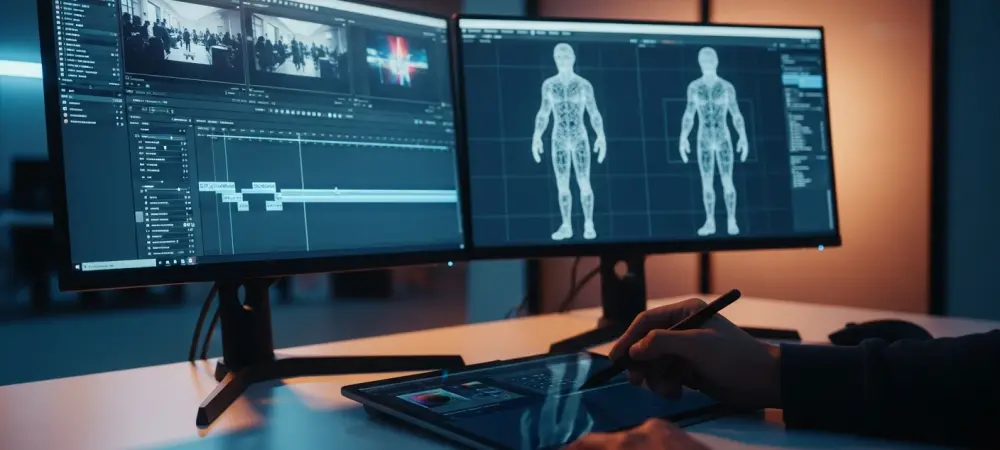
The rapid progression of generative artificial intelligence has fundamentally altered the expectations of digital creators who now demand more than just static aesthetic outputs. As the industry moves toward 2027, the focus has pivoted from mere image generation to the complex orchestration of temporal and spatial consistency within high-fidelity video. Seedance 2.0 emerges in this landscape not merely as an incremental update, but as a sophisticated multimodal engine designed to bridge the gap between amateur prompting and professional-grade cinematography.
This technology represents a shift in the broader technological landscape where AI transitions from producing simple clips to facilitating complex, high-fidelity storytelling. By merging text, imagery, and audio into cohesive cinematic outputs, the system addresses the fragmentation that previously plagued generative media. The result is a platform that prioritizes the director’s intent, ensuring that the final render aligns with a specific creative vision rather than a randomized interpretation of a text string.
Introduction to Multimodal AI Video Generation
The core philosophy of Seedance 2.0 centers on the integration of disparate data streams to create a unified visual narrative. In earlier iterations of generative video, users often struggled with “prompt drift,” where the AI would lose the essence of a character or setting as the video progressed. This system mitigates such issues by employing a multimodal framework that processes text, images, and audio as a single, interconnected dataset, allowing the model to understand the relationship between a character’s appearance and the mood suggested by a soundtrack.
This evolution is particularly relevant as the industry moves away from the novelty phase of AI and toward functional utility. Professionals now require tools that can handle the nuances of lighting, depth of field, and rhythmic pacing. Seedance 2.0 positions itself at the center of this shift, offering a more controlled environment where the user acts as a conductor of various AI sub-systems, rather than just a passive recipient of generated content.
Core Features and Technical Capabilities
Multimodal Input Architecture
The system’s ability to process text, images, and video references simultaneously represents its most significant technical achievement. By using a unified architecture, the generator can extract the structural data from an uploaded image and apply the motion dynamics described in a text prompt, while using a video reference to dictate the specific “vibe” or camera movement. This approach provides a level of precision that was previously unattainable, as it allows for the precise replication of brand assets or specific actor likenesses without the need for extensive fine-tuning.
This unified input method enhances creative control by allowing users to provide “anchor points” for the AI. For instance, an architect might upload a static render of a building and use a text prompt to simulate a drone flyover at sunset. The architecture ensures that the structural integrity of the building remains intact throughout the motion, preventing the warping and morphing that often characterize lower-tier video models.
Native Audio-Visual Synchronization
Beyond visual fidelity, the platform introduces a sophisticated technical layer where uploaded soundtracks directly influence the motion of the generated scene. This is not merely an overlay of sound on top of video; instead, the AI analyzes the rhythm, frequency, and emotional cadence of the audio to guide the intensity of movements and the timing of cuts. If a track features a heavy bass drop, the visual engine can trigger a specific camera shake or a change in lighting intensity to match the beat.
Furthermore, the lip-syncing capabilities are integrated directly into this synchronization engine. By processing the phonemes in an audio file, the system can animate a character’s facial expressions with a high degree of accuracy, ensuring that the visual performance feels grounded and believable. This level of synchronization reduces the time spent in post-production, as the foundational timing is baked into the initial generation.
Narrative Continuity and Spatial Logic
Maintaining character identity and lighting consistency across multiple shots has long been a challenge for generative models. Seedance 2.0 addresses this through a robust spatial logic system that treats the generated environment as a three-dimensional space rather than a series of flat frames. This allows the camera to move around a character while maintaining consistent shadows and textures, which is essential for professional-grade storytelling.
By preserving these elements across different clips, creators can build a coherent narrative without the jarring transitions that typically break immersion. This continuity is achieved by the model’s ability to “remember” the spatial coordinates and material properties of objects within a scene. Consequently, a user can generate a wide shot of a room and then a close-up of a character within that same room, with the lighting and background details remaining perfectly aligned.
Emerging Trends in Generative Media
The current trend in AI development is moving rapidly toward “directorial control” tools that offer more than just a single generation button. There is an increasing industry demand for models that allow users to manipulate specific variables, such as camera focal length or the intensity of a character’s movement. Seedance 2.0 aligns with this trend by providing a more granular interface that caters to users who understand traditional cinematography.
Moreover, the industry is seeing a shift toward the synchronization of motion and sound as a primary metric for quality. As viewers become more accustomed to AI-generated content, their tolerance for desynchronized audio or unnatural motion decreases. This has led to a technological arms race where the most successful models are those that can flawlessly integrate multiple sensory inputs to create a seamless experience.
Real-World Applications and Industry Use Cases
Marketing teams have been among the first to adopt Seedance 2.0 for creating cinematic promos and rapid product showcases. The ability to turn a single product photograph into a high-end commercial teaser in minutes has drastically reduced the cost of entry for small businesses. These teams can iterate on different creative directions without the overhead of a physical film shoot, allowing for a more agile approach to digital advertising.
In the realm of social media, creators use the platform to produce immersive content that stands out in crowded feeds. The technology allows for the deployment of immersive instructional designs in the educational sector, where complex concepts are visualized through detailed animations. For example, a history lesson can be enhanced by generating a historically accurate flyover of an ancient city, providing students with a visual context that a textbook simply cannot provide.
Technical Hurdles and Industry Challenges
Despite its advancements, the technology faces significant hurdles, primarily concerning the immense computational power required for high-fidelity rendering. Generating 4K video with consistent motion requires substantial GPU resources, which can lead to high costs for both the developer and the end-user. There is also an ongoing discussion regarding the ethics of content rights, as these models are trained on vast datasets that often include copyrighted material.
Developers are also struggling to balance the depth of professional tools with the simplicity required for a general user interface. While professionals want more control, casual users can be overwhelmed by a complex suite of settings. Finding a middle ground that maintains professional power while remaining accessible is a challenge that continues to shape the evolution of the platform’s user experience.
Future: AI-Driven Cinematography
The outlook for Seedance 2.0 suggests a movement toward longer-form video generation and deeper integration with traditional non-linear editing software. As the models become more efficient, we can expect the ability to generate entire scenes or short films with a single set of instructions. This will likely involve more sophisticated “agentic” AI that can take a script and automatically handle the breakdown of shots, lighting setups, and character blocking.
The long-term impact of this technology will be the radical lowering of the barrier to entry for high-end video production. When a single individual can produce visuals that rival a traditional studio, the definition of a “filmmaker” will change. This democratization will likely lead to a surge in niche content and experimental storytelling, as the cost of failure becomes virtually non-existent.
Final Assessment of Seedance 2.0
The analysis of Seedance 2.0 revealed a platform that successfully balanced professional utility with creative accessibility. It demonstrated that multimodal integration was not just a luxury, but a necessity for the next generation of generative media. By prioritizing spatial logic and audio-visual synchronization, the developers provided a tool that addressed the core frustrations of the previous era of AI video.
The performance metrics indicated that while computational demands remained high, the quality of the output justified the resource expenditure for serious creators. Ultimately, Seedance 2.0 established itself as a leader in the transition toward intentional, director-led AI cinematography. The technology proved that the future of media production would be defined by the synergy between human creative vision and the automated precision of multimodal models.