

Imagine a manufacturing floor where robotic systems seamlessly swap tools in mere seconds, adapt to misalignments without a hitch, and deliver precise force feedback for delicate assembly tasks—all while enduring the harshest industrial conditions. This is no longer a distant vision but a reality shaped by advancements in end-of-arm tooling. Schunk, a leader in automation solutions, has crafted a modular suite of tools that addresses the pressing demands of modern production lines for flexibility and efficiency. This review dives into the intricacies of this innovative portfolio, exploring its standout components, real-world impact, and potential to redefine industrial automation.
Overview of the Modular Tooling Suite
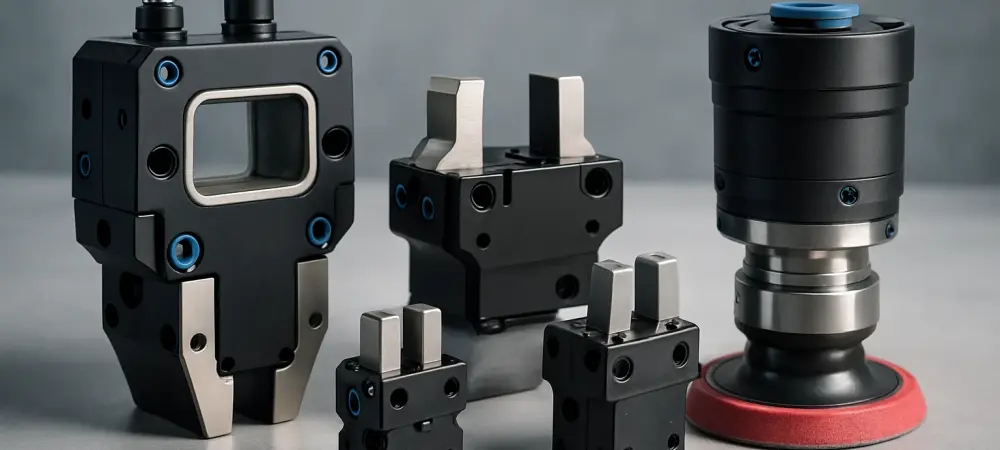
The Schunk Robot PLUS Portfolio stands as a comprehensive collection of end-of-arm tooling solutions tailored for robotic automation in manufacturing. Comprising automatic tool changers, manual change systems, compensation units, and force/torque sensors, the portfolio is engineered to meet diverse operational needs. Its modular design allows for customization, enabling manufacturers to configure systems that align with specific production requirements, whether for heavy-duty tasks or intricate assembly processes.
At the core of this suite lies a commitment to precision, durability, and adaptability. Each component is designed to minimize downtime and maintain consistency, addressing the critical need for reliable automation in high-throughput environments. As industries increasingly turn to robotics to boost productivity, Schunk’s offerings provide a robust foundation for scalable and efficient systems, positioning them as a vital player in the automation landscape.
Key Features and Technical Specifications
CPS and CPB Tool Changers: Precision at Speed
Among the flagship components are the CPS and CPB automatic tool changers, which excel in delivering rapid tool swaps with unparalleled accuracy. Boasting repeatability between 0.01 mm and 0.015 mm, these changers ensure that frequent tool changes do not compromise positional precision. This capability proves essential in fast-paced production cells where every second counts.
Built for resilience, both models feature hardened steel components and high IP ratings—IP54 when uncoupled and IP64 when coupled—making them suitable for harsh industrial settings with dust and coolant exposure. The CPB model further integrates VERO S zero-point clamping technology, originally designed for machine tables, to offer industrial-grade strength in robotic applications, reducing the risk of errors over extended cycles. Their ability to minimize downtime while maintaining such tight tolerances highlights their value in optimizing workflow. For manufacturers aiming to enhance throughput without sacrificing quality, these tool changers represent a significant leap forward in automation efficiency.
CMS Manual Change System and AGM Compensation Unit: Flexibility in Action
Complementing the automatic changers, the CMS manual change system offers a practical solution for scenarios requiring human intervention. With a lever-based locking mechanism, it enables quick tool swaps without additional equipment, supporting payloads up to 58 kg. Integrated safety sensors monitor locking status, ensuring reliability during light handling or assembly tasks.
The AGM compensation unit tackles the challenge of misalignment in complex robotic operations. Available in 23 size variants, it provides tolerance compensation across all directions, using spring and air cartridges to maintain stability even in non-standard positions. This adaptability shines in applications like bin picking or joining processes, where precise alignment is often difficult to achieve.
Together, these components broaden the portfolio’s applicability, catering to diverse tasks while reducing operational interruptions. Their design prioritizes ease of use and stability, empowering manufacturers to handle varied workloads with confidence.
FTS Force/Torque Sensors: Intelligence for Sensitive Tasks
For applications demanding precise feedback, the FTS force/torque sensors deliver critical data on force and torque, enabling tasks such as press-fit assembly and quality control. With an IP67 rating, these sensors are built to withstand challenging conditions, including exposure to dust and liquids, ensuring consistent performance on the shop floor.
Factory-calibrated with detailed certificates, the sensors support data-driven automation by providing high-resolution feedback for process monitoring and safety in collaborative setups. Their role is particularly notable in e-mobility applications, such as battery assembly, where delicate handling is paramount.
By integrating such intelligent components, Schunk addresses the growing need for robots that can perform sensitive operations with accuracy. This focus on real-time data enhances both operational safety and product quality, marking a significant trend in automation technology.
Innovations Driving Automation Forward
Schunk’s portfolio aligns seamlessly with industry shifts toward more sophisticated automation systems capable of handling intricate, high-frequency tasks. The emphasis on rapid tool changes and error compensation reflects a broader demand for solutions that keep pace with dynamic production schedules. This responsiveness ensures that manufacturers can maintain efficiency even as operational complexity increases.
A notable innovation is the incorporation of proven technologies like the VERO S clamping system into robotic tooling, as seen in the CPB changer. This adaptation brings a level of robustness typically reserved for stationary machinery to mobile robotic applications, setting a new standard for durability. Such advancements demonstrate Schunk’s ability to blend established engineering with cutting-edge needs.
Additionally, the integration of intelligent sensors like the FTS series points to a future where data-driven decision-making becomes central to automation. As manufacturers seek smarter systems to meet evolving standards, Schunk’s forward-thinking approach positions its tools as essential assets in achieving operational excellence.
Real-World Impact Across Industries
The practical applications of this portfolio span a wide array of sectors, including automotive, e-mobility, and general manufacturing. In automotive production, CPS and CPB tool changers have proven instrumental in high-throughput cells, enabling swift transitions between tasks like welding and material handling, thus streamlining workflows.
In lighter assembly or bin-picking scenarios, the CMS manual system and AGM compensation unit have enhanced flexibility, allowing robots to adapt to varying conditions without halting operations. Meanwhile, FTS sensors have found a niche in e-mobility, particularly in battery assembly and connector seating, where their precise feedback ensures defect-free outputs. Case studies from manufacturing floors reveal measurable improvements in efficiency and quality control. Reduced downtime and enhanced precision have allowed companies to meet tighter deadlines and stricter standards, underscoring the tangible benefits of Schunk’s solutions in real-world settings.
Challenges in Implementation
Despite its strengths, deploying this portfolio is not without hurdles. Initial setup can pose complexities for integrators, especially when aligning components with existing robotic systems that may lack full compatibility. This integration challenge requires careful planning to ensure seamless operation.
Environmental constraints also warrant consideration. While high IP ratings provide substantial protection, extreme conditions beyond the tools’ design scope—such as prolonged exposure to corrosive substances—could impact performance. Manufacturers must assess their specific environments to mitigate such risks.
Schunk continues to address these limitations through ongoing development, focusing on expanding compatibility and simplifying integration processes. Efforts to tailor solutions for niche applications suggest a commitment to overcoming current barriers and broadening the portfolio’s reach.
Future Prospects in Robotic Tooling
Looking ahead, the portfolio holds promise for further evolution, with potential expansions in component variants to cater to even more specialized tasks. Enhanced sensor capabilities could also emerge, offering deeper insights into robotic performance and enabling more autonomous operations over the next few years.
Emerging trends, such as the rising adoption of collaborative robots, present opportunities for Schunk to adapt its tools for safer human-robot interactions. Developing lightweight, intuitive components could position the company at the forefront of this growing segment, aligning with Industry 4.0 objectives.
The long-term impact on manufacturing efficiency and scalability remains significant. As automation becomes increasingly integral to production, Schunk’s ability to innovate will likely play a pivotal role in shaping smarter, more resilient industrial ecosystems.
Final Thoughts and Next Steps
Reflecting on the evaluation, it becomes clear that Schunk’s Robot PLUS Portfolio has set a high benchmark in end-of-arm tooling with its blend of modularity, precision, and durability. Each component has delivered on its promise to enhance automation, proving instrumental in tackling modern manufacturing challenges. For manufacturers and integrators, the next step involves assessing specific operational needs to select the most suitable tools from this suite. Exploring pilot implementations could help validate compatibility and performance under unique conditions. Additionally, staying attuned to Schunk’s future updates on compatibility enhancements promises to ease integration concerns.
As the automation landscape continues to evolve, engaging with solution providers to customize setups offers a pathway to maximize efficiency. Leveraging such innovative tooling has laid a strong foundation for scaling operations, ensuring that industries remain competitive in an ever-changing market.