

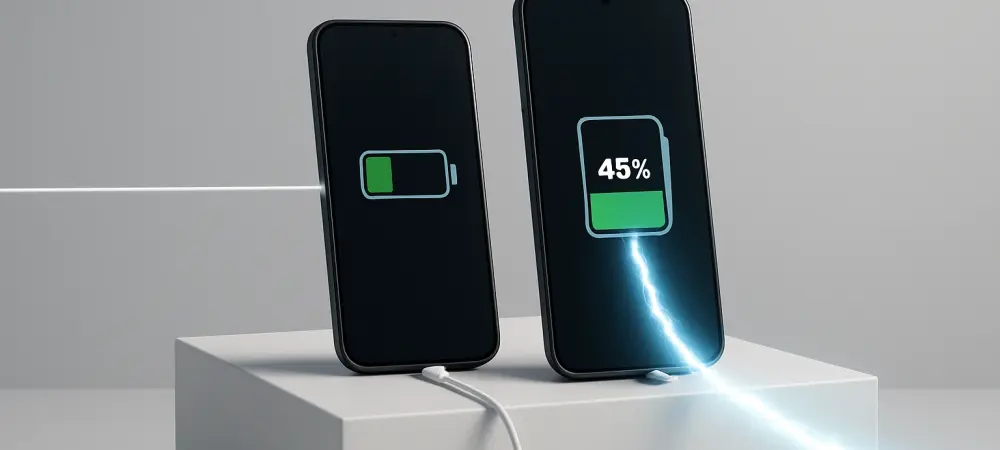
In the ever-competitive smartphone market, consumers have long been conditioned to expect that a higher price tag on a flagship device guarantees superiority in every conceivable specification, from processing power to camera quality and charging speed. However, an emerging trend from one of the industry’s biggest players is poised to upend this fundamental assumption, creating a perplexing choice for prospective buyers. New regulatory findings suggest that Samsung is preparing to equip its next-generation mid-range device with a charging capability that will significantly eclipse that of its own future flagship counterpart. This strategic divergence signals a potential shift in how the company defines value across its product tiers, forcing a reevaluation of what it means to be a “premium” device. The development places a spotlight on the increasingly critical role of battery technology, where the convenience of rapid charging can often outweigh the appeal of marginal gains in other performance metrics for the everyday user.
A Mid-Range Powerhouse Emerges
Evidence for this surprising development comes from a recent China Compulsory Certification (CCC) filing, a standard regulatory step for electronics preparing for a market launch. The database entry for a device with the model number SM-A5760 explicitly confirms support for 45W wired charging. This model number logically follows the sequence established by previous devices in the popular Galaxy A5x series for the Chinese market, strongly indicating it is the upcoming Galaxy A57. This move represents a significant continuation of a trend where Samsung bestows faster charging on its mid-range lineup than on its entry-level flagships. Beyond its impressive charging speed, the Galaxy A57 is also anticipated to be powered by the unannounced Exynos 1680 chipset, promising a notable performance uplift for its segment. With an expected launch in early 2026, the A57 is shaping up to be a formidable contender, offering a key feature that has historically been reserved for the most expensive top-tier models, thereby challenging the established hierarchy within Samsung’s own smartphone ecosystem.
The Flagship’s Puzzling Limitation
In stark contrast to the advancements seen in the A-series, the upcoming Galaxy S26 flagship is rumored to be facing a puzzling stagnation in its charging technology. Current speculation points to the S26 retaining the same 25W charging speed as its predecessor, the Galaxy S25, a figure that is increasingly looking modest in a landscape of rapidly evolving charging standards. This decision becomes even more curious when considering that the device may see an increase in its overall battery capacity, which would make faster charging an even more desirable feature to reduce downtime. This creates a scenario where the more affordable Galaxy A57 will be able to replenish its battery far more quickly than the more prestigious base model S26. This strategic choice by Samsung suggests a deliberate effort to differentiate its product lines, potentially to upsell consumers to its more expensive “Ultra” models, which traditionally offer the fastest charging speeds. This left the standard flagship in an awkward position, outmatched in a crucial, user-facing feature by its less expensive sibling, a situation that highlighted a clear strategic divide in product development.