

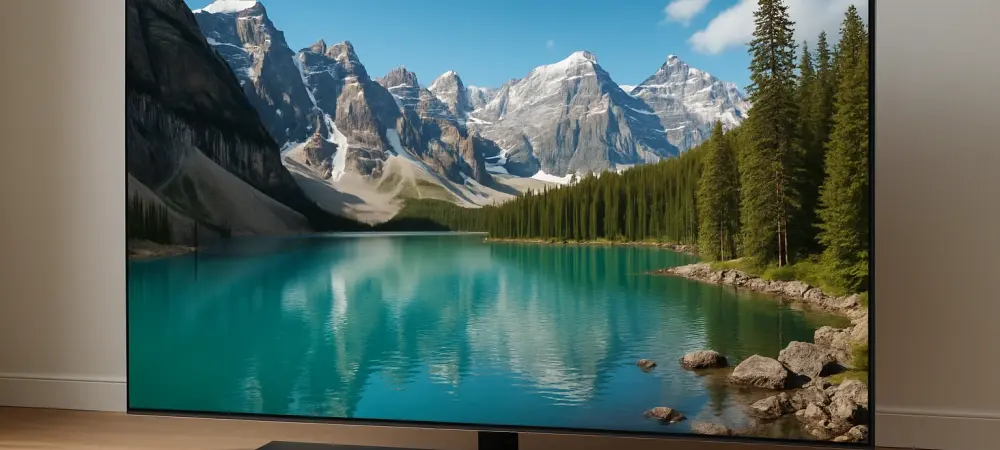
What if a television could transform an ordinary living room into a cinematic masterpiece, blurring the lines between reality and screen? Samsung has unveiled a jaw-dropping innovation with its 115-inch Micro-RGB Vision AI Smart TV, a colossal display that promises to revolutionize home entertainment. Priced at an eye-watering $30,000, this technological marvel isn’t just a gadget; it represents a bold leap into the next era of visual immersion. Available initially in Korea and soon expanding to the United States and other markets, it stands as a testament to cutting-edge display technology.
The Significance of a Visual Titan
In an age where home entertainment demands ever-greater spectacle, Samsung’s latest offering emerges as a pivotal development. The television industry is locked in a race to surpass existing OLED and mini-LED technologies with superior color depth, contrast, and brightness. This 115-inch model introduces micro-RGB technology to the consumer market, striking a balance between the limitations of traditional LCD screens and the prohibitive costs of full microLED displays. It caters to tech enthusiasts and high-end buyers while signaling potential for broader accessibility as production scales over the coming years.
This innovation arrives at a time when consumers crave theater-like experiences without leaving their homes. The sheer scale and advanced features of this TV position it as a benchmark for premium displays, challenging competitors to elevate their game. Beyond just size, it embodies a shift toward integrating smarter, more versatile technology into everyday viewing, setting a new standard for what a television can achieve.
Unpacking the Micro-RGB Breakthrough
At the heart of this television lies its groundbreaking micro-RGB technology, a system that uses tiny individual red, green, and blue LED modules instead of the conventional white or blue backlighting found in mini-LED models. This design delivers unparalleled color accuracy, with vibrant reds and blues that stand out, alongside over four times the dimming zones of leading mini-LED TVs. The result is a striking contrast that enhances every frame, making dark scenes deeper and bright moments more vivid.
Beyond the technical wizardry, the 115-inch screen offers an immersive experience that rivals a private cinema. Its ability to maintain pristine picture quality even at wide viewing angles makes it ideal for spacious environments or gatherings. Whether it’s a blockbuster movie or a live concert, the display ensures every seat in the room feels like the best one.
Adding to its allure, Samsung’s custom Micro RGB AI Engine upscales content to match the massive screen, ensuring even older, non-4K material looks sharp and detailed. Features like access to an Art Store for displaying digital masterpieces further elevate its appeal, turning the TV into a lifestyle centerpiece. With a 144Hz refresh rate, it also promises smooth performance for fast-paced content like gaming or sports, marking it as a versatile, future-ready device.
Voices from the Frontline of Innovation
During a hands-on session at Samsung’s New Jersey headquarters, a prominent tech editor described the visual quality as nothing short of astonishing. == “The colors are vivid, rich, and incredibly realistic,” the expert noted, emphasizing how this model outshines even top-tier OLED displays and other high-end Samsung offerings.== The precision in rendering hues and maintaining clarity from various perspectives left a lasting impression, hinting at a new pinnacle for premium TVs.
Further insights revealed admiration for the TV’s potential to redefine viewing standards. While testing focused on static and cinematic content, the anticipation for its performance in dynamic scenarios like gaming remains high. Such firsthand accounts underscore the transformative impact this display could have, especially for those seeking the ultimate in-home entertainment setup. The consensus points to a product that doesn’t just meet expectations but redefines them entirely.
Weighing the Price Tag Against the Promise
With a staggering cost of $30,000, this television is undeniably a luxury investment, targeted at affluent consumers, commercial venues, or dedicated tech aficionados. Compared to even pricier microLED options like Samsung’s own high-end models, it offers a relatively accessible entry into next-gen display technology. For those considering the purchase, evaluating whether the space and budget align with such a monumental screen becomes essential.
Looking ahead, this first-generation product serves as a harbinger of what’s to come in the industry. As micro-RGB technology matures, costs are expected to decrease, paving the way for more affordable iterations between now and 2027. This trajectory suggests that early adopters are not just buying a TV but investing in a vision of future entertainment possibilities.
To maximize the value, buyers can leverage its smart capabilities beyond traditional viewing. The integration of AI-driven upscaling and art display options transforms it into a multifunctional hub, justifying the expense for those who see it as more than just a screen. It’s a statement piece, blending technology with lifestyle in a way few devices can match.
A Milestone in Home Entertainment History
Reflecting on Samsung’s bold unveiling, the 115-inch Micro-RGB Vision AI Smart TV stood as a defining moment in the evolution of visual technology. Its fusion of immense size, innovative micro-RGB modules, and intelligent features crafted an experience that surpassed even the loftiest expectations. The industry took notice, as competitors were prompted to rethink their approaches to premium displays.
For those with the means, exploring this TV became an opportunity to own a piece of cutting-edge history. Others watched closely, anticipating how this technology would trickle down to more accessible models in subsequent years. The journey of micro-RGB sparked discussions on enhancing home setups, urging consumers to consider how far they’d go for unparalleled immersion. As the market continued to evolve, this monumental release remained a benchmark, inspiring a reimagining of what television could truly be.