

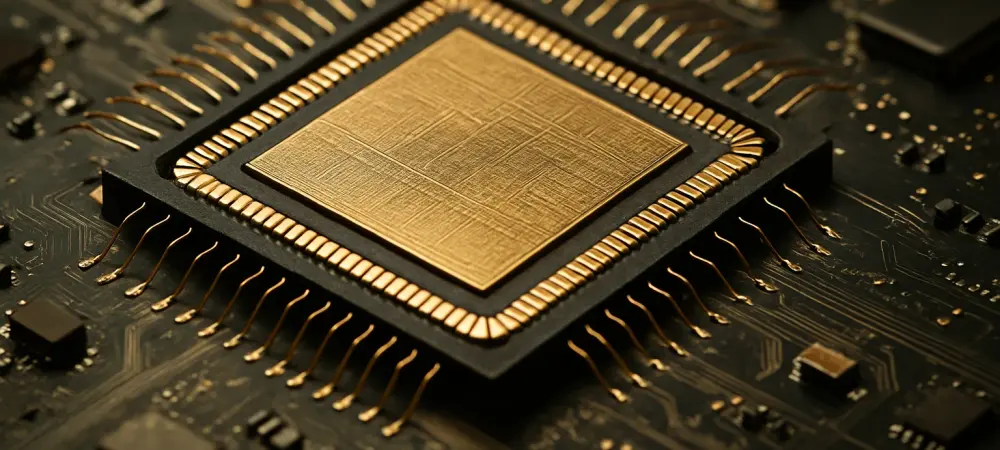
Imagine a world where a single nation, long reliant on foreign tech giants for cutting-edge hardware, suddenly unveils a breakthrough that could rival global leaders in artificial intelligence. This is the reality unfolding in China today, as the country introduces its 5nm AI chip technology through the innovative Fuxi GPU series. This development signals a seismic shift in the semiconductor landscape, positioning China as a formidable contender in a field historically dominated by Western companies like NVIDIA. The stakes are high, not just for technological advancement but for geopolitical influence, as this leap forward promises to redefine global competition in AI hardware.
This review delves into the intricacies of China’s latest achievement, exploring how domestic ingenuity and national strategy have converged to produce chips that could challenge the status quo. With restrictions on accessing advanced Western technology tightening, China’s drive toward self-reliance has never been more critical. The focus here is on the technical prowess of these new GPUs, their real-world applications, and the broader implications for the global tech ecosystem.
Key Features and Performance of Fuxi GPUs
Fuxi A0: Redefining Rendering and AI PC Workloads
The Fuxi A0 chip emerges as a specialized powerhouse designed to handle rendering and AI-driven personal computing tasks with remarkable efficiency. Tailored for both professional and consumer environments, this GPU leverages the advanced 5nm manufacturing process to deliver high performance in graphics-intensive applications. Its architecture prioritizes seamless processing for complex visual outputs, making it a potential game-changer for industries reliant on real-time rendering.
Beyond raw power, the Fuxi A0 stands out for its adaptability to diverse workloads, from gaming to professional design software. Benchmarks indicate that it competes closely with mid-tier offerings from established players, a significant feat for a domestically developed chip. This capability underscores China’s growing ability to cater to internal demand for high-performance computing without relying on imported solutions.
Fuxi B0: Pioneering AI Training with Integrated NPU
In contrast, the Fuxi B0 chip is engineered specifically for AI training, integrating a Neural Processing Unit (NPU) to optimize deep learning tasks. Supporting mainstream models such as DeepSeek R1, this GPU boasts an impressive compute power of up to 160 TFLOPS in FP32, placing it among the top contenders for AI development platforms. Such specifications highlight its potential to accelerate innovation in machine learning applications.
The integration of an NPU allows the Fuxi B0 to process neural network operations more efficiently than traditional GPU setups. This feature is particularly vital for handling large-scale datasets and complex algorithms, which are central to modern AI research. As a result, the chip offers a glimpse into how China aims to build robust infrastructure for training sophisticated AI systems domestically.
A key differentiator of the Fuxi B0 is its focus on energy efficiency, a critical factor in sustainable AI computing. By minimizing power consumption without sacrificing performance, the chip addresses one of the persistent challenges in high-performance computing. This balance could make it an attractive option for data centers looking to scale operations while managing operational costs.
Recent Trends in China’s Semiconductor Ecosystem
China’s journey to 5nm AI chip technology reflects a broader transformation within its semiconductor industry, marked by rapid innovation and strategic investments. Moving beyond the earlier 7nm process limitation, this shift to a finer manufacturing node showcases significant progress in fabrication techniques. Domestic firms like Anfu Technology and Xiangdi have played pivotal roles, driving the development of cutting-edge hardware amidst global supply chain constraints.
Government policies have further catalyzed this momentum, with substantial funding and incentives aimed at fostering computational breakthroughs. The emphasis on homegrown alternatives is evident in the collaborative efforts among local tech giants, mirroring the success of companies like Huawei in other domains. This unified push is designed to insulate the nation’s tech sector from external pressures, including export restrictions imposed by foreign governments.
Despite these advancements, speculation persists about potential partnerships with international foundries like TSMC to achieve the 5nm process. While unconfirmed, such collaborations could indicate a pragmatic approach to overcoming domestic manufacturing bottlenecks. Regardless of the means, the trend is clear: China is aggressively scaling its capabilities to meet both current and future demands in AI hardware.
Practical Applications Across Industries
The deployment of 5nm AI chips like the Fuxi series is already making waves across multiple sectors, demonstrating their versatility in real-world scenarios. In high-performance computing, these GPUs are powering simulations and data analysis tasks that require immense processing capacity. Their ability to handle such demands positions them as vital tools for scientific research and industrial modeling.
In the realm of consumer technology, the Fuxi A0 is finding a foothold in AI-enhanced personal computing, enabling smarter and faster user experiences. From voice recognition to personalized content delivery, these chips are enhancing device functionality in ways previously reliant on foreign hardware. This shift hints at a future where Chinese-made technology could dominate local markets for consumer electronics.
Unique applications also emerge in specialized fields like autonomous systems, where the Fuxi B0’s AI training capabilities support the development of self-driving algorithms. Such use cases illustrate the chips’ potential to impact not just traditional computing but also transformative technologies shaping modern life. As adoption grows, these GPUs could redefine industry standards for performance and accessibility.
Challenges Hindering Progress
Despite the impressive strides, China faces significant hurdles in scaling its 5nm AI chip technology to meet global standards. Technical challenges in mass production remain a primary concern, as achieving consistent yields at such advanced nodes requires sophisticated expertise and infrastructure. These obstacles could slow the pace of deployment and limit immediate market impact.
External pressures compound these issues, with export controls on critical semiconductor equipment restricting access to essential tools. Navigating these geopolitical barriers necessitates innovative workarounds, which, while feasible, add layers of complexity to development timelines. The uncertainty around manufacturing partnerships further clouds the path forward, as reliance on foreign collaboration remains a point of contention.
Efforts to address these limitations are underway, with increased investment in domestic research and alternative supply chains. However, the road to full technological independence is fraught with risks, including potential quality disparities compared to established global leaders. Overcoming these barriers will be crucial for sustaining the momentum of China’s AI hardware ambitions.
Future Prospects for AI Hardware Innovation
Looking ahead, the trajectory of China’s AI chip technology appears poised for further evolution, with potential advancements in manufacturing processes on the horizon. Refining the 5nm node and exploring even smaller geometries could yield chips with unprecedented performance, keeping pace with global trends. Such progress would solidify China’s standing in the competitive semiconductor arena.
Performance breakthroughs are also anticipated, particularly in optimizing NPUs for next-generation AI models. If current development rates persist, the Fuxi series could see significant upgrades within the next few years, enhancing capabilities for both training and inference tasks. This would broaden their applicability across emerging fields like edge computing and real-time analytics.
The long-term implications extend beyond technical achievements, potentially reshaping China’s role in the global market. As domestic solutions gain traction, the balance of power in AI hardware could shift, fostering greater competition and innovation worldwide. This evolution will likely depend on sustained policy support and strategic industry partnerships over the coming decade.
Final Thoughts on China’s AI Chip Journey
Reflecting on this technological milestone, it becomes evident that China’s foray into 5nm AI chip technology marks a turning point in its quest for self-reliance. The Fuxi GPUs, with their robust performance and specialized features, showcase the nation’s capacity to innovate under constraint. Their emergence challenges preconceived notions about the limits of domestic hardware development.
Moving forward, stakeholders need to prioritize addressing production scalability and geopolitical hurdles to maintain this momentum. Investing in localized manufacturing expertise and forging resilient supply chains emerge as actionable steps to mitigate external dependencies. These efforts promise to fortify the foundation for future advancements.
Ultimately, the journey ahead demands a focus on fostering global collaboration where feasible, balancing national interests with the benefits of shared innovation. By navigating these complexities, China positions itself to not only meet domestic needs but also influence the broader trajectory of AI technology on an international scale.