

The New Era of Tech Launches: When Hype and Leaks Collide
The once-sacred tradition of the surprise technology reveal has all but vanished, replaced by a relentless torrent of pre-launch information that now defines a product’s entry into the world. In this high-stakes environment, flagship smartphone launches are less about a single day of announcements and more about a months-long campaign where official marketing battles for attention against a constant drip of unofficial data. This dynamic between meticulously planned corporate hype and the unpredictable nature of public leaks now dictates the narrative and, ultimately, the perceived success of a major release.
The upcoming launch of Samsung’s Galaxy S26 series serves as a prime example of this new reality. Its story illustrates a market where corporate secrecy is a thing of the past, and the most anticipated details often arrive long before the company takes the stage. The game is no longer about guarding secrets but about managing their inevitable release.
Deconstructing the S26 Unveiling from Every Angle
The Official Playbook: Samsung’s Confirmed Plans for Galaxy Unpacked
Samsung has formally entered the conversation by scheduling its next Galaxy Unpacked event for February 25 in San Francisco. The company confirmed the global reveal of the Galaxy S26, S26+, and S26 Ultra will be accessible to a worldwide audience via livestream. In a bid to capture early consumer interest, Samsung has already opened reservations, providing incentives like $30 vouchers and enhanced trade-in bonuses for those who commit ahead of the launch.
This strategy of offering early-bird deals raises an important debate among industry observers. On one hand, these incentives are seen as a proactive method for building brand loyalty and securing sales before the full reviews are out. Conversely, some view it as a defensive maneuver, designed to hedge against the impact of exhaustive leaks or any last-minute product announcements from competitors that could steal the spotlight.
The Unofficial Narrative: A Comprehensive Preview Courtesy of the Grapevine
Parallel to the official announcements, an avalanche of leaked information has effectively unveiled the S26 lineup in its entirety. The sheer volume is staggering, encompassing everything from detailed specification sheets and precise physical dimensions to the complete European pricing structure for all models and configurations. This flood of data has left little to the imagination.
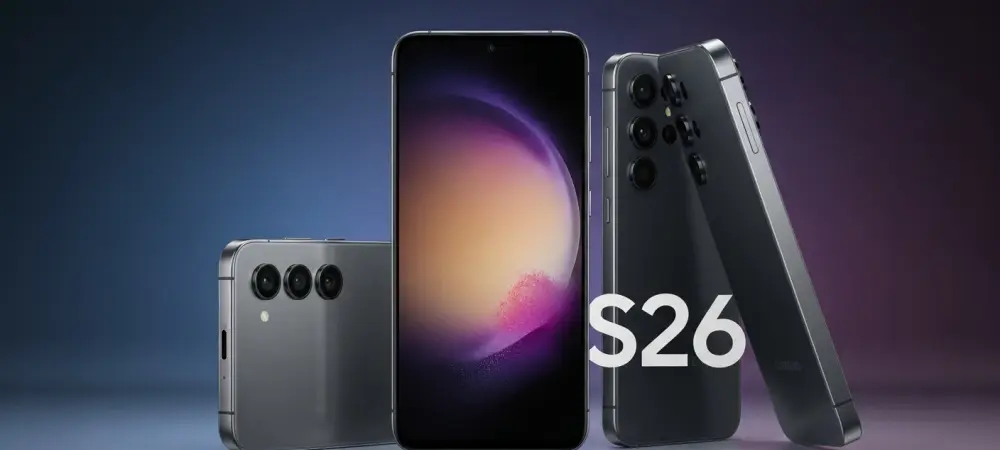
The final piece of the puzzle fell into place with the recent surfacing of official product renders, confirming the updated designs weeks before their formal debut. This presents a double-edged sword for Samsung. While such exhaustive leaks risk cannibalizing the excitement of the live event, they also function as a powerful, sustained, and entirely free marketing campaign, keeping the devices in the public eye for an extended period.
Charting the Competitive Field: How Rivals Are Positioning Themselves
While Samsung prepares for its launch, its rivals are making strategic moves of their own. Leaked pricing for the upcoming iPhone 18 Pro and 18 Pro Max suggests Apple intends to maintain price stability, holding costs at $1,099 and $1,199 respectively, despite reports of rising memory component prices. This signals a clear strategy to retain its premium market share through consistency.
Elsewhere, the market shows signs of dynamic shifts, challenging any notion of a two-horse race. Sony has quietly reaffirmed its commitment to mobile with the Xperia 1 VIII and 10 VIII appearing in the GSMA database, while rumors suggest Xiaomi is aiming for a major leap forward by equipping its 18 Pro model with dual 200MP cameras. These developments underscore that Samsung’s launch does not exist in a vacuum but is instead one significant move in a constantly evolving competitive landscape.
Beyond the Spec Sheet: The Growing Importance of Sensory Design
As internal specifications begin to plateau across flagship devices, some brands are seeking differentiation through physical and sensory experiences. A recent review of the new Motorola Signature, the first in a new premium line, serves as a compelling case study. The device was praised not for its processing power, but for its unique “linen-inspired” textural finish and a novel fragrance-infused unboxing experience.
This focus on tactile and sensory identity stands in stark contrast to the performance-centric nature of the Galaxy S26 leaks. It prompts speculation that the future of flagship competition may lie not just in megahertz and megapixels, but in creating a memorable and distinct physical connection with the consumer, turning a functional gadget into a more personal object.
Navigating the Smartphone Market: A Strategic Guide for Consumers and Analysts
The convergence of official plans and unofficial data paints a clear picture: Samsung’s confirmed launch is now largely a formality for an audience that is already well-informed. The extensive leaks have transformed from mere rumors into a reliable buyer’s guide, while the actions of Apple, Xiaomi, and others prove that the competition is not standing still. This transparent environment empowers prospective buyers to make highly informed decisions well before launch day by leveraging leaked specifications and early reservation offers. For industry professionals, this new era demands a strategic shift. Modern marketing must now account for a continuous information drip, supply chain security is more critical than ever, and managing public perception is a fluid, ongoing process rather than a single event.
The Inevitable Transparency of Modern Tech
Ultimately, the saga of the Galaxy S26 confirms that the traditional, surprise-filled product reveal is effectively obsolete in the smartphone industry. The primary implication for brand strategy is a necessary evolution from guarding a single moment of revelation toward managing a continuous, months-long narrative where the brand’s voice is one of many.
This trend forces a forward-looking question upon the entire industry. As the line between carefully curated rumor and official reality continues to blur, what will be the next evolution in how we are introduced to the technology that shapes our lives?