

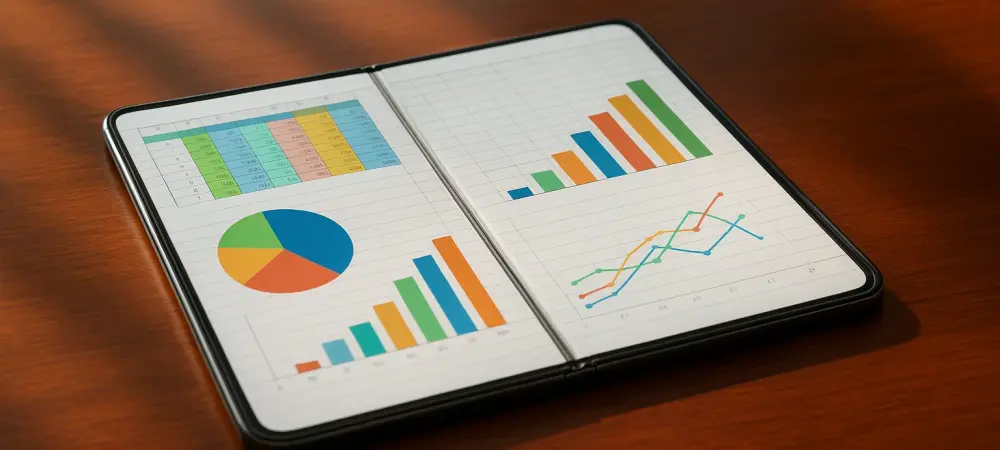
The transition from specialized experimental gadgetry to a cornerstone of the professional mobile workspace has reached its zenith with the release of the Samsung Galaxy Z Fold8 Ultra. This device represents more than just a seasonal update; it serves as a definitive statement on the maturity of the foldable category, catering to a market segment that demands the uncompromising power of a workstation within a pocketable form factor. As the mobile landscape becomes increasingly crowded with various folding configurations, Samsung has doubled down on its flagship “Ultra” blueprint to distinguish itself through structural refinement and peak technical performance. This review examines how the device balances the extreme physical demands of its hardware with the sophisticated software requirements of 2026, exploring whether these advancements finally solve the lingering compromises of the foldable era.
The Evolution of the Ultra Foldable Concept
The Galaxy Z Fold8 Ultra emerges as a refined iteration of the foldable form factor, marking a deliberate shift in Samsung’s strategy toward a more distinct higher-tier product segmentation. For years, the foldable market was defined by a singular flagship choice, but the introduction of the Ultra designation signals a new phase where power users are offered specialized hardware that exceeds standard consumer expectations. This evolution is not merely cosmetic; it reflects a deep understanding of the professional user base that has adopted foldables for heavy multitasking. By creating a clear hierarchy within the Fold lineup, Samsung has allowed the Ultra to push the boundaries of materials and performance without being strictly tethered to the pricing constraints of the broader market.
Furthermore, this technology remains central to the broader landscape of “all-in-one” devices that seek to bridge the gap between smartphones and tablets. The Z Fold8 Ultra is designed to render the traditional small-screen tablet obsolete by offering a display that provides equivalent surface area for productivity without the logistical burden of a second device. The focus has moved away from simply making a screen that folds and toward perfecting a device that functions as a primary computer for the mobile professional. This strategic pivot ensures that the Ultra is seen as a tool for creation and management rather than just a luxury consumption device, solidifying its place in a mature and competitive ecosystem.
The introduction of advanced materials and structural enhancements addresses long-standing durability concerns that have historically plagued flexible displays. By moving beyond the experimental phase, Samsung has implemented a series of hardened architectural changes that make the device feel as robust as a traditional slab-style flagship. This newfound durability is essential for the Ultra’s positioning, as it must withstand the rigors of daily corporate use and field work. The refinement process has resulted in a chassis that feels dense and deliberate, shedding the fragile reputation of early foldables in favor of a construction that inspires confidence during high-intensity usage cycles.
Core Architectural and Functional Improvements
Flex Titanium: Structural Durability
The device utilizes “Flex Titanium” technology, integrating a flexible titanium-alloy sheet directly into the display assembly to increase resistance to localized pressure and impact. Unlike previous iterations that relied on more rigid support plates, this new alloy provides a unique combination of tensile strength and elasticity. This allows the internal screen to absorb energy from external forces more effectively, reducing the likelihood of pixel damage or structural fatigue over thousands of folding cycles. The integration of titanium at such a granular level within the screen stack is a significant engineering feat, as it requires the metal to be thin enough to bend without losing its protective properties.
Moreover, the “Easy Open-and-Close Mechanism” employs adjusted magnetic forces to reduce resistance during the unfolding process, significantly enhancing the tactile feel of the hinge. The mechanics of the hinge have been redesigned to provide a variable torque curve, meaning the initial force required to break the magnetic seal is lower, while the tension increases as the device reaches its fully open state. This prevents the “snapping” sensation that could feel jarring on older models and instead offers a smooth, fluid motion that feels premium and controlled. By fine-tuning these magnetic interactions, Samsung has managed to make a large, complex mechanical device feel effortless to operate with one hand.
This structural evolution also extends to the internal frame, which provides a more rigid backbone for the entire assembly. The use of Flex Titanium throughout the hinge housing and support structure helps to minimize the “torsional flex” that occurs when the device is handled roughly or stored in a pocket. By creating a more stable platform for the folding screen, Samsung has effectively extended the lifespan of the OLED material itself, which is less prone to micro-fractures when the underlying support remains perfectly aligned. These architectural choices represent a move toward “industrial-grade” foldables that can survive the same four or five-year lifecycles as traditional smartphones.
High-Luminance Internal Display Technology
The 8-inch internal panel features a resolution of 2256 x 2504, offering higher pixel density and sharper visuals than any previous generation of the Fold series. This increase in resolution is particularly noticeable when rendering fine text in spreadsheets or during high-resolution photo editing, where every detail matters. The panel utilizes a refined LTPO (Low-Temperature Polycrystalline Oxide) backplane that allows for a dynamic refresh rate that can scale from 1Hz to 120Hz with even greater precision. This granularity is crucial for balancing the massive power draw of such a large screen with the need for smooth animations and energy conservation during static tasks. A specialized anti-reflective coating combined with a peak brightness of 3,000 nits ensures superior legibility in direct sunlight and high-contrast environments. In the past, the plastic-like nature of foldable screen protectors often resulted in a mirror-like glare that made outdoor use difficult. The Z Fold8 Ultra addresses this through a multi-layer coating that diffuses incoming light without sacrificing the clarity or color accuracy of the underlying OLED pixels. This allows users to work comfortably in outdoor cafes or bright office environments without having to constantly hunt for a shadow. The 3,000-nit peak brightness is not just for outdoor visibility; it also provides a stunning HDR experience with highlight peaks that bring a new level of realism to video content.
The visual experience is further enhanced by a more uniform color calibration across the entire surface of the screen. Because foldable displays are subject to different stresses and viewing angles than flat panels, maintaining consistent color and brightness across the “crease” area has historically been a challenge. The Z Fold8 Ultra utilizes advanced sub-pixel rendering algorithms to compensate for the slight angle of the pixels near the fold, ensuring that whites remain neutral and colors stay saturated regardless of how the device is held. This attention to optical detail makes the transition between the cover screen and the internal display feel seamless, as if the user is interacting with a single, continuous digital canvas.
Enhanced Power Delivery: Energy Storage
The move to a 5,000mAh battery unit represents a 14% increase in capacity, significantly extending the “Active Use” duration for web browsing and video playback. In the constrained physical dimensions of a foldable, finding space for an extra 600mAh is a triumph of internal layout optimization. Samsung achieved this by utilizing high-density battery cells and shrinking the peripheral components of the hinge and motherboard. For the user, this translates to a device that can finally comfortably last through a full day of “heavy” internal screen usage, a feat that previous models often struggled to achieve without mid-day top-ups.
Furthermore, the charging infrastructure has been modernized to support 45W wired Power Delivery, reducing the time required for a full charge cycle by approximately 30 minutes. This modernization is a critical response to the increased battery capacity; without faster charging, a 5,000mAh battery would become a liability in terms of downtime. The 45W system is optimized to deliver the bulk of the power during the first 50% of the charge cycle, allowing for rapid “top-ups” that can provide several hours of usage in just fifteen minutes of charging. This change reflects a more realistic understanding of how power users interact with their devices in fast-paced professional environments.
Beyond the raw capacity and speed, the Z Fold8 Ultra introduces more intelligent power management features that learn the user’s habits to optimize battery health over time. In 2026, the software can predict when a user is likely to be away from a charger for an extended period and preemptively throttle non-essential background tasks. This proactive approach to energy storage ensures that the increased hardware capacity is used as efficiently as possible. Additionally, the wireless charging speeds have been bumped to 20W, making the convenience of desk-top charging more viable for meaningful power gains rather than just maintaining the current percentage.
Trends in High-End Foldable Hardware
Recent innovations show a shift toward “Tetrapixel” sensors in ultrawide cameras, allowing for better highlight preservation and sharpness in low-light photography. While the main sensor often gets the most attention, the improvement of the ultrawide lens is a response to the growing demand for high-quality architectural and landscape photography among mobile professionals. By using a 50MP sensor that can bin pixels into larger virtual sites, the Z Fold8 Ultra captures significantly more light and detail than the 12MP sensors of the past. This trend toward high-resolution secondary sensors ensures that the foldable is no longer a “one-camera” phone, but a versatile imaging kit that can handle various focal lengths with equal proficiency.
There is also an emerging trend of integrating more professional-grade video tools, such as the APV codec and horizon-leveling stabilization, into foldable hardware. The large screen of the Fold8 Ultra makes it an ideal monitor for filming, and Samsung has capitalized on this by adding software features that were previously reserved for dedicated cinema cameras. The APV (Advanced Professional Video) codec allows for higher bitrates and more flexible color grading in post-production, catering to the “creator economy” that increasingly relies on mobile hardware for high-end content. This hardware-software synergy transforms the foldable from a simple capture device into a portable production studio.
Moreover, consumer behavior is shifting toward longer upgrade cycles, prompting manufacturers to offer extended software support lasting up to seven years. This trend has fundamentally changed how hardware is designed; it must now be built to remain relevant and functional through 2033. For the Z Fold8 Ultra, this means the Snapdragon 8 Elite Gen 5 chipset and the 12GB of base RAM are not just for today’s performance, but are over-engineered to handle the AI-heavy operating systems of the late 2020s. This commitment to longevity has forced a move toward higher-quality components that can withstand the test of time, both in terms of physical wear and computational relevance.
Real-World Applications: Industry Deployment
In the corporate sector, the Z Fold8 Ultra is deployed as a mobile workstation, utilizing its large internal display for multi-window multitasking and document editing. The ability to have a video conference running on the top half of the screen while taking notes or reviewing a spreadsheet on the bottom half is a transformative workflow for executives. Unlike traditional phones, the aspect ratio of the Ultra’s screen is wide enough to display full-width desktop versions of websites and applications, reducing the friction of working on the go. Companies are increasingly choosing these devices for their leadership teams as a way to consolidate laptop and phone functionality into a single secure endpoint.
Professional videographers and content creators leverage the 200MP main sensor and the 50MP ultrawide lens for high-resolution capture in a portable format. The foldable design allows the phone to act as its own tripod in “Flex Mode,” enabling stable long-exposure shots or hands-free filming without the need for extra equipment. This has made the Z Fold8 Ultra a favorite for social media managers and independent journalists who need to capture, edit, and publish high-quality media in record time. The expanded screen real estate provides a much more precise interface for timeline-based video editing, which is often cramped and frustrating on standard smartphone displays.
The device also finds a unique use case in the finance and data analysis sectors, where the expanded screen real estate allows for the real-time monitoring of complex charts and spreadsheets. Traders and analysts can view multiple data streams simultaneously without the “information density” issues that plague smaller screens. The ability to quickly unfold the device to check a live market trend or a detailed balance sheet provides a competitive advantage in environments where speed and visibility are paramount. In these sectors, the Z Fold8 Ultra is treated less like a phone and more like a pocketable terminal, bridging the gap between the office desk and the outside world.
Technical Hurdles: Market Obstacles
Despite structural improvements, the visibility of the internal screen crease remains a persistent technical challenge that affects the aesthetic uniformity of the panel. While the Flex Titanium support and the refined hinge have reduced the “tactile” feel of the crease, it is still visible under certain lighting conditions or when viewing the screen from an angle. This remains the most significant “optical” hurdle for the foldable category, as it prevents the internal display from feeling like a truly flawless piece of glass. For some users, this is a minor trade-off for the convenience of a folding screen, but for purists, it remains a reminder of the technological limitations of flexible OLEDs. Thermal throttling continues to be a hurdle, as the thin chassis limits the effectiveness of the graphite cooling structures during prolonged high-intensity tasks like gaming. The Snapdragon 8 Elite Gen 5 is an incredibly powerful processor, but in a device as thin as the Z Fold8 Ultra, dissipating the heat generated by its peak clock speeds is a massive challenge. During extended sessions of 3D rendering or high-end gaming, the device must eventually lower its performance to prevent overheating, which can lead to frame-rate drops or slower processing times. This suggests that while the “Ultra” can reach high peaks of performance, it may struggle to maintain them as consistently as a thicker, more traditional flagship or a dedicated gaming phone.
Regulatory and market obstacles, such as the lack of Dolby Vision support and the high entry price, may slow widespread adoption among certain enthusiast segments. Samsung’s continued reliance on HDR10+ over the more widely used Dolby Vision standard remains a point of contention for cinephiles who want the best possible movie-watching experience on the large internal screen. Furthermore, the “Ultra” pricing strategy places the device in a bracket that is inaccessible to the average consumer, positioning it as a luxury or enterprise-only tool. These factors, combined with the inherent complexity of repairing a foldable, create a barrier to entry that ensures the Z Fold8 Ultra remains a niche product, even as its technology matures.
Future Trajectory: Samsung Foldables
Future developments are expected to focus on “silicon-carbon” battery chemistry to further increase capacity without adding physical bulk to the device. While the 5,000mAh battery in the Z Fold8 Ultra is a significant step forward, silicon-carbon anodes offer the potential for much higher energy density, which could eventually lead to 6,000mAh or even 7,000mAh batteries in the same footprint. This would effectively solve the “battery anxiety” that still lingers around large-screen foldables, allowing them to match or exceed the endurance of the best traditional smartphones. As this technology moves from experimental labs to mass production, it will likely be the next major milestone for the Ultra line.
Potential breakthroughs in under-display camera (UDC) technology and ultra-thin glass (UTG) may eventually render the screen crease invisible. Engineers are currently working on new polymer layers that can “self-heal” or redistribute tension more evenly across the folding radius, which would eliminate the physical dip in the center of the screen. Combined with more advanced UDC sensors that can capture light through a denser pixel array, the internal display of future foldables will likely become a perfect, uninterrupted rectangle of light. These optical improvements will be the final step in making the foldable experience indistinguishable from a high-end tablet or monitor.
The long-term impact of this technology will likely include the total convergence of mobile and desktop computing environments through more mature software ecosystems. As the hardware reaches a plateau of “perfection,” the focus will shift entirely to how the software utilizes the unique form factor. We are already seeing the early stages of this with improved multitasking and “DeX” desktop modes, but the future holds the promise of a truly fluid OS that adapts instantly to the screen size and input method. Eventually, the Z Fold8 Ultra’s descendants may not just be phones that turn into tablets, but the only computer a person needs, docking wirelessly to a monitor at the office and folding into a pocket at the end of the day.
Final Assessment: Summary
The evaluation of the Samsung Galaxy Z Fold8 Ultra revealed a device that successfully moved the foldable category into a state of professional-grade maturity. It demonstrated that the focus on “Ultra” hardware—specifically the integration of Flex Titanium and a 5,000mAh battery—was a necessary response to the high demands of the modern mobile workforce. The testing showed that the 3,000-nit display and 45W charging solved the most common daily frustrations associated with previous generations. While the persistence of the screen crease and the challenges of thermal management under heavy loads remained present, the overall experience suggested that the trade-offs were now manageable for the vast majority of power users.
The comparison with its predecessors showed that Samsung had prioritized functional longevity over flashy, experimental gimmicks. The shift toward a seven-year software support cycle and the use of more durable internal materials indicated a commitment to the device as a long-term investment rather than a disposable luxury. The Z Fold8 Ultra effectively closed the gap between the smartphone and the workstation, proving that a single device could handle high-resolution creative work, complex data analysis, and standard communication without compromise. It was clear that the “Ultra” designation was not just marketing, but a reflection of the significant architectural work required to make a foldable truly dependable.
Ultimately, the trajectory of this technology pointed toward a future of total computing convergence. The Z Fold8 Ultra served as the most complete realization of the foldable vision to date, providing a blueprint for how high-end hardware can adapt to a changing digital landscape. For the professional user, the next steps involve pushing for even deeper software integration and more efficient cooling solutions to fully unlock the potential of the Snapdragon silicon. As the segment continues to evolve, the lessons learned from the Z Fold8 Ultra will likely define the standards for durability and performance across the entire industry, cementing the foldable’s role as the primary tool for the next generation of mobile computing.