

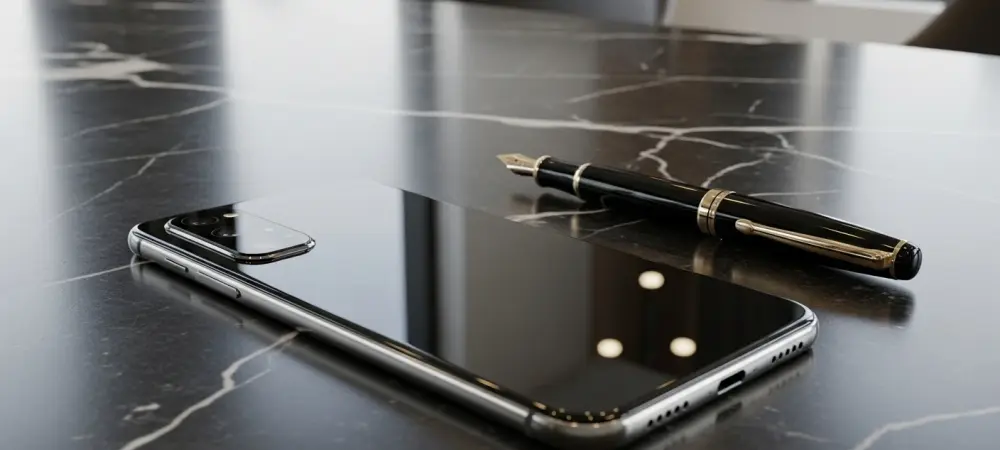
The modern smartphone consumer is no longer easily swayed by incremental processor bumps or slightly thinner bezels, yet the current frenzy surrounding the Samsung Galaxy S26 indicates that the era of the “must-have” upgrade is far from over. As the initial pre-order dust settles, a fascinating shift in retail strategy has emerged, moving away from simple early-bird hype toward aggressive, long-term launch deals. This transition suggests that hardware manufacturers are now competing as much on financial incentives as they are on technical specifications. With storage upgrades and high-value gift cards becoming the new standard for early adopters, the barrier to entering the premium ecosystem has shifted, favoring those who act during the primary launch window.
The real story of the season, however, is the overwhelming preference for the most expensive tier. Despite a global economic climate that favors frugality, the Galaxy S26 Ultra has seen a 25% surge in interest across the United States compared to previous flagship cycles. This trend indicates that when a device offers truly transformative features—such as the new “Privacy Display” and horizon lock video stabilization—consumers are willing to stretch their budgets for the premium experience. It is a clear signal that the market is bifurcating between those who want a reliable tool and those who demand a pocket-sized powerhouse capable of professional-grade content creation and total data security.
Does a $200 Gift Card Outweigh a 200-Megapixel Sensor?
The current retail landscape for the S26 series highlights a strategic pivot toward maintaining momentum through “launch deals” that extend well beyond the traditional first week. Samsung is currently bundling the 512GB Ultra for the price of the base 256GB model, essentially providing a massive storage boost at no extra cost. When paired with a $200 gift card from major retailers, the effective price of the most advanced Android phone drops significantly, challenging the notion that flagship devices must always be a $1,300 investment. This approach forces a difficult choice: is the hardware itself the draw, or is it the savvy financial move of securing a future-proof device for a mid-range net cost?
While the 200-megapixel sensor remains a technical marvel for photography enthusiasts, the general public seems more captivated by the tangible utility of software-driven enhancements. Features like “generative edit” allow users to manipulate reality with a few taps, turning mediocre snapshots into professional-looking compositions. This suggests that the smartphone era has moved past the “megapixels race” and into an age where AI-driven user experiences define the value of the hardware. The $200 incentive acts as the final nudge for a consumer who was already intrigued by the promise of artificial intelligence but hesitant about the premium price tag.
The Evolution of the High-End Android Ecosystem
The Android landscape is currently undergoing a fundamental transformation, moving from a focus on raw performance benchmarks toward a philosophy of AI-driven user experiences and privacy-centric hardware. The introduction of the Privacy Display on the high-end models marks a significant milestone, acknowledging that users now view their screens as vulnerable points for data leakage in public spaces. This evolution reflects a broader trend where the “mid-sized flagship” has become the primary battleground for Samsung, Google, and Apple. Consumers are increasingly demanding the full suite of pro-level features in a chassis that is comfortable for one-handed use.
Furthermore, the industry-wide disappearance of the 128GB storage tier marks a permanent change in how manufacturers perceive consumer needs. As 4K video recording and high-resolution AI processing become standard, the baseline expectation has shifted to 256GB. This change is not merely a courtesy to the user; it is a necessity for the modern ecosystem to function correctly. By eliminating the lower storage tier, Samsung and its rivals have effectively raised the floor of the flagship market, ensuring that even the most basic entry-point device can handle the data-heavy demands of modern software.
Navigating the S26 Lineup and the Shadow of the S25
Choosing between the different models in the current lineup requires a careful analysis of where the true innovation lies. The S26 Ultra continues its dominance by offering features that the plus and base models simply cannot match, such as the 5x ALoP periscope lens and 60W rapid charging. However, the S26+ finds itself in a precarious position, often referred to by analysts as a “value trap.” Despite a $100 gift card incentive, it lacks the most groundbreaking hardware of the Ultra while remaining significantly more expensive than the base model, making it a difficult sell for those who do not specifically require a larger screen.
When comparing the new silicon—the Snapdragon 8 Elite Gen 5—to the outgoing S25 series, the performance gap is noticeable but perhaps not revolutionary for the average user. The S25+ remains a viable option for those who prioritize value over the latest charging speeds or minor wireless improvements. Meanwhile, the S25 FE serves as a reminder of the trade-offs inherent in budget-friendly alternatives. By utilizing the older Exynos 2400 chipset and a non-LTPO display, the FE model offers a functional experience at a lower price point, but it misses out on the power efficiency and display fluidity that define the flagship S26 experience.
Competitive Pressure: The Google and OnePlus Response
Samsung is not operating in a vacuum, as Google and OnePlus have launched aggressive counter-offensives. The Google Pixel 10 Pro XL has targeted the S26 Ultra’s dominance by offering camera parity across its different sizes, ensuring that users do not have to buy the largest phone to get the best optics. With 16GB of RAM as a standard on Pro models, Google is making a strong case for being the superior multitasking machine. Their balanced sensor approach, focusing on 50MP and 48MP lenses, challenges Samsung’s philosophy that more pixels always result in better images, particularly in low-light environments.
In contrast, OnePlus is attempting to redefine the “all-day” battery life narrative with the OnePlus 15. By packing a staggering 7,300mAh battery into its frame—supported by 80W wired charging—it addresses the single biggest pain point for power users. This hardware divergence creates a diverse market where the “best” phone is entirely dependent on whether a user values Google’s software intelligence, Samsung’s hardware versatility, or the raw endurance of a OnePlus device.
Strategic Buying Guide for the Current Flagship Market
Assessing priorities in this crowded market requires looking past the marketing jargon to find the features that will actually impact daily life. For those deeply embedded in a productive ecosystem, the S26 Ultra’s generative AI features and S-Pen integration offer a level of utility that charging speed alone cannot replace. Conversely, for users who spend their days traveling or away from outlets, the sheer battery capacity of the OnePlus 15 provides a peace of mind that no software feature can replicate. Maximizing incentives is key; leveraging trade-in frameworks and storage upgrades can often reduce the total cost of ownership by several hundred dollars, making the jump to a new device more palatable.
The decision to upgrade should ultimately hinge on whether the new hardware offers a transformative shift or merely an incremental one. Those currently holding an S25 might find that the move to the S26 is more about refining the experience rather than reinventing it. However, for users coming from older generations, the combination of the Snapdragon 8 Elite Gen 5 and the new Privacy Display technology represents a significant leap in both security and efficiency. Prospective buyers would be wise to evaluate their current trade-in value against the available gift card rebates before the initial launch window closed. This proactive approach allowed many to secure the most advanced mobile technology at a fraction of the theoretical retail price.