

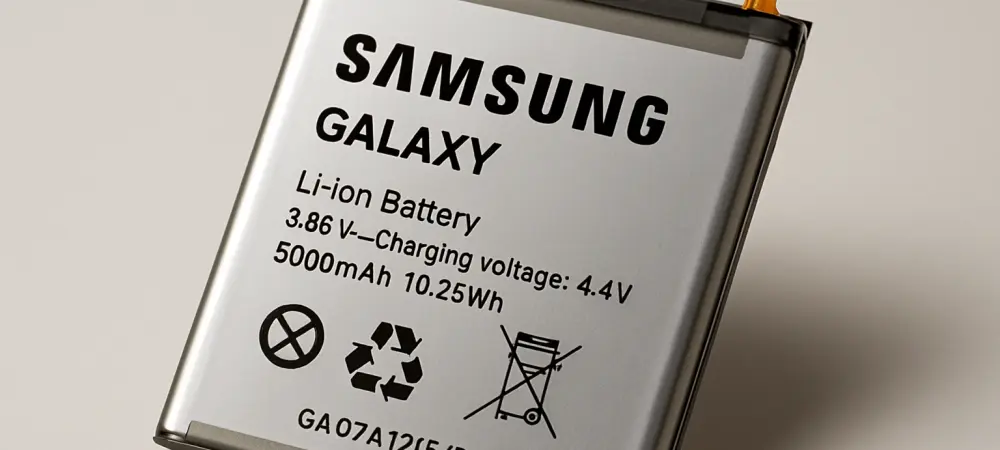
In smartphone innovation, the powerhouses of technology constantly vie for dominance through groundbreaking advancements and design. Samsung, a titan of the industry, has crafted a legacy by marrying sleek design with superior functionality. Yet, with each iteration of their Galaxy series, Samsung faces mounting pressure to push boundaries—not only in screen and camera technology but also in the crucial aspect of battery capacity. As we explore Samsung’s latest battery offerings, the backdrop is a competitive market where fast charging and larger capacities are expected norms.
Evolution of Samsung Galaxy Battery Technology
Samsung’s journey in battery technology has been pragmatic, with an emphasis on balancing form and function. Earlier Galaxy models laid the groundwork, often prioritizing extended battery life without compromising device thickness. Although previous models demanded frequent charging, Samsung’s incremental improvements over the years have been pivotal. Advances such as lithium-ion battery optimization and enhanced energy efficiency have become staples in more recent devices.
Comparing past models to current Samsung innovations reveals a discernible evolution—focusing on preserving battery longevity while maintaining ultra-thin profiles for sleek designs. Despite these developments, changing consumer dynamics and competitor benchmarks have compelled Samsung to re-evaluate its strategies to sustain its leadership position.
Key Features of Current Galaxy Battery Technology
Battery Capacity Developments
The latest Galaxy models exhibit modest advancements in battery capacity, with the upcoming S26 Ultra hinting at a 5,400 mAh power pack. This slight improvement reflects Samsung’s balancing act between increasing battery size while keeping the devices slender and aesthetically appealing. Despite this, some competitors offer batteries between 7,000 to 8,000 mAh, highlighting a trend favoring capacity over minimalism. Samsung’s restrained approach may cause disappointment among users anticipating longer battery life.
Charging Solutions and Technology
Samsung persists in refining its charging solutions with state-of-the-art fast charging capabilities, albeit with some constraints. The anticipated S26 Ultra model might feature enhancements in charging speed and efficiency. Still, it is expected not to rival the 65-watt quick charging seen in alternative brand devices. As consumers gravitate toward more rapid charging regimes, Samsung faces the dual task of meeting these expectations while preserving battery safety and lifespan.
Latest Trends and Innovations in Battery Tech
A prevailing trend in the battery technology landscape emphasizes increased capacities and accelerated charging times. Competitors are forging ahead with striking innovations, releasing smartphones that boast quicker and more potent energy cells. Such advancements stretch across industry lines, sparking a shift toward maximizing battery performance without sacrificing device integrity. This competitive environment highlights a shifting priority where cutting-edge battery technology could dictate market leadership.
Applications and Real-World Deployments
Samsung’s battery technology sparks a wide range of applications among its myriad Galaxy offerings. Real-world deployment of these technologies provides valuable insights, as users share varied experiences concerning battery longevity and charging efficiency. In certain models, consumer feedback emphasizes the reliable, enduring performance of Samsung’s battery systems, which prove exceptional in day-to-day usage scenarios. These practical experiences underpin the brand’s strengths, while also signaling areas for enhancement.
Challenges and Limitations
Samsung’s approach to battery technology is not without its challenges. Technical issues, market conditions, and evolving consumer expectations exert pressure on maintaining competitiveness. Industry constraints, such as regulatory requirements, also influence design choices. Coupled with the rising pace of competitor innovations, Samsung confronts hurdles in aligning its battery advancements with customer aspirations, all while ensuring safety and sustainability.
Future Outlook of Samsung Battery Technology
Looking ahead, Samsung’s battery technology appears poised for steady advancement, aligning with broader industry priorities and refining existing capabilities. Potential breakthroughs, particularly in energy storage and rapid charging, signify promising horizons. Samsung might leverage these developments to reclaim leadership standing, contributing positively to the smartphone industry at large.
Conclusion and Overall Assessment
Samsung has consistently pursued a fine balance between integrating sustainable battery technology and upholding its renowned design principles. While current Galaxy models offer moderate battery enhancements, they signify Samsung’s cautious approach amid customer demands for more robust solutions. The landscape engenders potent opportunities for future breakthroughs, setting a course for Samsung to innovate decisively in battery technology. As the smartphone industry races toward larger capacities and faster charging, Samsung must navigate these expectations while grounding its ethos in legacy innovation and reliability.