

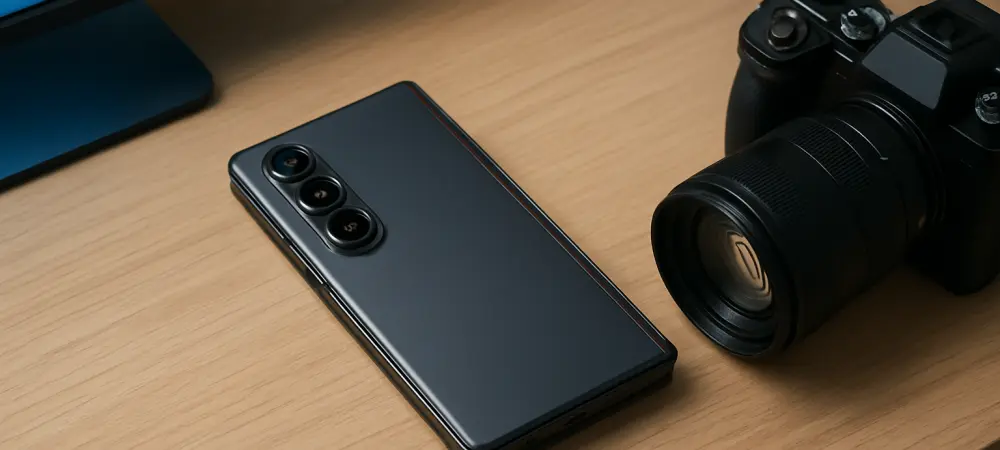
The intersection of folding hardware and high-resolution imaging has created a unique technical friction where peak performance often clashes with the harsh realities of thermal physics in the Samsung Galaxy Z Fold 8 series. This integration of high-resolution sensors within a folding chassis attempts to bridge the gap between versatile form factors and traditional flagships.
The Evolution of Foldable Imaging Systems
The Galaxy Z Fold 8 and Z Fold 8 Ultra represent a bold attempt to merge flagship-grade optics with a collapsible form factor. Unlike traditional slab phones, these foldables must house sophisticated sensor arrays within thin halves, requiring a total reimagining of internal architecture. This necessity drives a complex balance between the physical depth of lenses and the sleekness expected of a premium device.
Core Imaging Features: Processing Logic
High-Resolution Image Synthesis: 24-Megapixel Output
High-resolution image synthesis allows the system to pull data from the sensor to produce 24-megapixel shots. This mode is designed for professional-grade detail, but it demands significant computational power. It offers a clear advantage for photographers who require extra cropping room without sacrificing clarity.
Intelligent Thermal Throttling: Resolution Scaling
When internal temperatures hit 45°C (113°F), the software intervenes, downscaling to 12 megapixels to protect the chipset. This automated mechanism ensures system stability during high-intensity tasks. It highlights a pragmatic approach to hardware management, preventing permanent component damage at the cost of immediate pixel count.
Current Trends: Computational Photography Management
Modern mobile photography has entered a phase of “conditional performance,” where hardware capabilities are no longer absolute. This trend reflects a shift toward aggressive software-based protection, ensuring that devices remain stable even if it means sacrificing advertised features. Manufacturers now prioritize component longevity over consistent peak metrics in extreme environments.
Practical Applications: Environmental Performance
During outdoor summer sessions, users often find their resolution dropped unexpectedly. The logic extends to macro and low-light shots, where the phone favors the larger virtual pixels of a 12-megapixel binning process to reduce noise. This prioritization ensures that even if resolution is lower, the resulting image quality remains usable and visually pleasing.
Technical Constraints: Hardware Limitations
The thinness of the foldable body leaves little room for the expansive vapor chambers found in traditional smartphones. Consequently, heat management is primarily handled by software, which limits the frequency of high-resolution processing cycles. Ongoing development efforts seek to refine these algorithms, aiming for a more transparent transition between performance tiers.
Future Outlook: Foldable Camera Hardware
Progress toward more efficient cooling solutions and AI-driven noise reduction is likely to mitigate these compromises. Future hardware may include graphene-based cooling layers to dissipate heat more effectively. These advancements will likely bridge the gap between 12MP and 24MP performance, eventually making resolution drops a relic of early foldable engineering.
Final Assessment: Samsung Foldable Performance
The review of the Galaxy Z Fold 8 series demonstrated that while the hardware pushed boundaries, the software prioritized safety over raw output. Users learned to adapt to environmental constraints when seeking peak resolution. The industry moved toward more robust thermal solutions, signaling a shift in how premium foldable devices balanced high-end capabilities with physical durability.