

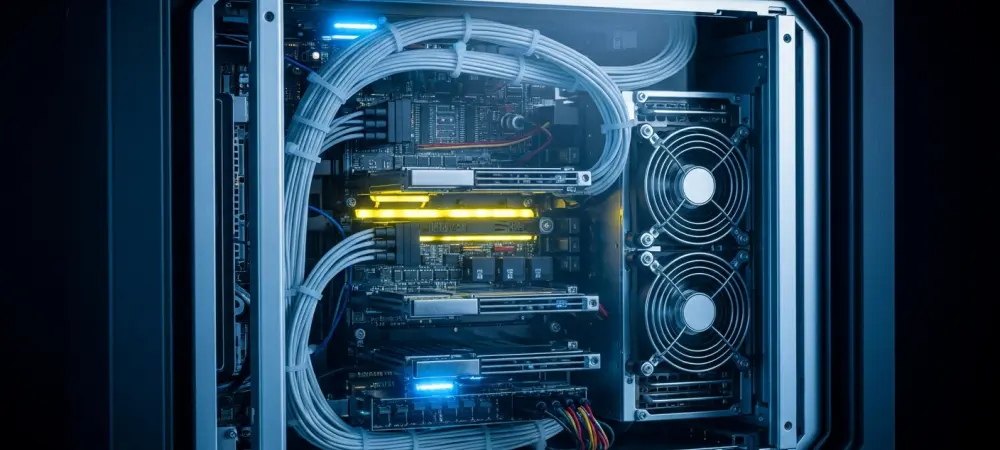
The rapid proliferation of data-intensive applications has forced a fundamental shift away from centralized cloud architectures toward resilient, localized infrastructure capable of operating in the harshest physical environments imaginable. Modern organizations no longer rely solely on distant server farms; instead, they utilize micro data centers that function as self-contained, portable hubs for localized data storage and micro-processing. This decentralized approach ensures that critical information remains close to the point of origin, bypassing the bottlenecks inherent in traditional network topologies.
The Fundamentals of Rugged Edge Infrastructure
Rugged edge infrastructure bridges the gap between massive cloud facilities and the practical needs of the field. These micro data centers are self-contained, portable units designed to house sophisticated hardware in locations that lack traditional climate control. By integrating cooling, power, and security into a single chassis, these systems enable computing where it was previously impossible.
The relevance of this technology is particularly high for organizations requiring low-latency processing. When a server is positioned at the edge, data does not have to travel through multiple network hops to reach a centralized site. This localized processing capability allows for immediate feedback loops, which are essential in industries ranging from smart manufacturing to professional sports where every millisecond affects the outcome.
Core Technical Components: Performance and Resilience Features
Environmental Hardening and Protective Chassis
Physical construction is the primary defense of a rugged unit, utilizing IP-rated enclosures that provide comprehensive waterproofing and dustproofing. These features allow the hardware to operate in “semi-outdoor” conditions, such as warehouses or training hangars, where environmental contaminants would quickly destroy standard equipment. The refrigerator-sized form factor ensures that while the units are robust, they remain portable enough to be moved as operational needs evolve.
Integrated Support Systems and Latency Optimization
Internally, these units feature integrated Uninterruptible Power Supplies and advanced noise insulation to maintain hardware stability and prevent environmental disruption. By maintaining high-performance computing resources within 30 meters of data sources, organizations can virtually eliminate latency. This proximity is a critical performance metric, ensuring that real-time analytics remain accurate and responsive even during peak data loads.
Innovations in Decentralized Data Management
Recent developments in the sector have introduced the “managed edge” service model, where third-party providers oversee hardware via 24/7 remote monitoring. Furthermore, the trend toward modular, scalable units means that companies can expand their capacity incrementally rather than investing in massive, underutilized server rooms.
Specialized hardware partnerships have also emerged as a significant trend. Global manufacturers now collaborate with local IT integrators to customize solutions for specific regional markets. For instance, the partnership between Zella DC and Internet Initiative Japan has brought specialized cooling and management software to the Japanese market, ensuring that the hardware is optimized for local environmental challenges.
Real-World Implementations: Professional Athletics and Beyond
The Tohoku Rakuten Golden Eagles, a professional baseball team in Japan, have implemented this technology to support their player performance systems. By installing Zella Pro units directly into their indoor training facilities in Sendai, they bypassed the limitations of their existing, overcapacity server rooms. These units process high volumes of athletic data in real time, providing coaches with immediate insights during practice sessions.
This specific use case highlights the technology’s ability to thrive in challenging environments characterized by high humidity and fluctuating seasonal temperatures. The units maintain a stable internal climate, protecting the sensitive player tracking hardware from the dust and moisture typical of training grounds. This implementation proves that ruggedized edge solutions are no longer just for heavy industry; they are essential for any data-driven organization operating outside a traditional office.
Navigating Technical and Environmental Hurdles
Significant challenges remain, particularly regarding the heat output generated by high-density servers in confined spaces. To address this, many installations require external air conditioning solutions to prevent thermal throttling without disturbing the immediate training or working environment. Noise pollution is another hurdle, as the cooling fans within the units can be loud enough to disrupt the focus of athletes or technicians.
Furthermore, the market requires more proactive proposals from technology vendors. Rather than simply fulfilling equipment orders, providers must understand the specific industrial or athletic workflows of their clients. This shift from reactive fulfillment to strategic consulting is necessary to overcome the logistical obstacles associated with deploying high-performance IT in non-traditional settings.
Future Projections for Edge Computing Evolution
Looking ahead, the integration of AI-driven analytics at the point of data collection will likely become the primary driver of edge adoption. As these systems become more intelligent, they will be able to filter and process data locally, sending only essential insights to the cloud. This will further reduce bandwidth costs and improve the speed of automated decision-making in complex environments. Breakthroughs in cooling efficiency and power density are also expected to shrink the physical footprint of these units even further. As the hardware becomes more compact, it will find its way into even more diverse sectors, including remote medical facilities and autonomous transportation hubs. The long-term impact of this localized infrastructure will be a complete reimagining of how data is managed across global industries.
Final Evaluation of Rugged Edge Solutions
This review determined that the shift toward localized micro data centers successfully addressed the environmental and latency barriers that hindered previous decentralized efforts. The project with the Tohoku Rakuten Golden Eagles served as a clear demonstration of how strategic hardware placement could result in a measurable competitive advantage.
Ultimately, the implementation of these rugged units proved to be a decisive factor in modernizing data workflows. The transition from massive, centralized server rooms to portable, managed edge solutions marked a significant milestone in IT infrastructure. Future developments will likely build upon these successes, ensuring that high-performance computing remains accessible regardless of the physical location or environmental challenges.