

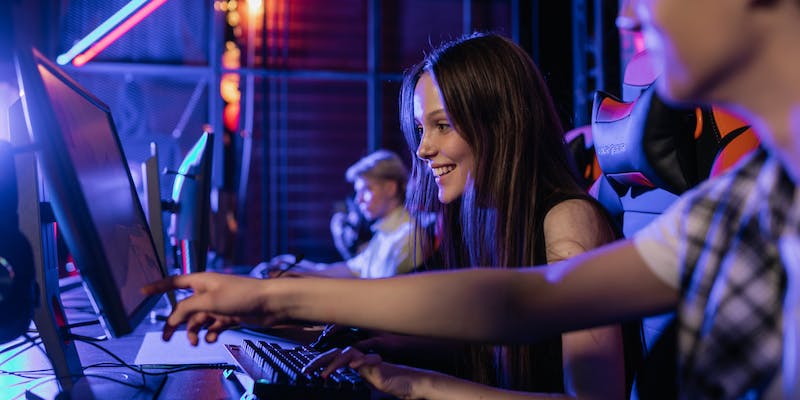
Blockchain is poised to revolutionize gaming, bestowing upon players an unprecedented level of control and ownership over their virtual experiences. This technology is transforming gaming landscapes, granting gamers not only ephemeral victories but also the potential to shape the gaming world according to their own vision.
With blockchain, the notion of genuine ownership comes to the fore, as gamers gain the ability to own in-game assets in a concrete way, potentially even earning from them as they might with real-world assets. This integration also paves the way for in-game economies that reflect the dynamism of real markets, complete with trade, investment, and growth.
Moreover, blockchain ensures fairness and transparency within games, raising standards and reaffirming trust in the systems at play. It introduces verifiable scarcity for collectibles and characters, while facilitating secure and verifiable transactions, which is a massive shift from the previous gaming paradigms where game developers had full control.
The infusion of blockchain into gaming is not just a technical evolution; it’s a cultural shift. Gamers are no longer just consumers; they become stakeholders. It heralds a future where gamers can expect that their time and effort can result in tangible assets taking on value both within and outside the game. This form of gaming is about to redefine entertainment, economics, and ownership, encapsulating gamers in a more immersive, empowering, and equitable digital ecosystem.
Empowering Players with True Ownership
The advent of blockchain gaming has brought a paradigm in which in-game assets transcend their previous state of fleeting digital constructs. Through blockchain and the innovation of Non-Fungible Tokens (NFTs), these assets gain indisputable ownership and real-world value. Players can now possess a unique in-game sword with the certainty that it belongs solely to them, tradable in vast digital marketplaces. This evolution disrupts the traditional confines of gaming, turning every skirmish and quest into an opportunity for true economic engagement. As players begin to perceive their virtual endeavors as investments, the entire gaming experience is redefined, setting the stage for a revolution in digital ownership.
The significance of NFTs extends well beyond the cosmetic. They mark the intersection of gaming and finance, creating a hybrid platform where players are investors and their strategic decisions carry weight in both realms. This synergy promises an expansive future for the gaming industry, where the thrill of gameplay is amplified by the gravity of tangible stakes.
Bridging Virtual Worlds: The Power of Interoperability
In the emergent blockchain gaming universe, the once-impenetrable barriers between distinct gaming realms are dissolving, thanks to the concept of interoperability. Virtual possessions acquired in one game now retain their value and utility in another, allowing players to weave a continuous thread through their online identities. With blockchain as the underlying framework, the vision of a seamless and unified gaming multiverse inches ever closer to reality.
Interoperability enriches the gaming landscape with unprecedented depth. Gamers no longer operate in isolated pockets of the digital sphere but in a vast ecosystem where each move has the potential to reverberate through multiple worlds. Initiatives, alliances, and digital commodities hold the promise of resonating beyond their origins, engendering an industry where the spirit of collective exploration and achievement flourishes.
Decentralizing Game Development and Governance
Blockchain technology is shattering the long-standing centralized fortresses that once dominated game development. Independent creators and players now wield influence through Decentralized Autonomous Organizations (DAOs), enabling a truly collective approach to creating the games of tomorrow. Ideas and resources circulate within these communities, ensuring that the best visions are not just dreamt but brought to virtual life, powered by the collective will of the gaming populace.
With DAOs, the power dynamics of game creation and governance undergo a fundamental shift. No longer the sole domain of corporate behemoths, the development process becomes a shared journey, with transparency and inclusivity at its core. Through this model of shared ownership and responsivity, the future of gaming culture is molded by the aspirations and interactions of its most passionate stakeholders.
Ensuring Fair Play with Transparent Systems
Blockchain technology has revolutionized the gaming industry by forging an environment where trust is seamlessly integrated into the fabric of every game. Its immutable ledger functions as an unalterable record of every in-game action and transaction, cementing a culture of fairness and transparency. This system inherently excludes any form of deception or unfair play, allowing only the player’s skill and strategic acumen to dictate the outcome of the game.
In this trustless domain established by blockchain’s clear rules, games become a true test of merit, challenging players on an equal footing. The certainty that comes with blockchain’s explicit and open processes means that players operate in a space where victory is not obscured by doubt or the possibility of foul play. It’s a competitive sphere purified of all uncertainties, set for the pure celebration of strategic mastery and talent.
As such, blockchain-based games are epitomes of integrity, offering a battleground where success is predicated on a player’s wit and might alone. This lends a purer form of gaming excitement, where every move is transparent and every win or loss can be attributed solely to the player’s choices and abilities, fostering a truly meritocratic gaming universe.
Beyond Play-to-Earn: Innovating Game Interaction Models
Blockchain gaming is outgrowing its play-to-earn origins, giving rise to an intricate tapestry of interaction models that redefine gamer engagement. It is a burgeoning world of tokenized economies, where in-game currency wields real-world significance, and strategic alliances among players reflect the dynamism of genuine social and economic networks.
As this novel landscape unfolds, it beckons players to partake in a more substantial gaming experience, where the line between virtual and reality becomes blurred. Gaming guilds and cooperative missions are but the nascent stages of interaction, with evolution eager to unveil its next iteration. The progression from earning to interaction signifies the rich potential and continuous innovation that blockchain gaming fosters.
Addressing the Challenges of Blockchain Adoption
Embarking on the blockchain gaming adventure presents vast opportunities, yet it’s a path riddled with hurdles. Players and creators alike must wrestle with scalability issues, the labyrinth of legal stipulations, and the daunting task of mastering the nuances of blockchain technology. The industry must, therefore, tackle these issues with strategic acumen and the spirit of innovation.
The gaming and blockchain communities are on a mission to fuse this technology into the fabric of gaming. This integration promises a new era of immersive play and equitable digital ecosystems. Overcoming the current challenges—through teamwork and persistent innovation—is paramount for paving the way to this future. By doing so, blockchain will do more than just underpin games; it will revolutionize the entire gaming narrative.