

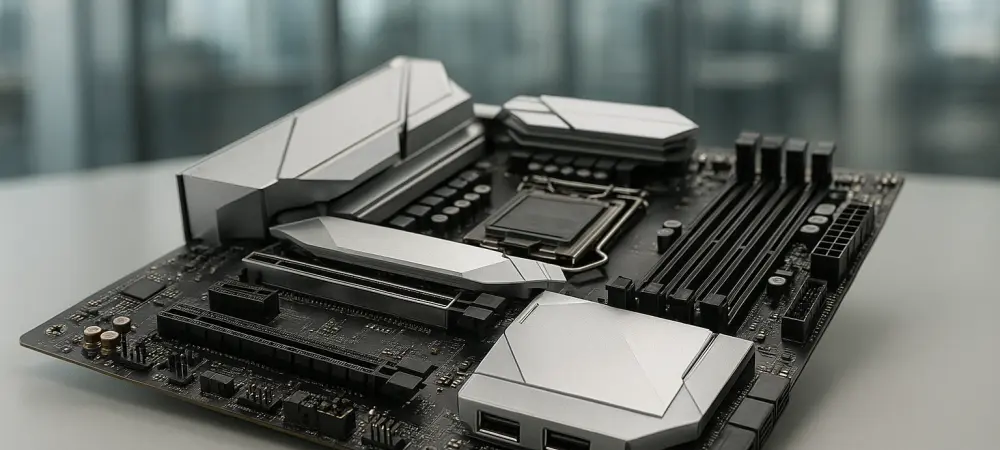
The V14 revision of this flagship board incorporates internal refinements to the circuitry specifically designed to improve the performance of high-frequency DDR5 memory. As the hardware landscape in 2026 continues to evolve, the AM5 platform has reached a state of peak maturity, providing a stable foundation for the latest Zen 5-based Ryzen 9000 processors. This motherboard serves as a pivotal bridge between established architectural standards and the demanding requirements of modern high-bandwidth applications. By prioritizing signal integrity and electrical efficiency, the engineering team has addressed the common bottlenecks associated with extreme data throughput. Enthusiasts seeking to maximize the potential of the Granite Ridge architecture will find that the refinements in this iteration facilitate more aggressive tuning than previous versions. The transition to the 800-series chipsets reflects a broader industry shift toward mandatory high-speed standards, ensuring that every component within the system can operate at its peak theoretical capacity without being hindered by legacy limitations.
Standardizing Connectivity: Mandatory USB4 and PCIe 5.0 Integration
One of the most significant advancements within the X870E ecosystem is the mandatory inclusion of USB4 technology, which provides a versatile and high-bandwidth interface for a wide array of external peripherals. Unlike previous generations where such features were often relegated to optional add-in cards or specific premium models, the current standards ensure that high-speed data transfer is a fundamental expectation. This development is particularly beneficial for creative professionals who rely on external storage arrays or high-resolution docking stations, as it guarantees a consistent experience across the entire enthusiast-grade spectrum. The integration of USB4 also streamlines the motherboard layout, as manufacturers must now adhere to strict signal routing requirements to maintain the integrity of the 40Gbps connection. This focus on standardizing high-performance I/O reflects the growing necessity for universal compatibility in an era where data sizes for video and complex datasets continue to expand at an unprecedented rate for modern users.
In addition to external connectivity, the internal expansion capabilities have been elevated to the PCIe Gen5 standard for both the primary graphics slot and the main NVMe M.2 interface. This level of bandwidth is essential for future-proofing systems against the next generation of discrete GPUs and ultra-fast storage solutions that are becoming more prevalent in 2026. By ensuring that the primary data pathways are not restricted by older protocols, the motherboard allows for a seamless transition as newer hardware components are released. The technical architecture behind this involves sophisticated PCB layering to prevent electromagnetic interference, which is a common challenge when dealing with the high frequencies required for Gen5 speeds. This commitment to maintaining the highest possible transfer rates across all critical interfaces ensures that the system remains responsive under heavy multitasking or intensive gaming scenarios. It establishes a baseline of performance that ensures the longevity of the platform for several years to come for the consumer.
Aesthetic Refinement: The Industrial Design of the Vulcan W
The visual identity of the Vulcan W series is defined by its striking silver-white color palette, which has been meticulously applied to both the PCB and the surrounding heatsink infrastructure. This design choice caters to a specific segment of the market that prioritizes clean, cohesive aesthetics in “all-white” PC configurations, a trend that remains highly popular among boutique builders. The use of frosted metallic finishes on the thermal spreaders provides a sophisticated contrast to the white substrate, creating a premium look that avoids the plasticky feel of lower-tier products. Beyond its appearance, the industrial design serves a functional purpose by maximizing the surface area for heat dissipation. Each component of the board’s armor is precision-milled to ensure tight tolerances, reflecting the high manufacturing standards associated with the Vulcan branding. This attention to detail extends to the integrated RGB lighting, which is strategically placed to accentuate the board’s geometric lines without becoming overly distracting or gaudy during operation.
Thermal management is further bolstered by the inclusion of massive heatsinks that cover the chipset and the multiple M.2 storage slots distributed across the board. In a high-performance environment, maintaining low temperatures for NVMe drives is critical to preventing thermal throttling, especially when utilizing Gen5 drives that generate significant heat during sustained workloads. The motherboard utilizes high-conductivity thermal pads to facilitate efficient heat transfer from the underlying components to the metal fins. This passive cooling strategy is designed to work in tandem with the internal airflow of a chassis, ensuring that even during extended stress tests or long gaming sessions, the temperatures remain within optimal ranges. The structural integrity provided by these metallic covers also prevents PCB flex, which is a common issue for larger E-ATX motherboards when heavy air coolers or high-end graphics cards are installed. This marriage of form and function illustrates the engineering philosophy behind the Vulcan series, where every aesthetic choice is supported by a practical performance benefit.
Electrical Architecture: Precision Power Delivery for Overclocking
The voltage regulator module on this board is an over-engineered masterpiece designed to handle the massive electrical demands of top-tier processors like the Ryzen 9 9950X. Utilizing a multi-phase digital power design, the motherboard ensures that voltage delivery remains rock-steady even when the CPU is pushed to its absolute limits through manual overclocking or Precision Boost Overdrive. This stability is achieved through the use of high-quality chokes and capacitors that are rated for extreme temperatures and high current loads. The V14 revision specifically focuses on reducing ripple and electrical noise, which is vital for maintaining system stability when the processor is operating at its maximum clock speeds. Such robust power delivery is not merely about achieving high numbers in benchmarks; it is about ensuring the long-term health of the silicon by providing clean, filtered power that minimizes degradation over time. This makes the board a preferred choice for enthusiasts who demand reliability during 24/7 operation under heavy computational loads.
Memory performance also benefits from the advanced electrical design, as the motherboard is tuned to support high-frequency DDR5 profiles that can exceed 8000 MT/s. Achieving these speeds requires meticulous trace routing to ensure that the memory signals arrive at the CPU with perfect timing and minimal interference. The BIOS provides a comprehensive suite of tuning options, allowing users to adjust primary, secondary, and tertiary timings with granular precision. This level of control is essential for squeezing every bit of performance out of modern memory modules, which have become increasingly sensitive to voltage and temperature fluctuations. By offering a stable platform for both CPU and RAM overclocking, the motherboard empowers users to tailor their system’s performance to their specific needs, whether they are focused on minimizing latency for competitive gaming or maximizing throughput for data-heavy professional tasks. The refined circuitry of the V14 revision serves as the silent backbone that enables these high-performance configurations to remain stable.
Platform Strategy: Longevity and Market Positioning in 2026
The transition to the LGA 1718 socket represents a commitment from AMD to provide a long-lasting ecosystem that will be supported through at least 2029. This longevity is a key selling point for the AM5 platform, as it allows users to upgrade their processors across multiple generations without the need to replace the entire motherboard. By maintaining the same physical footprint as previous designs, the motherboard ensures compatibility with a vast array of existing cooling solutions, significantly reducing the cost of entry for those migrating from older systems. This approach to platform sustainability is highly valued in the enthusiast community, where hardware cycles can be rapid and expensive. The Vulcan W positions itself as a premium entry within this ecosystem, offering a feature set that justifies its status as a flagship product. It stands as a testament to the benefits of a mature socket design, where the focus has shifted from establishing the basics to refining the limits of what the architecture can achieve for high-end users.
When navigating the current 800-series hierarchy, the X870E chipset sits at the pinnacle, providing the maximum number of PCIe lanes and the most comprehensive I/O features available. This distinguishes it from the B850 and B840 variants, which are designed for more budget-conscious builds where certain high-speed features are optional. The Vulcan W is specifically targeted at the segment of the market that refuses to compromise on connectivity, storage, or aesthetics. It competes directly with the most prestigious offerings from other manufacturers by delivering a unique blend of white-themed design and extreme performance capabilities. For builders who are planning a high-end workstation or a top-tier gaming rig in 2026, this motherboard represents a strategic investment in a platform that is built to accommodate future advancements in hardware technology. The careful segmentation of the 800-series ensures that every user can find a board that matches their requirements, but for those who want the absolute best, the X870E Vulcan W remains a standout choice for high-performance computing.
Strategic Implementation: Optimization for Future Workloads
To maximize the utility of this motherboard, builders should prioritize the selection of components that can leverage the Gen5 and USB4 standards. Investing in a high-speed Gen5 NVMe drive for the primary boot volume will provide the most noticeable improvement in system responsiveness and data transfer speeds. Additionally, users who frequently work with large external files should consider adopting USB4-compatible peripherals to take full advantage of the 40Gbps bandwidth. It was also advisable to pair this board with a high-quality power supply that features a dedicated 12VHPWR connector, ensuring that the system had ample headroom for the latest generation of power-hungry graphics cards. Fine-tuning the memory timings within the BIOS became a necessary step for those looking to reach the theoretical limits of the platform, as the V14 revision provided the stability required for these advanced configurations. By focusing on these specific areas, users were able to build a system that was not only powerful for current tasks but also well-prepared for the software demands of the coming years.
The introduction of the X870E Vulcan W OC effectively closed the gap between experimental overclocking and daily reliability. This motherboard successfully demonstrated that high-end aesthetics did not have to come at the expense of technical rigor or electrical stability. Throughout its development, the focus remained on refining the existing AM5 architecture to better serve the needs of a more demanding consumer base. By standardizing high-bandwidth connectivity and improving memory signal integrity, the board set a high bar for what a flagship motherboard should provide in 2026. This evolution proved that the maturity of a platform was just as important as the initial launch of a new socket, as it allowed for the fine-tuning of every critical subsystem. As the industry moved forward, the lessons learned from the V14 revision continued to influence how power delivery and thermal management were handled in premium hardware. Ultimately, this motherboard provided a stable and future-proof foundation that allowed the highest-performing processors to reach their full potential without compromise.