

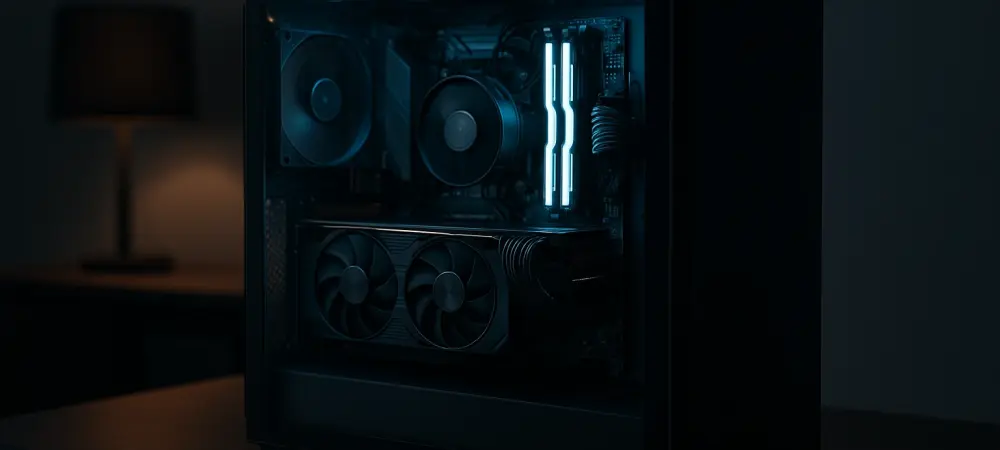
Users operating on the NVIDIA Pascal architecture will find that the GTX 1060 remains a viable entry point for 1080p playability when paired with modern upscaling technologies. This specific hardware target highlights the significant efforts made by Asobo Studio to ensure their latest narrative epic remains accessible to a broad demographic of PC gamers. While the visual fidelity of the proprietary engine suggests a need for the latest silicon, the reality is a more nuanced story of clever optimization and the intelligent application of DirectX 12 features. The game pushes the boundaries of cinematic storytelling, utilizing high-density assets and intricate character models that would typically strain older systems to their breaking point. However, by focusing on the core strengths of the Asobo Studio Engine, the developers have managed to preserve the atmospheric tension and emotional weight of the experience for those who have not yet transitioned to current-generation enthusiast builds. This investigation into legacy performance reveals how a title can look like a modern powerhouse while maintaining a technical baseline that respects the longevity of mid-range components from the mid-to-late 2010s. For players using hardware that predates the current console cycle, the experience is not merely functional but surprisingly fluid, provided that the right balance of settings and upscaling is employed to manage the heavy computational load inherent in the game’s massive crowd simulations and expansive medieval environments.
System Prerequisites and Technical Infrastructure
Core Requirements: Essential Stability Baselines
Maintaining a stable frame rate in a title as demanding as this requires more than just a capable graphics processor; it demands a solid foundation in the underlying system software and storage architecture. To achieve even the most basic level of performance, users must be operating on a modern environment like Windows 10 or 11, as the game utilizes the DirectX 12 API exclusively to handle its complex rendering pipelines and thread management. Unlike previous generations of gaming where a mechanical hard drive might have sufficed, the move to an NVMe SSD has transitioned from a recommendation to a fundamental necessity. This shift is driven by the game’s high-speed asset streaming requirements, which are designed to eliminate the microstutters often associated with older SATA-based drives or traditional HDDs. Without the rapid throughput provided by modern solid-state storage, players will likely encounter significant hitches when transitioning between the game’s highly detailed environments, as the engine constantly cycles high-resolution textures and geometry in the background to maintain its cinematic presentation without the intrusion of traditional loading screens.
For those aiming for a baseline 1080p experience at a consistent 30 frames per second, the processor requirements have similarly evolved to reflect the increased complexity of modern game logic and physics. An Intel Core i3-12100 or an AMD Ryzen 3 3100 now serves as the practical entry point, representing the minimum processing power needed to handle the title’s heavy background tasks. These quad-core processors are tasked with managing a significant amount of data, from the rudimentary AI of enemy guards to the logistical overhead of the DirectX 12 interface. While these chips are capable, they are often pushed to their limits during intense sequences, making it imperative for users to close background applications to ensure every available cycle is dedicated to the game. This focus on modern architecture even at the low end ensures that the game can utilize instructions and features that were simply not available on older quad-core chips from earlier in the decade. The shift toward these newer but affordable CPUs illustrates how the minimum requirements have been raised to ensure a level of stability that matches the game’s high production values.
Graphics and Memory: The Bottleneck Challenges
System memory has emerged as one of the most critical factors in preventing performance degradation during extended play sessions. A baseline of 16 GB of RAM, specifically in a dual-channel configuration, is strictly necessary to avoid the severe stuttering that occurs when the system is forced to swap data to the page file. The engine uses a massive amount of system memory to cache assets that do not fit into the dedicated video memory of older graphics cards, making the speed and capacity of the RAM a primary driver of overall smoothness. When the system memory is insufficient or running in single-channel mode, the bandwidth limitations become immediately apparent during high-action sequences or when moving through densely populated market squares. This requirement is a clear signal that the days of 8 GB being sufficient for modern narrative-driven games have firmly passed, as the complexity of the environments and the sheer volume of unique assets require a larger and faster pool of temporary storage to keep the engine fed with the data it needs for real-time rendering.
On the graphics side, the entry-level experience is defined by the aging but resilient NVIDIA GTX 1060 and the AMD Radeon RX 5500 XT. These cards represent the minimum threshold for achieving a playable experience, but they are heavily reliant on modern upscaling technologies like DLSS or FSR to bridge the gap. For users with these older components, utilizing the “Quality” or “Balanced” presets of these upscalers is essential for maintaining a frame rate that stays above the 30 FPS mark at 1080p. Without this software-based assistance, the raw rasterization power of these legacy cards would struggle to handle the complex lighting and shadow effects that are baked into the game’s aesthetic. This reliance on upscaling is a strategic choice by the developers, allowing them to keep the game visually striking while reducing the actual internal rendering resolution to a level that 2010s-era silicon can handle. It is a pragmatic approach that allows the legacy of the GTX 1060 to continue, even as the demands of modern game engines grow increasingly sophisticated and resource-intensive.
Optimization Strategies for Legacy Hardware
Advanced CPU: Threading and Rat Swarms
The technical wizardry behind the massive rat swarms remains the centerpiece of the Asobo Studio Engine, and keeping this feature performant on older hardware required a deep refactoring of the game’s task scheduler. In previous iterations, these swarms would often cause a massive CPU bottleneck as the processor struggled to calculate the individual paths and behaviors of thousands of entities simultaneously. To resolve this for users on legacy quad-core and hex-core chips, the developers implemented a more efficient distribution of threads, ensuring that the workload is spread more evenly across all available logical processors. This prevents any single core from becoming a point of failure, which in turn leads to a more consistent frame pace even when the screen is filled with the series’ signature rodent waves. This structural improvement is particularly noticeable on older Ryzen 5 and Intel i5 processors, which can now maintain a steady rhythm that was previously difficult to achieve in such computationally heavy scenarios.
Beyond mere thread distribution, a hybrid logic system was developed to further reduce the strain on aging CPUs without sacrificing the visual impact of the swarms. For rats located at a distance from the player, the engine shifts their processing to GPU-based vector calculations, treating the movement more like a fluid simulation rather than individual AI actors. This offloads a significant portion of the work from the CPU, allowing it to focus on more complex tasks like player interaction and environmental physics. Only the rats in the immediate vicinity of the player character utilize simplified behavioral algorithms for pathfinding and interaction, ensuring that the closest threats feel responsive and intelligent. This intelligent scaling of complexity based on distance is a masterclass in optimization, providing the illusion of a massive, living swarm while carefully managing the limited cycles of older hardware. It allows the game to deliver its most iconic and terrifying moments without causing the hardware to buckle under the weight of the simulation.
Visual Fidelity: Memory Management and Screen Space
One of the most impressive feats of the updated engine is its ability to maintain a high-quality visual presentation on cards with limited VRAM, such as the 4 GB or 6GB models that were common in the mid-range market years ago. To accommodate these constraints, the developers reworked the Level of Detail system to scale textures and geometry dynamically based on the available video memory. This prevents the harsh “popping” of textures and the microstutters that typically occur when a game exceeds its VRAM budget and is forced to fetch data from the slower system RAM. By prioritizing the most visible elements in the player’s immediate view and aggressively downscaling distant assets, the engine ensures that the cinematic experience remains intact even on older hardware. This dynamic scaling is nearly invisible during gameplay, but it is the primary reason why cards like the GTX 1060 can still offer a visually satisfying experience without constant technical interruptions.
In addition to texture management, the developers chose to prioritize refined screen-space techniques over hardware-intensive features like Ray Tracing for legacy users. By utilizing high-quality Screen Space Ambient Occlusion (SSAO) and Ground Truth Ambient Occlusion (GTAO), the engine produces deep, moody shadows and a sense of physical weight in the environments that would otherwise require much more modern hardware. These techniques provide a similar high-contrast aesthetic to Ray Tracing but at a fraction of the performance cost, making them ideal for non-RTX graphics cards. This focus on artistic intent over raw technical features ensures that the game’s atmosphere—its most critical component—is preserved for all players. The lighting feels natural and the environments look grounded, proving that careful optimization of traditional rendering techniques can still produce results that rival the most modern effects. This approach demonstrates a commitment to the artistic vision of the game, ensuring that the dark and gritty world is accessible to everyone regardless of their hardware’s age or feature set.
Benchmarking Results and Hardware Evaluation
The performance benchmarks revealed a clear divide between the different tiers of legacy hardware, particularly when testing across various resolutions. At a standard 1080p, the GTX 1060 and RX 5500 hit a minimum playability of 25 FPS, which was considered acceptable for a cinematic title but lacked the smoothness required for more intense action sequences. However, moving up to the GTX 1660 Super or the RX 5600 XT provided a much more stable 60 FPS experience, representing the true “sweet spot” for Full HD gaming on older builds. As the resolution increased to 1440p, the demands on these cards became significantly more apparent, with the mid-range champions of yesterday struggling to maintain a consistent output. At this higher resolution, the former flagship RTX 2080 Ti and the RX 6700 XT were required to reach a comfortable 60 FPS, showcasing the steep performance curve that comes with pushing more pixels on aging silicon. These results indicated that while 1080p remained highly accessible, Quad HD was starting to move beyond the reach of all but the most powerful legacy components.
A significant finding during the testing process was the definitive sunsetting of some older architectures, most notably the AMD Polaris series, including the popular RX 400 and 500 cards. Because the engine relied on DirectX 12 Ultimate instructions such as Mesh Shaders to manage its complex geometry and crowd logic, these older cards would typically crash or fail to launch the title altogether. This marked a definitive end for many of the most popular mid-range cards of the last decade, highlighting the growing gap between cards that support modern API features and those that do not. Furthermore, native 4K resolution proved to be essentially out of reach for any legacy hardware without the use of aggressive upscaling, which often degraded the image quality to a point that negated the benefits of the higher resolution. The technical data showed that the transition to modern APIs and rendering techniques has created a new baseline for what constitutes a viable gaming rig, effectively phasing out components that were once the backbone of the PC gaming community but now lack the necessary architectural support for modern software.
The engine demonstrated impressive scaling across various CPU architectures, with the efficiency sweet spot sitting at around 12 threads. For those utilizing NVIDIA graphics cards, an Intel Core i5-7600K or a Ryzen 7 1800X served as a reliable baseline for maintaining a 60 FPS target, provided the GPU was not the bottleneck. Interestingly, users with AMD GPUs often faced slightly higher CPU demands, frequently requiring a more modern Ryzen 5 2600X to maintain the same target due to differences in driver overhead and API interaction. While the game remained mostly GPU-bound in the majority of scenarios, having at least six physical cores proved to be a significant advantage during the game’s most crowded scenes, where the physics and AI calculations peaked. This threading efficiency ensured that even older enthusiast-tier processors could keep up with the game’s demands, provided they were paired with sufficient system memory. The focus on a stable frame pace over raw visual peaks ensured that the cinematic adventure remained engaging and responsive, even when the hardware was being pushed to its absolute limits.
Memory management emerged as a standout feature of the engine’s overall optimization for these older builds. Throughout the testing at 1080p and 1440p, VRAM usage consistently stayed between 5 GB and 6 GB, rarely exceeding 7 GB even during 4K testing with upscaling active. This indicated that the texture streaming was exceptionally well-tuned for the previous generation of flagship cards, allowing them to perform at their peak without being limited by their video memory capacity. However, the requirement for 16 GB of system RAM was strictly enforced by the engine’s architecture, as it utilized a large portion of the system memory to cache assets that could not fit into the VRAM. This made dual-channel configurations mandatory for any player seeking a stutter-free experience, as the bandwidth provided by single-channel memory was simply insufficient for the task. The technical data confirmed that as long as the memory and storage requirements were met, older rigs could still deliver a compelling and atmospheric performance that stayed true to the developer’s original vision for the game.
The technical data showed that the software was a well-optimized title that successfully balanced high-end visuals with the realities of an aging hardware market. While the transition to DirectX 12 Ultimate officially sunsetted older AMD architectures, those with GTX 10-series or first-generation RTX cards still enjoyed a high-quality experience. The developers successfully offloaded traditional CPU burdens to the GPU, ensuring that the core experience remained intact for players who had not yet upgraded to the latest hardware. To maintain this level of performance in the coming years, users with legacy systems should prioritize upgrading their storage to NVMe SSDs and ensuring they have at least 16 GB of dual-channel RAM, as these components have become the new “floor” for modern gaming. Looking ahead, the focus on software-based upscaling and intelligent resource management will likely be the primary method for extending the life of older components, allowing players to enjoy cinematic adventures without the constant need for expensive hardware cycles. The success of this title in running on older rigs provided a roadmap for future developers, proving that a commitment to optimization can keep a game accessible and visually stunning for a diverse audience.