

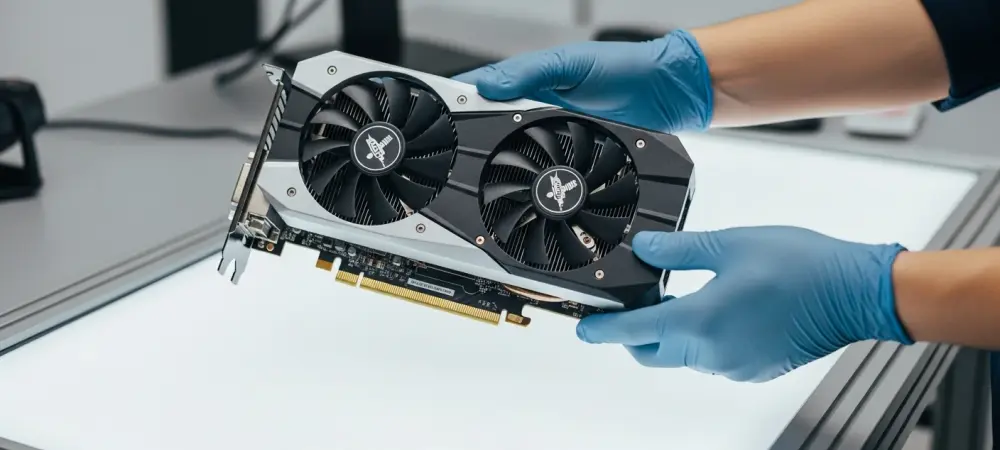
The sheer demand for cutting-edge graphical performance has pushed the secondary market into a territory where damaged goods now represent a multi-thousand dollar investment for specialized collectors. A prominent French retailer, LDLC, has initiated a controversial sales strategy by listing defective units of the NVIDIA GeForce RTX 5090 for prices exceeding $1,600, a figure that would typically purchase a top-tier functional component. These units, which include the ASUS TUF Gaming and MSI Ventus 3x OC variants, are marketed exclusively as non-operational hardware that sustained significant damage during the logistical process. While a brand-new, fully functional unit of this flagship card retails for approximately €3,249, the decision to price broken boards at nearly half that value reflects the extreme scarcity and inherent worth of the silicon beneath the shroud. This scenario forces a conversation about the value of raw components versus the utility of a working product in a market where flagship hardware remains elusive for many.
The Economics: High-End Salvage and Market Pricing
Navigating the financial landscape of high-end computing components requires an understanding that the most valuable part of any graphics card is the silicon wafer itself. When a retailer lists a non-functional RTX 5090 for over $1,600, they are essentially selling a high-stakes lottery ticket to individuals capable of performing advanced board-level repairs. This pricing sits at an uncomfortable intersection where a buyer could alternatively purchase a brand-new, fully operational RTX 5080 with a complete manufacturer warranty for a similar financial outlay. The risk is compounded by the fact that these listings often lack high-resolution, microscopic imagery of the PCB layers or the GPU die, leaving the buyer to guess the true extent of the internal fractures. For a professional technician, the potential reward is a functioning flagship card at a discount, but for the average consumer, such a purchase represents a significant liability with no guarantee of recovery. The primary justification for such exorbitant pricing lies in the completeness of the hardware, as these cards have not been scavenged for parts by third-party refurbishers before reaching the sale block. Unlike standard donor boards found on various auction sites, which are frequently stripped of their expensive VRAM modules and voltage regulator components, these RTX 5090 units are sold with all vital internal structures intact. This includes the massive GPU die and the high-speed GDDR7 memory, which are currently among the most sought-after components in the entire hardware industry. By offering cards that are physically damaged but electronically “whole” in terms of component count, the retailer caters to a niche group of experts who possess the infrared reworking stations and precision tools necessary to transplant a healthy die onto a new PCB. This reflects a shift toward a more circular hardware economy where the most expensive silicon is treated as a commodity that can be harvested and reused.
Technical Risks: Strategic Considerations for Buyers
Physical structural failure is the most common cause of death for these listed units, often manifesting as deep cracks in the multi-layered printed circuit boards caused by rough handling during shipping. When a PCB suffers a structural deformation, the microscopic traces that carry power and data signals between the memory and the processor can be severed permanently, rendering the card a sophisticated paperweight. The retailer has remained transparent about these flaws, noting that the damage typically includes impact marks and bent brackets, yet the “no refund and no return” policy remains a daunting barrier for entry. This rigid stance places the entirety of the financial burden on the purchaser, who must possess the diagnostic expertise to identify whether the core silicon survived the impact that shattered the surrounding fiberglass. Without the ability to test the card or verify the integrity of the underlying silicon interposer, the transaction moves from a traditional retail experience to a speculative investment in raw material.
Consumers and professional repair shops had to adopt a more calculated approach to procurement as the cost of flagship components continued to soar throughout the current market cycle. It became clear that purchasing damaged hardware required not only technical proficiency but also a comprehensive risk-management strategy to ensure that the cost of repair did not exceed the market value of the refurbished unit. Professionals were advised to prioritize cards with visible external damage over those with mysterious electrical failures, as physical breaks are often easier to diagnose than internal silicon degradation. For those looking to enter this high-stakes salvage market, investing in advanced thermal imaging and high-resolution diagnostic equipment was a necessary prerequisite. The industry eventually recognized that the availability of complete donor boards provided a vital lifeline for out-of-warranty repairs, though the high entry price served as a stark reminder of the premium placed on high-performance silicon. This evolution in the secondary market suggested that the lifecycle of a GPU no longer ended with a physical accident.