

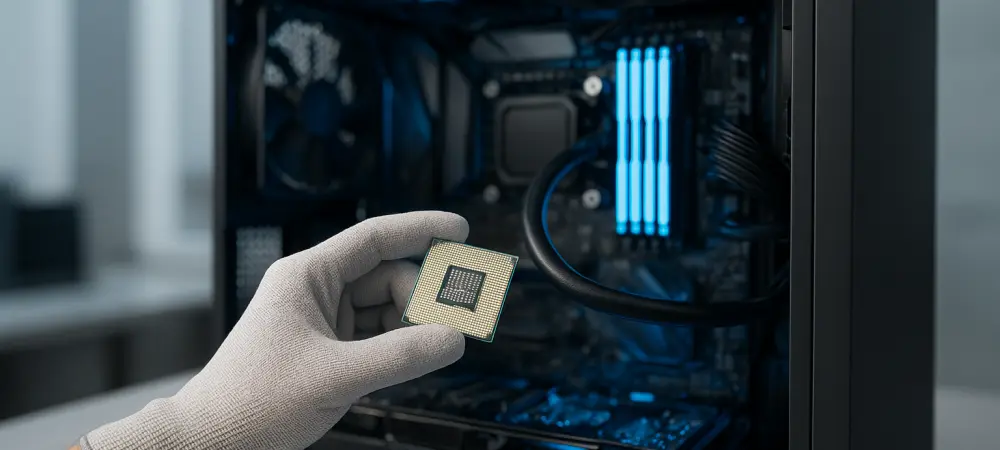
The landscape of the DIY desktop processor market is currently undergoing a significant shift, as evidenced by recent sales data from Amazon’s top-selling CPU charts. For a substantial period, the enthusiast market was essentially a monochromatic affair, with the red logo of Advanced Micro Devices appearing in every single entry of the sales charts. This dominance was not merely a matter of marketing, but a reflection of a period where AMD’s Ryzen architecture consistently outpaced the competition in both efficiency and raw gaming performance. However, recent movements in retail volume indicate that the long-standing status quo is finally being challenged by the re-emergence of Intel hardware. This shift represents the first significant disruption to AMD’s retail dominance since early 2023. While the top spots are still occupied by heavy hitters like the Ryzen 7 9800X3D, two Intel processors have successfully navigated back into the top ten rankings. This recovery signals that the “blue team” has found a way to reconnect with builders who had previously abandoned the platform for the high-efficiency allure of the Socket AM5 ecosystem. The battle for the desktop is no longer a foregone conclusion, as consumer sentiment begins to swing toward a more balanced view of the market.
The 18-Month Stranglehold Faces a Blue Disruptor
The narrative of the DIY market for nearly two years was one of total AMD saturation, leaving very little room for competition. Intel’s presence in the enthusiast space had felt increasingly marginalized, with many builders viewing the brand as a secondary choice for specialized workstations rather than the primary option for mainstream gaming rigs. This prolonged period of dominance allowed AMD to solidify its reputation as the leader in innovation, particularly through the success of its 3D V-Cache technology. However, the recent appearance of the Core i7-14700K and the Core Ultra 7 270K Plus on retail leaderboards marks a definitive turning point. These chips did not just appear by accident; they represent a strategic clawback into the market segment that values high core counts and multi-threaded versatility. The streak of total dominance by a single manufacturer has been broken, suggesting that the enthusiast community is once again willing to consider the trade-offs between different architectural philosophies.
Why the Shift in Power Matters for PC Builders
Understanding these fluctuations is vital for anyone looking to optimize a system build in the current economic landscape. For a long time, the prevailing wisdom suggested that AMD was the only logical choice due to its superior power efficiency. However, the re-emergence of Intel highlights that consumer priorities are becoming more complex. Builders are no longer just looking at frame rates; they are looking at the total cost of ownership and the flexibility of the platform they choose.
This change is deeply connected to broader trends in the technology industry, including the rising prices of peripheral components. As the cost of building a high-end machine increases, the value proposition of a processor is increasingly judged by how it interacts with the rest of the build. The shift in power suggests that Intel has identified a vulnerability in AMD’s modern platform requirements, allowing it to appeal to a demographic that feels squeezed by the mandatory transition to new and expensive standards.
Analyzing the Drivers of Intel’s Resurgence
A primary factor driving this comeback is the strategic way Intel has handled memory compatibility. While AMD’s AM5 platform requires a mandatory move to DDR5 RAM, Intel’s LGA 1700 platform continues to support DDR4. With global DDR5 shortages projected to last from 2026 to 2028, the ability to reuse existing memory or purchase cheaper older kits has become a significant financial incentive. Intel has effectively mitigated what many call the “DDR5 tax,” making its 14th-generation chips a pragmatic choice for budget-conscious upgraders.
Furthermore, aggressive price corrections have made high-end performance more accessible. The Core Ultra 7 270K Plus has emerged as a particularly strong contender by offering 24 cores at a price point that frequently dips below $290. This creates a compelling price-per-core ratio that is difficult to ignore for professionals who need a machine for both gaming and heavy productivity tasks. By lowering the barrier to entry for high-core-count processors, Intel has managed to undercut AMD’s more premium Ryzen 9 offerings.
The current market also reflects a nuanced split in user intent. While the Ryzen 7 9800X3D remains the undisputed king for pure gaming enthusiasts, Intel has positioned itself as the superior option for hybrid users. By focusing on raw clock speeds and single-core efficiency, Intel’s latest offerings are closing the gap in gaming while maintaining a significant lead in multi-core workloads. This creates a “sweet spot” for users who need a balanced machine that excels at video editing or 3D rendering without sacrificing a high-quality gaming experience.
Market Insights from the Retail Trenches
Data from major global retailers indicates a clear move from brand loyalty toward functional pragmatism. Expert analysis of these trends suggests that while a gaming-first mentality is still a significant driver, it is no longer the sole factor influencing purchase decisions. The sustained popularity of the Core i7-14700K proves that platform flexibility is often more important to the average consumer than having the newest socket or the most advanced manufacturing node.
Intel is doubling down on this strategy by reportedly working on projects designed to serve the massive base of users who are not yet ready to abandon their DDR4 setups. This focus on backward compatibility and platform longevity has provided a lifeline for the brand in the retail space. It serves as a reminder that the cutting edge is not always where the highest volume of sales occurs; often, the most successful products are those that meet the user where they currently are, rather than where the industry wants them to be.
A Framework for Choosing the Right Platform
To choose the right path, one must evaluate the total system budget rather than focusing exclusively on the price of the CPU itself. If the goal is to build a top-tier gaming rig with an upgrade path that lasts until 2027 or beyond, AMD’s Socket AM5 remains the gold standard. The longevity of the AM5 platform offers a level of security that is highly valued by those who plan to swap out their processors every few years without replacing the entire motherboard. Conversely, Intel provides a more accessible entry point for those looking to maximize their immediate performance per dollar. Choosing the blue team makes sense for users who want to avoid the high migration costs of DDR5 or those who require high core counts for professional applications immediately. The strategy for modern builders involved balancing the desire for long-term platform stability with the reality of current hardware costs and performance needs.
The retail environment eventually reached a state where competition forced both manufacturers to refine their value propositions. Builders examined their specific workloads and realized that the best processor was the one that fit their total budget constraints. The decision to invest in a platform was based on the projected availability of components and the immediate requirements of the user. This era of competition ensured that the market remained dynamic, preventing any single entity from becoming complacent. Ultimately, the industry moved toward a future where flexibility and cost-effectiveness were prioritized over pure brand allegiance.