

Dominic Jainy, a seasoned expert in the convergence of high-end mobile electronics and specialized software ecosystems, joins us to discuss one of the most successful tech-luxury collaborations of recent times. With his extensive background in analyzing how brands leverage specific hardware architectures to drive consumer engagement, Dominic provides a unique perspective on the intersection of storytelling and specifications. Today, we delve into the craftsmanship and market impact of the latest themed flagship that has taken the industry by storm, looking at everything from its intricate design elements to its record-breaking sales performance.
The unboxing of a themed smartphone is often designed to be a ritual for the fans; how does the inclusion of items like the miniature Hogwarts trunk and the invitation letter transform the initial consumer experience?
The unboxing experience is meticulously crafted to evoke a sense of nostalgia and belonging, effectively turning a simple purchase into an “enrollment” into a fictional world. By housing the device within a tiny, textured Hogwarts school trunk, the brand immediately moves away from standard cardboard packaging and creates a tangible keepsake. Inside, you aren’t just greeted by an 80W charger and a USB cable, but by emotional artifacts like a personalized invitation letter and distinct bookmarks representing the four legendary houses—Slytherin, Ravenclaw, Hufflepuff, and Gryffindor. This sensory journey is enhanced by leaflets that look as though they were plucked straight from the first film set, ensuring that the first five minutes with the product are purely about emotional immersion. It is a brilliant strategy to justify the premium nature of a special edition by making the hardware feel like a secondary component to the overall collectible experience.
Looking closely at the physical design, how do the leather-like textures and the UV-reactive crest on the rear panel influence the way a user interacts with the device in different environments?
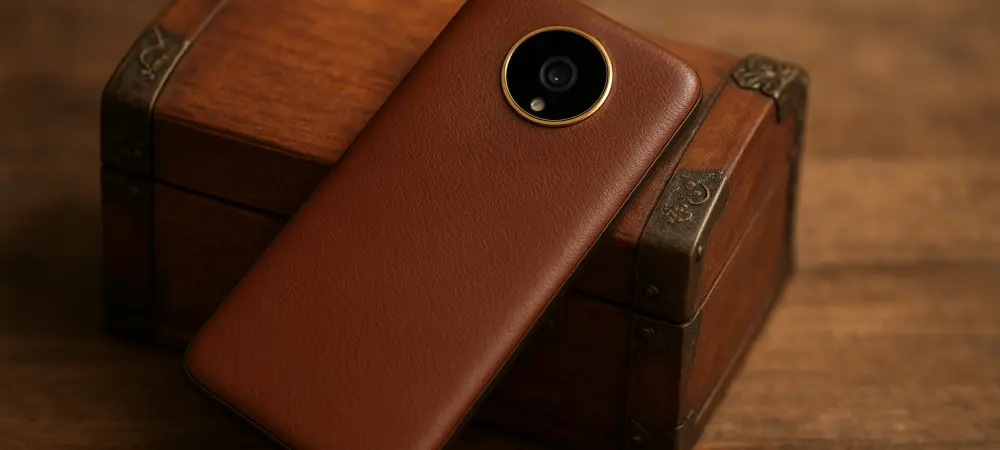
The physical design is a masterclass in tactile storytelling, utilizing a brown, leather-like texture that feels incredibly sophisticated and seasonally appropriate for the autumn launch. The diamond pattern across the back is a subtle nod to wizard’s chess, providing a grip that is both functional and evocative of the source material’s lore. The centerpiece, however, is the Hogwarts crest, which is engineered with significant depth and texture that changes when exposed to the elements. When you take the phone into direct sunlight, UV rays activate a vibrant array of house colors that pop against the brown frame, whereas indoors, the crest maintains a more somber, muted grey or dull-colored appearance. This dynamic visual element ensures the phone feels “alive,” rewarding the user for taking it out into the world and making the gold-accented frame and camera island truly shine.
Beyond the exterior aesthetics, how deeply does the software integration go to ensure that the Harry Potter theme remains consistent throughout daily usage?
The immersion extends deep into the digital layer, as the device runs on UI 7.0 based on Android 16, which has been completely reskinned to maintain the magic. Users are greeted by a custom Harry Potter boot animation, and even the security process is themed, featuring a unique wax letter seal animation for the fingerprint sensor. There are more than 30 custom-designed icons that replace standard app visuals, alongside high-resolution wallpapers featuring the iconic castle. While the deeper menus eventually revert to the familiar and efficient UI 7.0 layout, the primary touchpoints are consistently thematic. This balance ensures that while the user never forgets they are holding a piece of wizarding history, they still benefit from the streamlined performance and modern features expected in 2026.
With a massive 7,000mAh battery and a large 6.78-inch display, how does this device manage the compromise between being a heavy-duty media powerhouse and a delicately themed collector’s piece?
The device is undeniably substantial in the hand, but that weight translates into a feeling of premium durability rather than just bulk. The 6.78-inch screen is perfectly suited for long sessions of cinematic consumption, making it the ideal canvas for rewatching the very films that inspired the phone’s design. To support such a large display, the 7,000mAh battery is a critical inclusion, offering runtimes that far exceed the standard daily cycle for most modern flagships. Even with the extra weight, the ergonomic leather-like finish helps the phone feel secure during use. It serves as a high-performance tool for power users who refuse to carry a portable power bank, all while being encased in a shell that pays homage to a beloved franchise.
Considering the 12/256GB model sold out entirely within just 24 hours at a price point of INR 62,999, what does this tell us about the future potential for these kinds of high-spec themed collaborations?
The fact that this single configuration vanished from shelves in a single day proves that there is an enormous, untapped appetite for high-performance hardware paired with elite-level intellectual property. At INR 62,999, the price reflects a luxury markup that fans are clearly willing to pay when the attention to detail, such as the Hedwig-inspired camera island with its golden diamond “owl” eye, is executed with such precision. This success story will likely encourage more manufacturers to move beyond simple color swaps and instead invest in deep hardware customizations and bespoke packaging. It demonstrates that exclusivity and “fandom-first” engineering are powerful drivers in a market that can sometimes feel saturated with identical-looking glass slabs. We are seeing a shift where the phone is no longer just a communication tool, but a centerpiece of a fan’s personal collection.
What is your forecast for the future of themed mobile collaborations?
I anticipate that by the end of 2026, we will see a move toward even more interactive hardware, where the physical materials of the phone change based on software triggers or environmental sensors. We have already seen the success of UV-reactive panels, but the next step will likely involve haptic textures that change or light-emissive leather that glows during specific notifications. Manufacturers will move away from broad “one-size-fits-all” designs and toward hyper-limited batches of 5,000 to 10,000 units that offer deeper integration with augmented reality experiences. This will turn the smartphone into a literal “key” to digital worlds, where owning the device unlocks exclusive content or real-world events tailored specifically to that fandom.