

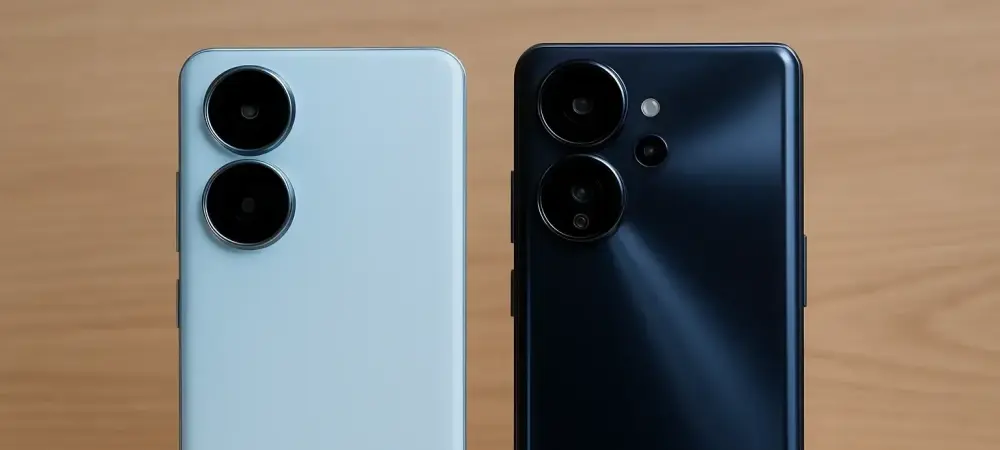
In the ever-evolving smartphone market, mid-range devices are closing the gap with flagship models, offering premium features at accessible prices. Imagine a scenario where consumers no longer need to spend a fortune to access cutting-edge technology—Realme is making this a reality with its latest releases, the Realme 15 and Realme 15 Pro, which promise to redefine expectations in the competitive mid-range segment by blending high-end specifications with affordability. This comparison dives deep into how these two models stack up against each other, exploring their strengths and differences to help buyers make an informed choice.
Introduction to Realme 15 and Realme 15 Pro
Realme has unveiled its latest numerical lineup with the Realme 15 and Realme 15 Pro, succeeding the Realme 14 series. These smartphones build on their predecessors’ legacy, with the Pro model stepping up from the Realme 14 Pro+ and the standard variant following the Realme 14 Pro. The brand continues to carve a niche by delivering enhanced hardware and innovative features tailored for the mid-range market, catering to users who seek value without compromising on quality.
A core focus for Realme with these releases is to push the boundaries of performance and user experience. Both models reflect an ambition to integrate advanced technology, such as powerful chipsets and superior displays, into price brackets that appeal to a broad audience. This approach underscores Realme’s commitment to evolving its offerings in response to consumer demands for more capable yet budget-friendly devices.
The significance of the Realme 15 and 15 Pro lies in their positioning within a fiercely competitive segment. With rivals constantly raising the bar, these smartphones aim to stand out by offering a balance of premium specs and cost-effectiveness. They target tech-savvy users who prioritize modern features like fast charging and vibrant screens, ensuring that cutting-edge technology is accessible to more people.
Key Specifications and Features Comparison
Performance and Processing Power
At the heart of the Realme 15 Pro is the Snapdragon 7 Gen 4 chipset, a powerhouse designed to handle demanding applications and multitasking with ease. This processor positions the Pro model as a go-to for users who engage in gaming or resource-intensive tasks, promising smooth operation even under pressure. Its performance is a step above typical mid-range offerings, catering to those who crave speed.
In contrast, the standard Realme 15 is equipped with the Dimensity 7300+ chipset, which, while capable for everyday activities like browsing and streaming, falls slightly short in handling heavy workloads compared to the Pro’s silicon. This difference highlights a deliberate tiering in Realme’s lineup, ensuring the standard model remains accessible for casual users while still delivering reliable functionality.
A standout feature of the Realme 15 Pro is its AirFlow VC system, engineered for thermal management during prolonged high-performance use. This cooling technology helps maintain consistent speeds without overheating, an advantage not present in the standard Realme 15. Such innovation reflects a focus on durability for power users who push their devices to the limit.
Display Technology and Visual Experience
Both the Realme 15 and 15 Pro boast a 6.8-inch OLED display paired with a 144Hz refresh rate, setting a high standard for visual fluidity in this category. Whether scrolling through social media or watching high-definition content, users can expect crisp, vibrant imagery that enhances the overall experience. This shared spec ensures neither model compromises on screen quality.
While the core display technology remains identical, subtle tuning differences may exist, with the Pro potentially offering marginally better brightness or color calibration for specific scenarios. These nuances, though minor, could appeal to users who prioritize an optimized viewing experience for tasks like photo editing or gaming.
The emphasis on high-refresh-rate OLED panels in both devices underscores Realme’s intent to democratize premium display features. By equipping even the standard model with such advanced tech, the brand ensures that all users enjoy a smooth and immersive interface, aligning with industry trends toward better visual standards in mid-range phones.
Camera Systems and Imaging Capabilities
Photography enthusiasts will find the Realme 15 Pro’s camera setup particularly compelling, featuring a triple 50MP configuration for the main, ultrawide, and selfie lenses. The main camera, powered by a Sony IMX 896 sensor, delivers enhanced clarity and detail, while the 50MP ultrawide offers versatility for wide-angle shots, a significant leap from previous models.
On the other hand, the Realme 15 sports a 50MP main and selfie camera but pairs them with a more modest 8MP ultrawide lens. This downgrade in ultrawide resolution limits its ability to capture expansive scenes with the same level of detail as the Pro, reflecting a cost-saving measure that may affect users who value photographic flexibility.
Both models incorporate AI-driven enhancements like AI Edit Genie, integrated into the gallery app, to simplify photo editing and improve results. This shared feature demonstrates Realme’s push toward software innovation, ensuring that even users of the standard model can access tools that elevate their imaging experience without needing third-party apps.
Battery Life and Charging Efficiency
A major highlight for both the Realme 15 and 15 Pro is their massive 7,000 mAh battery, a substantial upgrade that promises extended usage without frequent recharges. This capacity caters to users who rely heavily on their devices for work, entertainment, or travel, minimizing downtime in a fast-paced lifestyle.
Charging efficiency remains consistent across both models, with 80W fast charging support and a durability claim of retaining 80% battery capacity after 1,600 cycles. This focus on longevity ensures that the devices remain dependable over extended periods, addressing common concerns about battery degradation in smartphones.
Despite housing such a large battery, the Realme 15 Pro maintains a remarkably slim profile at 7.69mm, showcasing Realme’s prowess in design engineering. The standard model, while slightly thicker, still benefits from thoughtful construction, ensuring that the hefty power reserve does not compromise portability or ergonomics for everyday use.
Design Aesthetics and Pricing Structure
Aesthetically, the Realme 15 Pro offers a premium vibe with color options like Flowing Silver, Velvet Green, and Silk Purple, appealing to users who value style alongside functionality. Its pricing starts at INR 28,999 (approximately $335) for the base 8GB/128GB variant, scaling to INR 35,999 (about $415) for the top-tier 12GB/512GB configuration, reflecting its enhanced features.
The standard Realme 15, available in Velvet Green, Flowing Silver, and Silk Pink, presents a slightly different palette that still exudes elegance. Priced from INR 23,999 (around $280) for the 8GB/128GB model up to INR 28,999 (roughly $335) for the 12GB/256GB version, it targets budget-conscious buyers who still desire a modern design and solid specs.
These design and pricing distinctions clearly delineate the target audiences for each model. The Pro caters to those willing to invest more for superior performance and camera capabilities, while the standard variant appeals to cost-sensitive consumers seeking essential premium features without breaking the bank, aligning with Realme’s segmented market strategy.
Challenges and Limitations
Despite their impressive offerings, both models face certain hurdles that potential buyers should consider. The Realme 15’s 8MP ultrawide camera, for instance, significantly limits its versatility compared to the Pro’s 50MP setup, potentially disappointing users who frequently capture wide-angle shots or group photos in varied lighting conditions.
Another concern lies in thermal management, particularly for the standard Realme 15, which lacks the advanced AirFlow VC system found in the Pro variant. Without this cooling mechanism, sustained intensive use, such as gaming or video rendering, could lead to overheating, impacting performance and user comfort over time.
Navigating the mid-range segment also presents broader challenges, such as striking a balance between cost and premium features. Realme addresses this by offering tiered models, ensuring that the Pro delivers high-end specs for a slightly higher price while the standard version prioritizes affordability, though sometimes at the expense of cutting-edge components or refinements.
Conclusion and Recommendation
Reflecting on the detailed comparison, it becomes clear that the Realme 15 and Realme 15 Pro cater to distinct user preferences within the mid-range smartphone arena. The Pro model stands out with its superior Snapdragon 7 Gen 4 chipset, advanced cooling, and versatile 50MP triple-camera setup, while the standard variant impresses with core premium features like a 7,000 mAh battery and 144Hz OLED display at a lower price point.
For those who prioritize top-tier performance and photography, the Realme 15 Pro emerges as the better choice, justifying its higher cost. Conversely, budget-focused buyers find a reliable companion in the Realme 15, which delivers essential modern specs without stretching finances. Moving forward, potential buyers should weigh their specific needs—be it camera prowess or cost savings—before deciding.
As a next step, exploring hands-on reviews or testing the devices in-store could provide deeper insights into real-world performance. With pre-orders already open and sales having kicked off on July 30 at 12:00 PM India time, interested consumers should act swiftly to secure their preferred model. Realme’s strategic focus on blending innovation with value continues to shape the market, and staying updated on future software enhancements or accessory support could further maximize the ownership experience.