

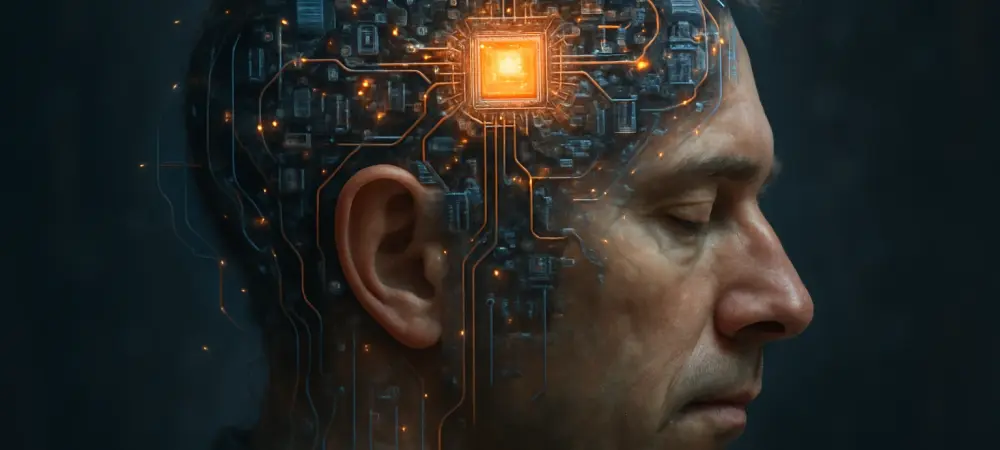
Imagine a world where the intricate workings of the human mind are no longer a mystery, where a single, comprehensive theory explains how perception, memory, and reasoning intertwine to shape thought, driving psychology’s pursuit of a unified cognition theory. This ambitious vision could transform mental health care and cognitive enhancement. With artificial intelligence (AI), particularly generative AI and large language models (LLMs), emerging as a powerful partner, researchers across disciplines are pooling insights to crack this enigma. This roundup gathers diverse perspectives, tips, and reviews from multiple sources and experts to explore how AI is shaping this journey, highlighting both optimism and caution in the field.
Unpacking the Mind: Why a Unified Theory Matters
The concept of cognition, encompassing everything from how humans perceive the world to how they solve complex problems, remains one of psychology’s greatest challenges. Many in the field argue that a unified theory would provide a foundational map of mental processes, potentially revolutionizing therapeutic approaches. Reports from academic circles suggest that such a framework could pinpoint the roots of disorders like anxiety or memory loss with unprecedented precision.
Beyond clinical applications, some industry analysts emphasize the broader societal impact. A cohesive understanding of cognition might enhance educational methods or even optimize decision-making in high-stakes environments like business or governance. This potential drives relentless research, with numerous conceptual and computational models proposed over time, though none have yet achieved universal acceptance due to gaps in scope or empirical support.
A recurring theme among commentators is the urgency of this pursuit. As cognitive science intersects with technology, there’s a growing consensus that AI could be the key to synthesizing disparate theories into a singular, testable model. This roundup delves into how various experts view AI’s role, setting the stage for a deeper examination of its promises and pitfalls.
AI’s Role in Modeling the Human Mind
Simulating Thought: Computational Tools at Work
AI, especially LLMs like those fine-tuned for psychological research, is increasingly seen as a game-changer in simulating human cognition. Several research groups highlight the innovative use of models such as the Centaur framework, which leverages vast psychological datasets like Psych-101 to predict behaviors across diverse scenarios. These tools are praised for their ability to process complex patterns that mirror aspects of human decision-making.
However, not all feedback is glowing. A segment of cognitive scientists questions whether artificial neural networks (ANNs), the backbone of many AI systems, can authentically replicate the intricacies of biological neural networks. Critics argue that ANNs, being significantly simpler, might oversimplify the nuances of thought, leading to models that are more predictive than explanatory.
Despite these concerns, proponents maintain that AI offers a unique testing ground. By running simulations that would take years to conduct with human subjects, these technologies accelerate hypothesis testing. This duality of enthusiasm and skepticism shapes much of the discourse on computational modeling in cognition studies.
Data-Driven Insights: Learning from Human Behavior
Another focal point in expert discussions is how AI can be enriched with data from decades of psychological experiments. Datasets like Psych-101, which include results from tasks such as multi-armed bandit challenges and monetary lottery decisions, allow models to emulate human responses more closely. Many researchers commend this approach for bridging empirical data with theoretical constructs.
Yet, cautionary voices warn of potential missteps. Some psychologists note that an overemphasis on language patterns in LLMs might mimic human speech without capturing underlying reasoning processes. This discrepancy could skew interpretations of cognitive mechanisms, leading to theories that look convincing but lack depth.
A balanced view suggests that while data-driven AI holds immense promise, it must be paired with rigorous validation. Experts advocate for cross-checking AI outputs against real-world human studies to ensure that simulations reflect genuine cognitive functions rather than surface-level imitations. This careful integration is seen as vital for credible advancements.
Innovative Techniques: Refining AI for Accuracy
Emerging AI methodologies also draw significant attention in this space. Techniques like retrieval-augmented generation (RAG) and quantized low-rank adaptation (QLoRA) are frequently cited as tools that enhance the precision of cognitive models. Tech specialists argue that these advancements allow AI to handle nuanced psychological data with greater fidelity, pushing the boundaries of what simulations can achieve.
Speculation abounds about whether current AI architectures are sufficient or if entirely new designs are needed to capture cognition fully. Some forward-thinking researchers propose that global collaborations could spark novel frameworks, drawing from diverse cultural and scientific perspectives to enrich AI’s cognitive relevance.
A critical question raised in tech forums is whether simply scaling existing models will suffice. There’s a growing sentiment that psychology’s complex demands might necessitate a fundamental rethinking of AI systems, potentially leading to architectures that prioritize cognitive realism over computational efficiency. This debate remains open, fueling innovation.
Mutual Growth: Psychology and AI in Tandem
The symbiotic relationship between psychology and AI garners widespread interest as well. On one hand, AI supports psychology through applications like mental health apps that deliver personalized interventions. On the other, psychological principles inform AI development, guiding the creation of systems that better emulate human-like interactions, as noted by many in the tech-psychology intersection.
Differing opinions exist on whether AI can ever truly mirror human thought. While some technologists are optimistic about integrating biochemical insights with computational models to close this gap, others remain doubtful, citing the profound complexity of emotions and consciousness as barriers that AI may never surmount.
This interplay enriches both disciplines uniquely. Beyond viewing AI as a mere tool, many experts see it as a lens through which to refine psychological theories, while psychology offers AI a roadmap to human-centric design. This mutual enhancement underscores the depth of their collaboration, promising richer outcomes than isolated efforts could achieve.
Practical Tips and Key Takeaways from the Field
Synthesizing the varied perspectives, it’s evident that AI plays a pivotal role in psychology’s hunt for a unified cognitive theory. Successes like the Centaur model demonstrate tangible progress, yet challenges in aligning AI with authentic human thought persist, as echoed across research communities. This balance of achievement and limitation shapes current strategies. For researchers, actionable advice includes tapping into open datasets like Psych-101 to build on existing work. Encouraging interdisciplinary partnerships between psychologists, data scientists, and AI developers is also frequently recommended to tackle complex questions holistically. Additionally, maintaining a critical eye on AI’s shortcomings ensures that enthusiasm doesn’t outpace empirical grounding.
Engagement with these developments isn’t limited to academia. Broader audiences are encouraged to follow updates in AI-psychology intersections, as emerging theories could influence everyday tools like mental health apps or learning platforms. Staying informed about these advancements offers a glimpse into how cognition research might soon touch personal lives.
Reflecting on the Journey and Next Steps
Looking back, the collaboration between psychology and AI in pursuing a unified cognition theory sparked vibrant discussions and diverse viewpoints among experts. The blend of optimism for AI’s potential and caution about its limits painted a nuanced picture of progress, revealing how far the field has come while acknowledging the road ahead. Moving forward, a key step lies in fostering global research networks to pool resources and insights, ensuring that cognitive models reflect diverse human experiences. Investing in hybrid approaches that merge computational simulations with biological data also emerged as a promising direction to deepen understanding.
Another vital consideration is the ethical deployment of AI in psychological contexts, ensuring that tools developed from this research prioritize user well-being. As the dialogue continues, exploring alternative AI architectures inspired by cognitive intricacies could unlock breakthroughs, paving the way for a richer grasp of what it means to think.