

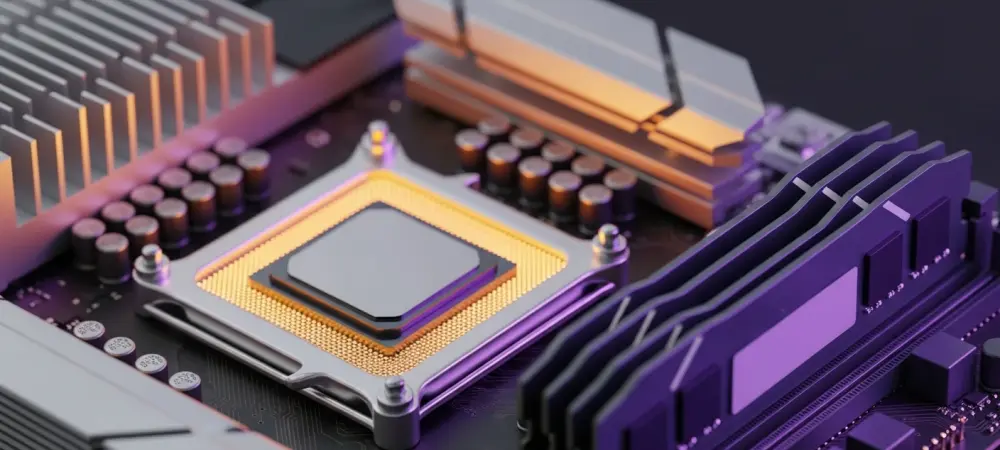
Walking into a hardware store today feels like entering a high-stakes luxury boutique where the smallest silicon chips carry price tags that would have previously bought an entire high-end workstation; the once-sacred tradition of assembling one’s own rig is facing its most significant financial challenge in decades. For as long as PC gaming has existed, the community followed a single, undisputed rule: building a computer with your own two hands is the only way to get the best value for your money. However, the current landscape has shattered this foundation, replacing the pride of assembly with a cold, mathematical reality that favors the pre-assembled machine.
Is the Golden Age of PC Building Officially Over?
The “DIY is always cheaper” mantra served as the bedrock of the gaming community for generations, but the current market has forced a jarring reality check upon even the most seasoned enthusiasts. For decades, the process of selecting individual components, hunting for deals, and carefully piecing together a custom rig was not just a hobby, but a savvy financial move. Builders could expect to save hundreds of dollars by avoiding the labor costs and branding markups associated with major manufacturers. Today, that logic has completely inverted, leaving custom builders staring at digital shopping carts where the total cost of individual parts significantly exceeds the price of a fully warrantied, pre-assembled system from a major integrator.
This shift represents more than just a temporary price fluctuation; it is a fundamental change in how hardware is distributed and priced. Enthusiasts who once laughed at the idea of buying a “box” from a store are now finding that those very boxes offer the only path to high-performance gaming without financial ruin. When a major manufacturer can offer a liquid-cooled, high-refresh-rate-capable machine for a lower price than the raw components required to build it, the traditional incentive for DIY construction evaporates. The sheer convenience of a pre-built system was always its selling point, but now that convenience is bundled with a massive discount that the retail component market cannot match.
Furthermore, the emotional attachment to building one’s own PC is being weighed against the harsh economic climate of the mid-2020s. The traditional price-to-performance ratio has flipped so dramatically that the labor of assembly is no longer rewarded with savings, but rather penalized with a premium. This has left the community in a state of flux, where the “golden age” of custom building seems to have retreated into the history books. As the gap between retail prices and system integrator costs continues to widen, the pragmatic choice for any gamer looking to maximize their budget has clearly shifted toward the pre-built market.
Understanding the RAMpocalypse and the 2026 Market Shift
The primary catalyst for this unprecedented market inversion is a catastrophic supply-chain event that the industry has dubbed the “RAMpocalypse.” While the Central Processing Unit and Graphics Processing Unit historically dominated a build’s budget, a massive shortage in memory and storage production has shifted the financial burden to DDR5 RAM and NVMe SSDs. This shift has caught many builders off guard, as components that were once considered affordable afterthoughts have now become the most volatile and expensive items in a parts list. The impact is felt most acutely at the retail level, where individual consumers bear the full brunt of price hikes that have rewritten the rules of system building.
Statistical data from the current market reveals the depth of this crisis, with 32 GB DDR5 memory kits skyrocketing to nearly five times their historical price points. Retailers are currently listing these kits between $350 and $500, a range that previously could have secured a mid-tier graphics card. This inflation is not limited to memory alone; standard 1 TB M.2 drives have seen 400% price hikes, making even basic storage a luxury for the average consumer. When a builder realizes that just the memory and storage for their new rig will cost upwards of $700, the prospect of a budget-friendly custom build becomes an economic impossibility.
Industry experts suggest that these supply constraints are not a brief anomaly but a persistent reality that will likely remain until at least 2027. The shortage is tied to deeper manufacturing bottlenecks and a global surge in demand for high-speed memory in other sectors, leaving the individual PC builder at the bottom of the priority list. This long-term projection has turned pre-built systems into a necessary sanctuary for gamers. While the retail market struggles with scarcity and price gouging, the pre-built sector remains relatively stable, offering a predictable path to ownership that bypasses the chaotic inflation currently plaguing the individual component market.
The Economic Edge of Major System Integrators
Major pre-built manufacturers like Skytech, Thermaltake, and ZOTAC are currently operating as a vital buffer between the volatile retail market and the end consumer. These companies leverage immense bulk-purchasing power and long-term supply contracts that were secured well before the peak of the current inflation cycle. By purchasing components by the thousands directly from manufacturers, system integrators can maintain pricing that is completely disconnected from the inflated numbers seen on retail shelves. This allows them to offer fully assembled systems at an MSRP that is often lower than what an individual would pay just for a GPU and a motherboard at a local electronics store.
For gamers targeting mid-range performance, the value proposition of these companies is particularly striking through the use of clever “escape hatches” like the DDR4 platform. Systems such as the Thermaltake LCGS Quartz i1460 utilize these slightly older but still highly effective memory standards to bypass the hyper-inflated costs of the DDR5 market. This strategic choice allows them to offer 1080p gaming performance for under $1,000, a feat that is currently unachievable for anyone trying to source parts individually. This ability to mix and match technologies to optimize cost is something that large-scale integrators can do with much higher efficiency than a lone hobbyist.
At the enthusiast tier, the economies of scale become even more apparent when looking at flagship hardware. The ZOTAC MEK Gaming PC, for instance, proves that acquiring a system with an RTX 5090 is actually more affordable than trying to source the standalone graphics card and its required supporting components separately. High-end units like the Skytech Gaming Azure 3 Plus also include 360mm liquid coolers and high-wattage, Gold-rated power supplies as part of a bundled price. When these premium parts are purchased individually, they push a custom build’s price well beyond the pre-built’s total cost, reinforcing the idea that the “bundle advantage” is the only logical way to shop in the current era.
Insights from Industry Experts on Hardware Evolution
The current market is not just defined by shifting prices, but also by a significant evolution in what constitutes a balanced and viable gaming system. Research into modern gaming workloads has demonstrated that the old standards of hardware sufficiency have been rendered obsolete by the demands of new game engines. Experts now reach a consensus that 8 GB of Video RAM is no longer a viable baseline for a modern machine, as textures and complex geometry in contemporary titles quickly exhaust such limited buffers. This has led manufacturers to standardize higher capacities, such as 16 GB or even 32 GB of VRAM, in their pre-configured builds to ensure long-term usability.
Another major shift noted by industry analysts is the total disappearance of the aesthetic gap that once separated DIY builds from pre-built machines. In the past, buying a pre-assembled PC often meant settling for a boring, poorly ventilated case with green circuit boards and “ketchup and mustard” colored wiring. Today, most modern systems feature the panoramic tempered glass, sophisticated ARGB lighting, and high-airflow dual-chamber designs that were once exclusive to custom enthusiast projects. System integrators have recognized that modern gamers value the visual presentation of their hardware as much as its performance, leading to a market where pre-builts are often more visually striking than what a novice builder could achieve alone.
This focus on longevity and aesthetics is paired with a move toward higher standardization in cooling and power delivery. As hardware has become more power-hungry, the industry has seen a shift toward including 360mm All-In-One liquid coolers and 1000W+ power supplies as standard equipment in mid-to-high-tier pre-builts. By providing a balanced, professionally engineered thermal and power solution out of the box, pre-built manufacturers are offering a level of reliability that matches their newfound price advantage.
Strategies for Navigating the Current Hardware Landscape
Navigating the complexities of the current hardware market required a shift in perspective, moving away from traditional brand loyalty and toward a more clinical evaluation of total system value. The most successful consumers in this environment were those who identified their specific resolution targets before even looking at a price tag. For those content with high-performance 1080p gaming, opting for systems built on the DDR4 platform emerged as a brilliant way to save hundreds of dollars. By avoiding the memory price spikes that defined the era, these buyers secured systems that remained highly capable without the “RAMpocalypse” tax that burdened more trendy configurations.
A primary strategy involved prioritizing Video RAM over specific brand names, as the longevity of a system became tied more to its memory buffer than its core clock speed. Builders and buyers alike found that seeking out machines with at least 16 GB of VRAM ensured their rigs remained relevant as game developers pushed the limits of asset density. Moreover, the evaluation of the total package became the standard practice for savvy shoppers. Rather than focusing solely on the CPU and GPU, consumers learned to calculate the value of secondary components like premium cooling systems and high-efficiency power supplies. When these “hidden” costs were factored in, the pre-built option almost always emerged as the fiscally responsible choice. The final consideration that solidified the shift toward pre-assembled hardware was the security provided by integrated support and comprehensive warranties. In a time when individual components were both expensive and difficult to replace, having a single point of contact for technical issues offered an added layer of financial protection. Manufacturers provided a level of holistic system security that component-level warranties could not match, as they were responsible for the compatibility and stability of the entire machine. This evolution in the market ultimately taught gamers that while the era of the “cheap” DIY build had passed, a new era of high-value, professionally engineered systems had arrived to take its place. These combined strategies allowed enthusiasts to maintain their passion for high-end gaming while respecting the new economic boundaries of the silicon industry.