

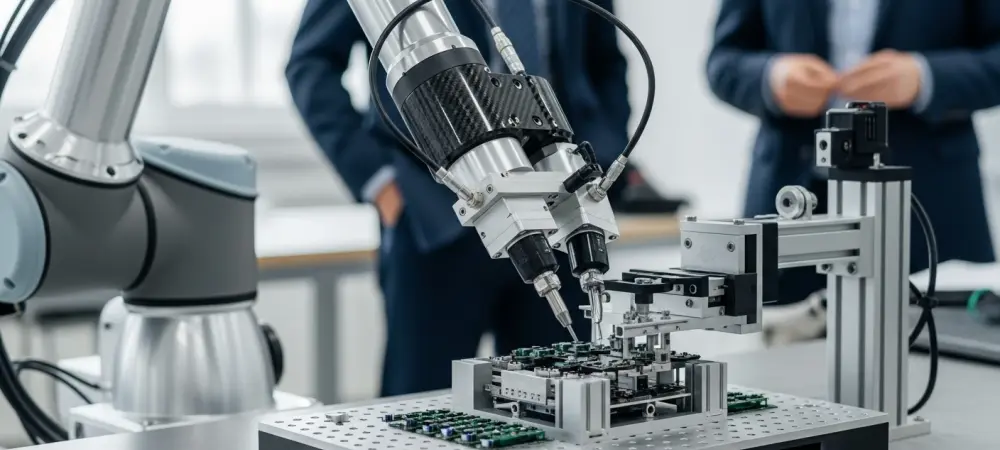
The silent evolution of mechanical systems into sentient-like partners is currently reshaping the global industrial floor as robots move beyond rigid programming toward fluid interaction. This shift defines physical AI, a discipline that fuses human-like reasoning with mechanical agility. While experimental pilots once dominated headlines, the focus has moved toward industrial application. Leading firms in warehousing and logistics are now orchestrating sophisticated fleets that navigate complex environments autonomously. This landscape is a competitive intersection where foundation model developers provide the brains, hardware manufacturers supply the limbs, and industrial integrators stitch these components into legacy workflows.
The Current Landscape: Bridging the Gap Between Perception and Tangible Action
Physical AI integrates human-like perception and reasoning into mechanical systems, allowing them to solve problems in real time. The industry is currently moving away from the pilot purgatory of the past decade toward meaningful industrial application. This transition is most visible in warehousing, logistics, and heavy manufacturing, where the environment is controlled yet dynamic enough to benefit from machine intelligence.
Competition is intensifying as diverse players enter the fray. Foundation model developers are no longer just focused on text; they are building spatial intelligence for the physical world. Hardware manufacturers are responding by creating modular platforms that can host these advanced brains. Meanwhile, industrial integrators act as the essential bridge, ensuring that these high-tech arrivals can communicate with decades-old factory equipment.
Drivers of Adoption and Quantifying Market Expansion
Technological Breakthroughs and Socio-Economic Catalysts
Advancements in simulation tools and Sim2Real transfer are drastically shortening training cycles by allowing robots to practice in virtual worlds. Furthermore, the role of edge computing and foundation models is enhancing machine autonomy at the point of action. Socio-economic pressures, including global labor shortages and the push for reindustrialization in Western economies, are acting as powerful catalysts. Falling hardware costs are also lowering the barrier to entry for smaller players.
Growth Projections and Priority Robotics Segments
Statistically, the industry is poised to transition from a low deployment rate to full-scale operations. High-growth categories include autonomous mobile robots and industrial arms that offer immediate utility. Humanoids, however, face a reality check as they remain a long-term goal compared to more specialized, task-oriented robotics. Executive sentiment indicates a focused three-to-five-year investment horizon where reliability is valued over general-purpose versatility.
Navigating the Scaling Chasm: Technical and Strategic Obstacles
Integration hurdles remain significant as teams try to align advanced AI with legacy industrial frameworks. Financial complexities, such as uncertain return on investment and high initial deployment costs, often stall large-scale rollouts. There is also a distinct lack of high-quality physical interaction datasets compared to the abundance of internet-based text and images. Managing public skepticism and ensuring workplace safety during human-robot interaction is vital for social acceptance.
Establishing Trust Through Governance and Security Standards
Security by design is becoming a prerequisite for connecting physical assets to broader networks. Companies are navigating emerging laws governing autonomous systems to ensure data privacy and operational safety. Compliance and standardization efforts are focused on developing universal safety protocols for collaborative environments. Building stakeholder trust through ethical AI and transparent operational frameworks is now a core business strategy.
The Roadmap Toward Autonomous Maturity and Long-Term Innovation
Emerging disruptors like multi-modal AI and advanced haptic feedback are set to redefine machine dexterity. Shifting consumer preferences for faster, more localized supply chains are fueling the demand for AI-driven logistics. These global economic impacts, influenced by trade policies, drive massive R&D investment into localized production. The evolution will eventually force a choice between general-purpose machines and specialized task-oriented robots.
Orchestrating a Successful Transition to Scalable Physical AI
The shift from conceptual hype to operational necessity was a defining moment for the industrial sector. Strategic leaders prioritized ROI-driven use cases over experimental trends to maintain financial health. This disciplined approach ensured that hardware and software worked in harmony to solve tangible bottlenecks. Organizations that moved toward a matured, AI-integrated future recognized that scalability required more than just technology; it demanded cultural and systemic shifts. The path forward was paved by those who viewed AI not as a replacement, but as an essential augmentation of physical labor. Success was ultimately measured by the ability to implement responsible and sustainable automated systems.