
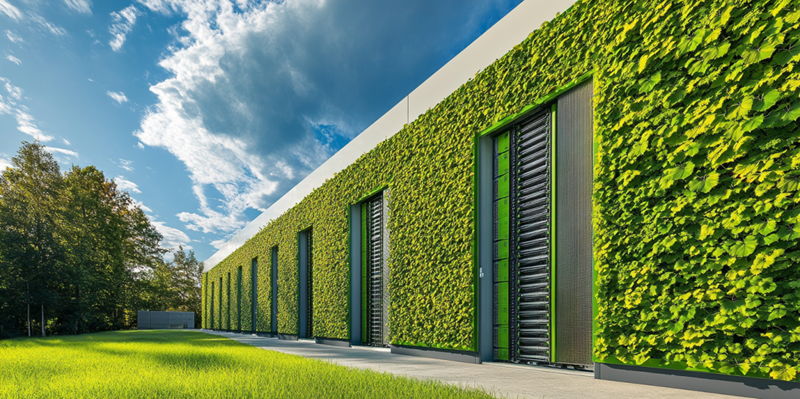
Philippines and Somalia Lead Green Data Center Initiatives

In a significant move towards sustainable technology infrastructure, the Philippines and Somalia are setting the stage for a new era of green data centers. Citicore Renewable Energy Corporation (CREC) and Evolution Data Centres recently signed a strategic memorandum of understanding (MoU) to develop a hyperscale-ready data center in the Philippines powered entirely by renewable energy. This initiative includes a power purchase agreement (PPA) for up to 100MWAC of 24/7 renewable power, which incorporates new-to-grid supply sources. Darren Webb, CEO of Evolution Data Centres, highlighted the Philippines’ advantageous open-access power market and its potential for reducing operational costs while promoting renewable energy growth.

The commitment to green data centers is not limited to the Philippines. In Somalia, Hormuud is expanding its green data center footprint to meet the increasing demands of both local and global AI economies. Despite the challenges posed by security and infrastructural limitations, Hormuud successfully operates 11 data centers with a combined capacity of 10 megawatts, heavily reliant on solar energy during daylight hours. The company relies on up to 95% solar energy during these hours, leveraging Somalia’s abundant solar resources to power its operations.

Both the Philippines and Somalia aim to leverage their natural solar resources for data center energy needs, exemplifying a common commitment within the industry to enhance sustainability through renewable energy. By addressing their unique market demands and infrastructure conditions, these nations not only promote environmental responsibility but also seek to reduce operational costs significantly. The initiatives in both regions reflect a growing trend towards integrating renewable energy into data center operations, setting a precedent for eco-friendly data management solutions globally.

In summary, the collaborative efforts in the Philippines and Somalia demonstrate a significant shift towards greener data management practices. These initiatives underline the importance of harnessing renewable energy resources to not only ensure sustainable data center operations but also to drive cost efficiencies. The global movement towards green data centers signals a forward-thinking approach that could pave the way for further advancements in sustainable technology infrastructure.

Explore more

Ethereum Plans Major Glamsterdam Upgrade for Late 2026

Ethereum developers are currently finalizing the specifications for the Glamsterdam hard fork, which represents the next major milestone in the network’s ongoing evolution toward a more scalable and efficient global computer. This upcoming transition is not merely a routine update but a comprehensive overhaul of several critical components that have defined the network since its inception. By addressing long-standing technical

How Does Databricks CustomerLake Redefine the Agentic CDP?

The landscape of customer data management is currently undergoing a seismic transformation as the traditional boundaries between storage, analysis, and execution are being dismantled by the rise of the Data Intelligence Platform. For years, enterprises have struggled with the fragmentation tax, which represents the hidden cost of moving, cleaning, and syncing customer information across dozens of disconnected marketing clouds and

KDE Releases Plasma 6.7 with Per-Screen Virtual Desktops

The sheer complexity of contemporary digital workspaces often leads to a phenomenon where users feel overwhelmed by the literal lack of physical and virtual boundaries across their hardware. For years, the traditional approach to virtual desktops treated all connected displays as a singular, unified canvas, meaning that switching a workspace on one screen would force a transition on all others

Is the Fixed-Price AI Subscription Model Sustainable?

The rapid expansion of generative artificial intelligence has fundamentally transformed the digital landscape, yet the industry remains tethered to a subscription-based pricing model that may soon prove mathematically impossible to sustain. While the initial wave of adoption was fueled by the accessibility of flat-rate subscriptions, the underlying economics of massive compute clusters suggest a growing disconnect between user fees and

Will Agentic Automation Drive EMEA’s Autonomous Enterprise?

The transition from experimental artificial intelligence to deep-seated industrial application has reached a critical inflection point where simple task execution no longer suffices for the modern enterprise. As organizations across the Europe, Middle East, and Africa region navigate the complexities of a digital-first economy, the focus is pivoting toward Agentic Process Automation to bridge the gap between human intuition and