

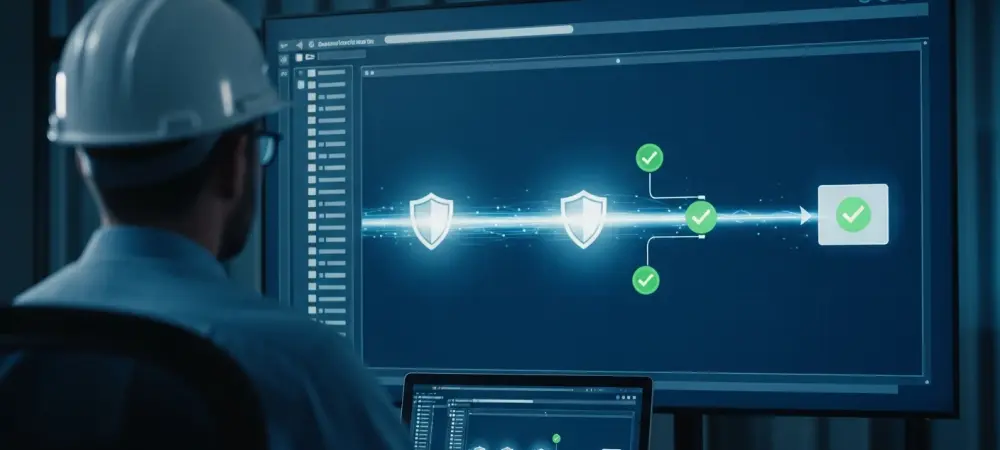
The rapid proliferation of artificial intelligence across the software development landscape has created a powerful yet fragmented ecosystem, leaving many organizations grappling with how to integrate these transformative tools without sacrificing governance or security. In a decisive move to address this challenge, Perforce Software is implementing a standardized protocol across its entire DevOps portfolio. This strategic adoption aims to provide a secure, unified framework for leveraging AI, transforming it from a collection of ad-hoc tools into a cohesive and governable part of the development lifecycle.
With 60% of Organizations Already Deploying AI in Software Development How Can Teams Harness Its Power Without Compromising Security and Control
The integration of AI into software development is no longer a speculative future but a present-day reality. Recent findings from the Futurum Group reveal that a significant 60% of organizations are actively using AI to build and deploy software, with substantial investments flowing toward AI copilots, agent development, and automated testing. This rapid adoption, however, is often tempered by a pervasive sense of caution. Teams remain hesitant to fully trust AI-generated outputs, citing concerns over reliability, security, and the lack of transparent oversight, which creates a critical bottleneck to realizing AI’s full potential.
This hesitation is well-founded, as conventional DevOps controls were not designed for the dynamic and often unpredictable nature of AI agents. Connecting AI tools directly to development workflows without a standardized approach introduces considerable risk, from exposing sensitive intellectual property to deploying insecure code. Furthermore, many AI models operate on static training data, creating a fundamental disconnect from the real-time context of a live project. This limitation means their contributions can be outdated or irrelevant, undermining their utility and highlighting the urgent need for a new integration paradigm.
The New Imperative Moving Beyond Ad Hoc AI Integration
The current landscape is characterized by a “wild west” of AI tool adoption, where individual teams integrate various solutions to solve immediate problems. This ad-hoc approach leads to a fragmented and insecure ecosystem, making it nearly impossible to enforce consistent governance or security policies. The dilemma for many organizations is balancing the clear productivity gains offered by AI with the significant risks posed by unmanaged integration. This challenge has shifted the conversation from whether to adopt AI to how to adopt it safely and strategically.
Without a standardized protocol, AI agents function like isolated contractors with limited access to the full project scope. They are often unable to interact with the complete suite of DevOps tools, from code repositories to testing environments, in a secure and context-aware manner. This lack of a common language prevents the creation of a truly intelligent and automated workflow. The result is a patchwork of disconnected AI-powered features that fail to deliver on the promise of a fully unified, AI-driven development process.
Perforces Answer a Standardized Protocol for a Smarter DevOps
In response to this industry-wide challenge, Perforce is strategically integrating the Model Context Protocol (MCP) across its entire portfolio of DevOps tools. MCP, an emerging open-source standard originally developed by Anthropic and now advanced by the Linux Foundation, acts as a universal translator between AI agents and external systems. By adopting this protocol, Perforce is creating a standardized and secure bridge that allows any AI agent or Large Language Model (LLM) to interact with its platforms, from code management and automated testing to infrastructure deployment.
The technical advantage of this approach lies in its ability to provide AI with real-time context. Instead of relying on static training data, MCP enables AI agents to perform actions using live, current information from the development environment. This capability dramatically improves the relevance and accuracy of AI-driven tasks. Crucially, it also extends an organization’s existing governance, traceability, and security frameworks to cover all AI-augmented activities, ensuring that every automated action is compliant, logged, and secure.
From Industry Trend to Strategic Standard
The momentum behind a standardized protocol is validated by clear market data. The Futurum Group’s research not only highlights the 60% adoption rate but also shows significant investment in AI-assisted testing and agent development, underscoring the market’s demand for a mature and secure integration solution. This data confirms that organizations are moving past initial experimentation and are now seeking scalable, enterprise-grade solutions to manage their AI initiatives, making Perforce’s adoption of MCP a timely and strategic response.
The credibility of MCP is further bolstered by its open-source foundation and the backing of respected organizations like the Linux Foundation and Anthropic. This positions the protocol not as a proprietary, vendor-locked solution but as a collaborative industry standard designed for broad adoption and interoperability. An open approach fosters trust and encourages a wider community of developers and organizations to contribute to its evolution, ensuring its long-term viability and preventing the fragmentation that currently plagues the AI tool market.
Architecting the Future of the AI Driven Development Team
As AI models become more sophisticated and their operational costs decrease, the central challenge for organizations is evolving. The conversation has shifted from which tools to adopt to a more strategic question: what is the appropriate level of autonomy for AI agents within the development lifecycle? A coherent, protocol-based strategy becomes essential to answering this question, allowing teams to define and enforce rules for how AI interacts with their systems, rather than simply accumulating a random assortment of disconnected tools.
This deep integration of AI was poised to fundamentally reshape the structure of DevOps. The protocol-driven approach facilitated by MCP helped eliminate traditional silos between development, security, and operations by creating a unified environment where AI agents could orchestrate tasks across different domains. This shift necessitated that organizations rethink their team structures to foster greater collaboration within a more integrated, AI-native workflow, marking a significant evolution in the principles of modern software development.