

The Strategic Shift Toward Urban Data Infrastructure
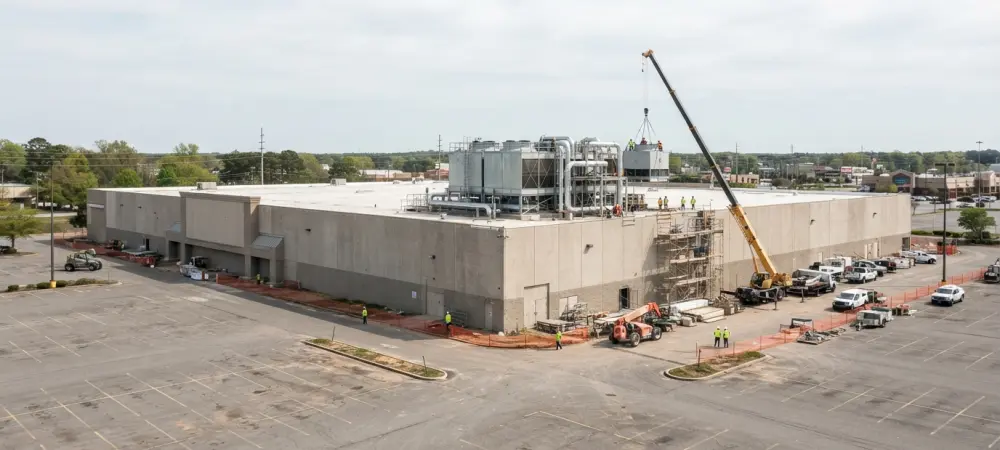
The repurposing of the former Walmart retail space in Fairfield, Alabama, by Patmos represents a sophisticated shift toward high-density urban digital infrastructure, transforming a 205,000-square-foot shell into a 50MW technology campus. This project signals a departure from traditional greenfield developments. By selecting a site that has remained vacant for a decade, Patmos is maximizing existing structural value while meeting the skyrocketing demand for high-density computing. The Fairfield project serves as a case study in how aging commercial real estate supports modern AI and cloud workloads, providing a template for economic revitalization.
The Timeline of the Fairfield Retail to Tech Conversion
2016: The Vacancy of the Aaron Aronov Drive Facility
The story of the Fairfield site began with an economic blow when Walmart shuttered the location in 2016. The exit left a massive 205,000-square-foot void in the urban landscape. This vacancy triggered a period of uncertainty, as the building’s sheer size made it difficult for traditional retail tenants to occupy, leaving the facility dormant and susceptible to deterioration.
2017 to 2023: Challenges in Property Revitalization
Following the departure, the property underwent a complex history with multiple owners. Visions for its reuse ranged from warehousing to mixed-use developments, yet these failed to gain traction due to logistical challenges. For seven years, the site remained a symbol of industrial stagnation, awaiting a developer with a viable high-growth strategy.
2024: Patmos Acquisition and 50MW Development Plan
A breakthrough occurred in 2024 when Patmos secured the site for $32 million. Moving beyond failed retail concepts, the company announced its intention to convert the facility into a 50MW data center campus. CEO John Johnson highlighted a commitment to industrial redevelopment, emphasizing that the project would breathe life into the site without encroaching on Alabama farmland.
2025 to 2026: Establishing Utility Infrastructure and Power Terms
During 2025 and the current progress in 2026, the focus shifted to technical requirements. Patmos finalized terms with Alabama Power to ensure energy needs are met without burdening the local grid. This period involves internal retrofitting, including the installation of advanced cooling systems and redundant power paths required for modern server environments.
May 2027: Projected Launch of the Technology Campus
The final milestone is the targeted launch in May 2027 with an initial capacity of 20MW. This launch will represent the culmination of a transformation, proving that abandoned retail assets can be successfully integrated into the global digital supply chain while supporting enterprise clients and high-density computing tasks.
Assessing the Significance of the Patmos Redevelopment
The project highlights a significant shift toward brownfield redevelopment. By utilizing an existing structure, Patmos reduces the carbon footprint associated with new construction while accelerating deployment. This strategy mirrors a trend where operators prioritize pre-existing shells to meet the urgent needs of the AI boom. The collaboration suggests a model where data centers serve as new anchors for communities formerly dependent on big-box retail.
Market Positioning and the Digital Exile Niche
Patmos is carving out a unique niche by offering what it describes as “uncancellable hosting solutions.” By positioning the campus as a refuge for the digital exile, the company targets a market segment concerned with Big Tech censorship and data sovereignty. This pro-speech business model adds a layer of differentiation to their infrastructure. By taking responsibility for power costs, Patmos addresses community concerns while operating as a unique ideological alternative.