

Dominic Jainy stands at the forefront of the digital infrastructure revolution, blending a deep mastery of artificial intelligence and machine learning with a strategic focus on the physical foundations that power them. As an expert who understands that the future of blockchain and high-density computing is tethered to the availability of sustainable power, Jainy provides a unique perspective on the massive development projects currently shaping the landscape. His insights bridge the gap between abstract technological potential and the concrete reality of large-scale engineering and renewable energy integration.
This conversation explores the technical specifications of the proposed 100MW Meridian One campus in Sussex and the environmental friction that often accompanies such ambitious industrial growth. We also examine the emerging trend of co-locating data centers with utility-scale renewable generation, as seen in Pace DC’s Bedfordshire project, and what the future holds for global infrastructure pipelines.
The Meridian One proposal involves a phased 100MW campus featuring five liquid-cooled buildings; what sets this technical approach apart in the current landscape?
Designing a massive site for 100MW of IT capacity in the Northlands Enterprise Park is a definitive statement about the infrastructure needs of modern computing. By committing to Tier IV standards across five distinct buildings, the project aims for the highest level of reliability, which is essential for the high-uptime demands of AI and technical operations. The decision to implement liquid cooling is particularly strategic, as it allows for much higher rack densities than traditional air-cooled setups, effectively future-proofing the site for next-generation hardware. This development near Hickstead is positioned to become a lasting home for technology, potentially creating a significant ripple effect for engineering and technical jobs throughout the region between Crawley and Brighton.
Local groups like CPRE Sussex have voiced concerns about the speed of these developments; how do you view the tension between rapid infrastructure expansion and the preservation of the countryside?
There is an undeniable friction when a major proposal like Meridian One enters the planning stage, as community advocates like Nancy Duckels argue that the countryside is being treated as expendable. This tension highlights a critical challenge for developers who must navigate the Mid Sussex District Council Local Plan hearings while facing claims that community voices are being sidelined. For a project of this scale to succeed socially, it must prove that the economic benefits—such as specialized construction and engineering roles—outweigh the loss of open space. The key is to demonstrate that these facilities are not just industrial blocks, but integrated technical hubs that can coexist with the local environment through smarter design and transparent communication.
Regarding the Pace DC project in Bedfordshire, how does the direct connection to a solar farm and battery energy storage system change the traditional energy model for data centers?
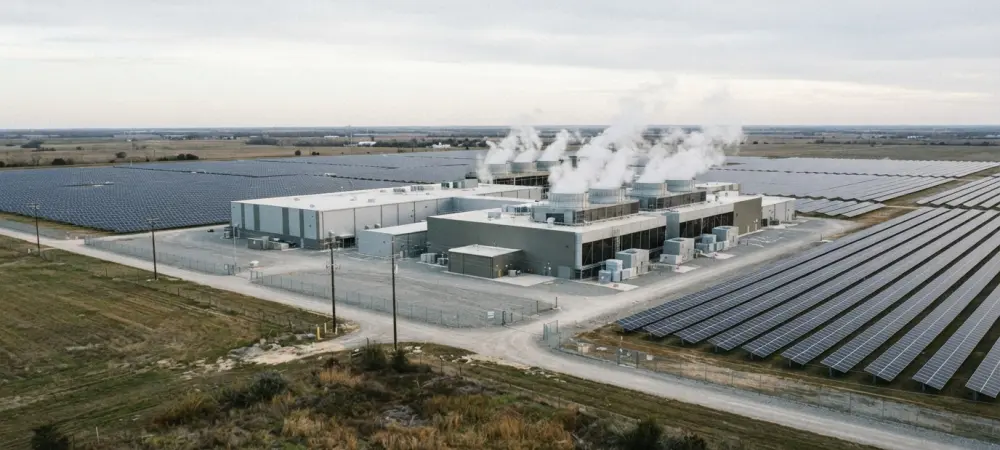
The Thurleigh Road Data Centre represents a shift toward a more sustainable “energy-first” architecture, occupying 22 hectares of land specifically chosen for its proximity to existing renewable assets. By creating a direct link to a previously approved solar farm and a Battery Energy Storage System, Pace DC effectively creates a microgrid environment that reduces the overall burden on the public utility. This campus will also utilize a closed-loop cooling system to minimize water consumption and will proactively make waste heat available for local reuse, which is a significant step forward in circular engineering. This approach demonstrates how a firm with a 2GW renewable pipeline can leverage its energy expertise to solve the power-density problems that currently plague the data center industry.
With a pipeline totaling 186MW in the UK and further expansion into New Zealand, what is the strategic significance of the timeline leading into the next few years?
We are looking at a very structured development cycle where the first projects in this extensive pipeline are scheduled to come online in 2028. Before that milestone, the immediate focus is on securing planning decisions for sites like Bedfordshire by the summer of 2027, which requires navigating complex public consultations and council approvals. The strategy involves targeting strategic regions like the Southeast, West Midlands, and West of England to create a distributed network of high-capacity sites. By blending 160MW of international capacity in New Zealand with their domestic efforts, Pace DC is positioning itself as a global player that understands the intersection of utility-scale renewable generation and high-performance computing.
What is your forecast for the integration of renewable energy and data centers?
I expect that within the next few years, the “standalone” data center will become an obsolete concept, replaced entirely by facilities that are co-developed alongside renewable generation sites. The model of utilizing a 2GW development pipeline to support IT capacity will become the standard because it addresses both the volatility of energy prices and the urgent mandate for carbon neutrality. We will see more projects following the lead of the 27MW Apple Tree Solar project, where energy production and data processing live side-by-side to maximize land efficiency. Ultimately, the industry will move toward a “zero-water, heat-export” standard that transforms these campuses from simple storage units into active contributors to local district heating and energy stability.