

The 900-Meter Lifeline Redefining Large-Scale Farming
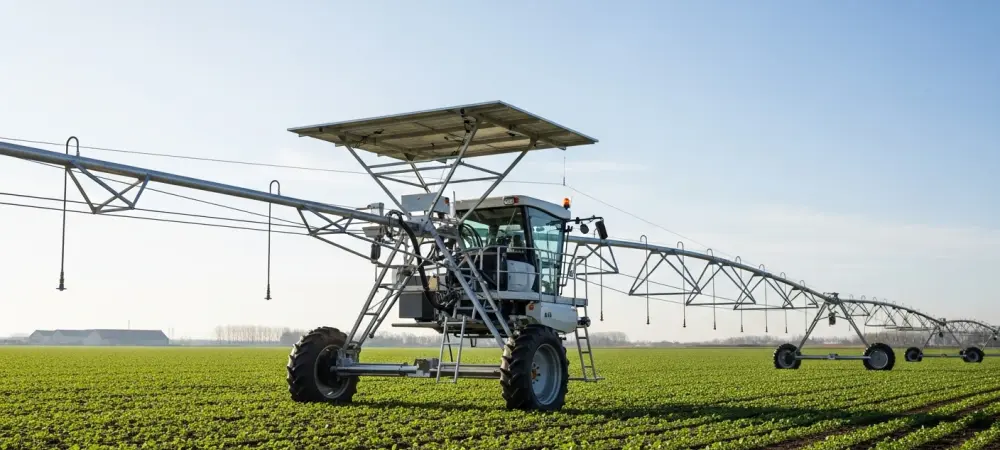
The rhythmic sound of water hitting the parched soil is being replaced by the silent, calculated hum of a specialized robot navigating vast hectares with surgical precision. Traditional irrigation often feels like a battle against evaporation and uneven distribution, but a new autonomous contender is fundamentally changing the stakes for professional growers. This machine does more than navigate 40 hectares of row crops a week with pinpoint accuracy; it actually harvests its own energy from the very water it distributes. The OSCAR robot, a standout innovation from Osiris Agriculture, moved beyond the experimental phase to solve the most persistent headaches in modern crop management.
By targeting the specific needs of large-scale operations, this technology bridges the gap between manual labor and full-scale industrial automation. The system is designed to handle the heavy lifting of pipe management while maintaining the delicate touch required for young crops. It represents a significant leap forward in how water is perceived, moving the industry away from broad application toward a more localized and data-driven methodology.
Navigating the Dual Crisis of Labor and Water Scarcity
Farmers today are caught between a shrinking labor pool and the increasing pressure to conserve every drop of water. Traditional reel-gun irrigation systems are notoriously inefficient, often losing significant moisture to wind drift and evaporation while requiring constant manual oversight. As global agriculture shifts toward more sustainable practices, the industry is searching for high-impact automation that integrates into existing workflows without demanding a total overhaul of field infrastructure.
OSCAR addresses these concerns by providing a hands-off solution that operates independently of human shifts. By automating the most labor-intensive aspects of water delivery, the platform allows farm managers to reallocate human resources to more complex agronomic tasks. This transition reflects a broader shift in the industry where robotics are no longer considered a luxury but a necessity for survival in a resource-constrained environment.
Engineering Autonomy: How OSCAR Operates in the Field
The technical prowess of OSCAR lies in its versatile four-wheel chassis, featuring independent in-wheel motors that allow for sophisticated two-wheel or four-wheel steering. Central to its design is a 44-meter foldable aluminum boom and the ability to manage up to 900 meters of polyethylene pipe autonomously. By utilizing RTK GNSS navigation, the robot follows established sprayer paths, ensuring that its precision nozzles—spaced at one-meter intervals—deliver water and nitrogen directly to the crop base.
This specialized movement reduces soil compaction and plant damage, which are common issues when using heavy manual machinery. The integration of high-torque electric motors ensures that the robot can traverse uneven terrain while maintaining a steady flow rate. This design philosophy prioritizes durability and adaptability, making the robot suitable for diverse soil types and crop varieties without requiring specialized tire configurations or excessive maintenance.
Efficiency by the Numbers: Real-World Performance and Sustainability
Data from the field indicates that OSCAR provides a 20% improvement in water efficiency compared to conventional irrigation methods, delivering approximately 23 liters per square meter. Beyond water savings, the system addresses the energy challenge through a self-generating electric driveline that pulls power from water flow, solar panels, and an onboard generator. Currently featured in the latest field robots catalogue and already operational in France and Bulgaria, this system proves that precision robotics deliver the operational consistency required for large-scale commercial success.
The cost of the unit represents a significant investment, yet the reduction in input waste and labor costs offered a clear path to return on investment. By utilizing multiple energy sources, the robot maintains a high duty cycle even during cloudy periods or when water pressure fluctuated. The deployment of multiple units across European farms showed that the technology was scalable and reliable enough for intensive commercial use.
Integrating Precision Robotics into Modern Farm Management
To successfully adopt a system like OSCAR, growers focused on aligning their existing field layouts with autonomous navigation requirements. The framework for implementation involved mapping permanent sprayer tracks to take full advantage of the robot’s RTK GNSS capabilities. Because the system was designed to irrigate roughly 40 hectares per week, farm managers scheduled high-intensity cycles that leveraged the robot’s multi-source energy harvesting. This strategy ensured continuous operation during critical growth stages without the need for manual battery swaps.
The move toward these systems signified a new era where water management was treated as a precision application rather than a bulk utility. Future considerations for adoption included the integration of soil moisture sensors to trigger autonomous deployments based on real-time data. Ultimately, the successful integration of OSCAR demonstrated that the path to sustainable agriculture relied on the marriage of heavy-duty mechanical engineering and high-level artificial intelligence.