

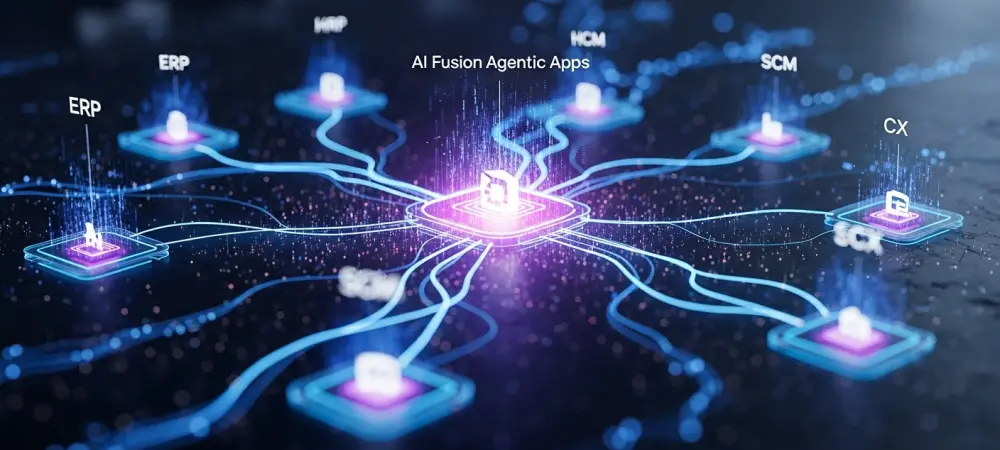
Modern enterprise systems are finally shedding their reputation as digital filing cabinets to become proactive engines of corporate strategy that execute tasks without constant human prompting. This shift represents a fundamental change in how businesses interact with data, moving away from systems that simply record history to those that actively shape the future. Oracle has recently catalyzed this movement by releasing 25 specialized applications within its Fusion Cloud suite, designed to perform complex operations autonomously. This roundup examines how these “agentic” tools are disrupting traditional workflows and what this means for the global business landscape as organizations move toward a more autonomous operational model.
The Shift from Assistance to Autonomy in Enterprise Software
The Evolution of Cloud ERP: From Ledgers to Agents
The journey of enterprise software has transitioned from the static databases of the past to the intelligent, agentic systems seen today. Early cloud ERP implementations focused primarily on centralization and accessibility, ensuring that data was available across departments. However, as business requirements became more dynamic, the industry moved toward predictive analytics and basic automation. Now, we are entering an era where software is no longer a passive tool. Instead, it acts as an active participant, capable of interpreting organizational intent and executing multi-step processes across various business functions.
Why Agentic AI Matters Now: Navigating Global Complexity
The current global economic environment demands a level of agility that human-led manual processes can no longer provide. Supply chains have become increasingly volatile, and workforce management requires navigating a maze of regional regulations and shifting talent markets. While basic “copilots” provided helpful suggestions, they still required a human to push the button for every action. Agentic AI addresses this bottleneck by handling routine execution independently, which allows leadership to focus on high-level strategy rather than getting bogged down in the administrative minutiae of daily operations.
A Roadmap for the Future: Defining New Industry Standards
Oracle’s specialized applications are setting a new benchmark for what stakeholders expect from their technology providers. By integrating intelligence directly into the core workflows of finance, HR, and customer experience, these tools eliminate the need for disjointed third-party add-ons. This roadmap suggests that the future of the enterprise is not just about having better data, but about having a system that knows exactly what to do with that data to drive immediate value.
Revolutionizing the Corporate Workflow through AI Agency
The Architectural Edge: How Fusion Cloud Powers Active Decision-Making
The technical foundation of these new applications represents a departure from traditional generative AI models that merely summarize text or provide recommendations. These agents are built to navigate complex approval hierarchies and adhere to specific organizational policies without constant supervision. Moreover, because they are integrated into the Oracle Cloud Infrastructure (OCI), they possess a deep understanding of the transactional context. This allows them to make decisions that are not only fast but are also deeply aligned with the specific business logic of the corporation.
Data-Driven Execution: Leveraging Real-Time Context
Execution is only as good as the data behind it, and these agents tap into a secure stream of real-time transactional information to perform their duties. Unlike fragmented systems that rely on batch processing, the agentic model works within the live flow of business. This means that a change in inventory levels or a new regulatory requirement is immediately factored into the agent’s actions. Consequently, the gap between a business event and the corresponding operational response is virtually eliminated, leading to a much more responsive enterprise.
Security Guardrails: Balancing Autonomy and Compliance
Granting autonomy to AI naturally raises concerns about security and control, but Oracle has addressed this by embedding strict guardrails into the architecture. Agents operate within predefined compliance and safety limits, ensuring they cannot bypass established corporate governance. This structure provides the benefits of speed and efficiency while maintaining a rigorous audit trail. It allows organizations to scale their use of AI confidently, knowing that the system will escalate matters to a human operator the moment a task falls outside of authorized parameters.
Optimizing the Value Chain: Finance and Supply Chain Transformation
Closing the Books Faster: Automating the Financial Cycle
Financial departments have long struggled with the labor-intensive nature of month-end closes and manual reconciliations. New tools like the Claims Settlement and Collectors Workspaces are designed to automate these exact cycles, directly impacting a company’s liquidity and working capital. By handling the repetitive aspects of claims and collections, the AI allows finance teams to shift their focus toward capital allocation and strategic growth. This transition from manual entry to automated oversight is significantly shortening the distance between revenue and cash.
Resilient Manufacturing: Proactive Adjustments in Production
Global manufacturing often faces sudden disruptions that require immediate adjustments to logistics and production schedules. The Logistics Execution Command Center and Production Shift Operations tools provide the proactive adjustments necessary to keep lines running smoothly. Instead of waiting for a manager to notice a delay at a specific port, the system can identify the ripple effects across the supply chain and suggest or execute rerouting strategies. This level of foresight is essential for maintaining resilience in an unpredictable market.
The Strategic Advantage: Connecting Procurement and Production
Friction between procurement and manufacturing often leads to cost overruns and production delays. The Design-to-Source Workspace bridges this gap by ensuring that the sourcing of materials is tightly integrated with the actual manufacturing requirements. Moreover, by streamlining the interaction between these departments, the system reduces the risk of stockouts or over-purchasing. This strategic alignment ensures that the entire value chain is optimized for efficiency rather than just individual silos.
Redefining the Human Element: AI in HCM and Talent Management
The Modern Recruiter’s Ally: Accelerating Talent Acquisition
In high-turnover industries, the speed of hiring is a critical competitive factor that often determines operational success. The Hiring Workspace for Store Managers and various Talent Calibration tools are designed to streamline the vetting and onboarding process. These agents can handle the initial stages of candidate review and scheduling, allowing hiring managers to spend more time evaluating cultural fit and long-term potential. This technology effectively removes the administrative hurdles that typically slow down the talent pipeline.
Empowering the Workforce: Reducing Administrative Burnout
Employee engagement often suffers when managers and staff are buried under a mountain of internal requests and administrative tasks. The Manager Concierge and Career Advancement Command Center aim to solve this by providing an intuitive hub for managing internal mobility and professional development. By automating routine inquiries and career path mapping, these tools help reduce burnout and foster a more motivated workforce. This shift allows human HR leaders to focus on complex organizational culture issues that AI cannot solve.
Compliance at Scale: Managing Global Labor Regulations
Managing a diverse, global labor force involves navigating a complex web of local laws and contract requirements. The Contract Compliance Workspace specifically addresses these regulatory challenges by ensuring that every labor agreement is adhered to in real time. This is particularly valuable for companies that rely on a mix of internal and external talent across different jurisdictions. The system acts as a persistent auditor, flagging potential issues before they become legal liabilities.
Proactive Growth: Scaling Customer Experience Through Automation
Revenue Acceleration: Autonomous Marketing and Sales
Sales and marketing teams are increasingly turning to automation to identify and capitalize on growth opportunities. The Sales and Marketing Command Centers can execute campaigns and identify cross-sell opportunities with minimal human intervention. By analyzing customer behavior patterns, the agents can trigger specific outreach strategies at the exact moment they are most likely to convert. This proactive approach ensures that no potential lead is lost due to a lack of timely follow-up.
The Future of Service: Managing Workflows Over Queries
Customer service is evolving from a reactive model of answering questions to a proactive model of managing entire service workflows. The Service Manager Workspace enables AI to oversee the entire lifecycle of a service request, from initial contact to final resolution. Moreover, it can identify recurring issues and suggest systemic changes to prevent future problems. This transition transforms service departments from cost centers into drivers of customer loyalty and long-term retention.
Competitive Differentiation: The Power of a Unified Journey
Fragmented legacy systems often result in a disjointed customer experience, where the left hand does not know what the right hand is doing. Oracle’s integrated approach provides a unified view of the customer across every touchpoint. This ensures that the agent-led journey is consistent, whether a customer is interacting with marketing, sales, or support. By providing this seamless experience, companies can differentiate themselves in a crowded marketplace where service quality is a primary decider for consumers.
Implementing the Next Generation of Enterprise Intelligence
Adopting the AI Agent Studio: Building Custom Business Logic
Organizations require the flexibility to tailor AI agents to their unique operational needs without embarking on expensive custom software projects. The AI Agent Studio provides a low-code environment where businesses can build, monitor, and scale their own agents. This allows for a high degree of customization, enabling the system to understand the nuances of a specific industry or niche. Furthermore, it allows for easy integration with external partner agents, creating a truly interconnected digital ecosystem.
Measuring Impact and ROI: Observability and Performance Tracking
To justify the investment in agentic AI, leaders must be able to track performance and financial benefits with precision. Oracle’s observability features provide real-time insights into how agents are performing and where they are delivering the most value. This transparency is vital for refining agent logic and ensuring that the technology is contributing to the bottom line. By using these metrics, businesses can make data-driven decisions about where to expand their autonomous capabilities next.
Strategic Integration: Moving to an Agent-First Model
Transitioning to an agent-first operational model requires a strategic approach that does not disrupt current security protocols or essential workflows. Businesses should start by identifying the most repetitive and high-friction processes within their current ERP setup. Gradually introducing agents into these areas allows the organization to build trust in the system while seeing immediate efficiency gains. This phased approach ensures that the digital transformation is sustainable and that the workforce has time to adapt to their new roles as orchestrators of AI.
The Dawn of the Autonomous Enterprise
The introduction of Fusion Agentic Applications addressed the persistent gap between disconnected data signals and the actual execution of business operations. Organizations that adopted these tools moved beyond simple automation and began to experience the benefits of a truly autonomous enterprise. By allowing AI to handle the bulk of routine administrative tasks, these companies reclaimed thousands of hours of productivity. This shift did not replace the need for human leadership; rather, it elevated it, requiring managers to transition from supervisors of tasks to architects of strategy and innovation. As the industry moved forward, the successful integration of agentic AI became the primary differentiator between market leaders and those struggling with legacy inefficiencies. Leaders who embraced this autonomy were able to navigate global disruptions with significantly more agility than their competitors. The lessons learned during this transition underscore the importance of building on a secure, unified data foundation. Moving forward, the focus for most enterprises has shifted toward refining these agents to better reflect unique corporate values and long-term objectives. The adoption of these tools was not merely a technical upgrade but a definitive leap into a more efficient and responsive future for global commerce.