

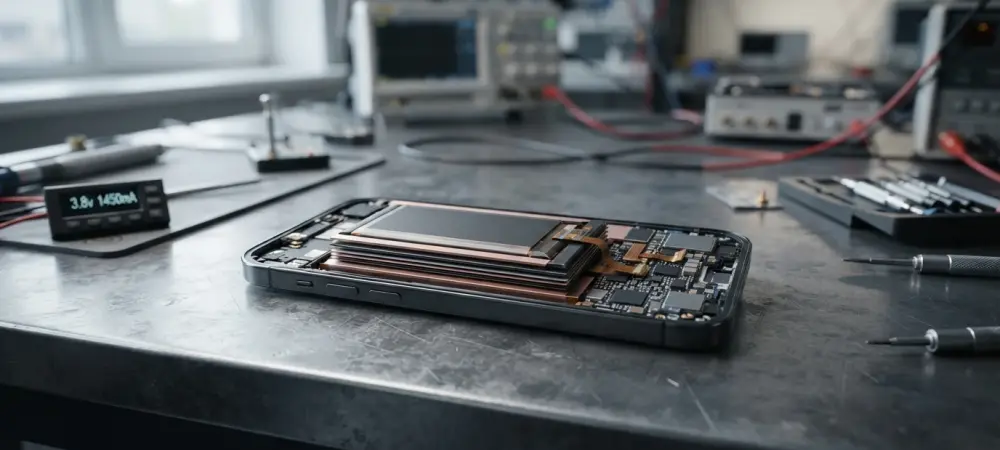
The modern smartphone market has reached a critical juncture where the silicon inside matters less than the chemistry that keeps it alive during a global hardware shortage. As of 2026, the industry faces a crippling DRAM crisis, driving retail prices up while internal specifications remain stagnant. Oppo’s strategic pivot toward extreme endurance, specifically the 12,000 mAh threshold, represents a pragmatic evolution. This move addresses a reality where battery cells are more cost-effective to scale than volatile semiconductor components.
Introduction to Oppo’s Energy-Centric Pivot
Oppo is redefining value by shifting focus from processing speed to raw longevity. The core principle involves maximizing chemical energy storage to offset the decreasing accessibility of high-tier memory and flash storage. This strategy positions the battery as the primary differentiator in a crowded landscape where traditional performance metrics have plateaued.
Technical Foundations of High-Capacity Power Cells
Extreme Energy Density and Capacity Scaling
The PNC110 model, featuring a rated 11,640 mAh capacity, serves as the vanguard of this movement. By packing nearly 50% more energy than the Find X10 Pro Max, Oppo utilizes advanced density techniques to minimize physical bulk. This scaling prioritizes chemical stability over pure transistor counts, ensuring the device remains manageable despite the massive cell.
Integration of 5G and Dual-SIM Connectivity
High-capacity cells are essential for sustaining modern 5G modems, which consume significant power during data-intensive tasks. In an unstable supply chain, providing a massive reservoir ensures these features remain usable for several days without a charge. This reliability becomes a major advantage against competitors struggling with power efficiency and rising component costs.
Emerging Trends in the Smartphone Battery Race
Chinese manufacturers are adopting “hardware brute force” to maintain market relevance during economic shifts. Instead of competing for expensive storage, they prioritize battery longevity for the end user. This trend favors utility over theoretical peak performance, offering a tangible benefit that resonates with a cost-conscious global audience.
Real-World Applications and Market Deployment
These devices find their niche in the mid-range sector, catering to power users and consumers in regions with inconsistent charging infrastructure. The 12,000 mAh capacity transforms the device into a reliable tool for multi-day utility without constant tethering. This deployment strategy targets practical endurance as the ultimate luxury feature in the current economic climate.
Challenges and Mitigation of High-Capacity Implementation
Managing the thermal profile of such a massive cell remains a significant engineering hurdle. Designers must balance charging speeds with longevity to prevent overheating during high-voltage cycles. Ongoing development focuses on optimizing internal cooling to accommodate volume without compromising safety or the ergonomics of the handheld chassis.
Future Outlook for Mobile Power Evolution
The 12,000 mAh benchmark could become a standard for many devices from 2026 to 2028. Breakthroughs in silicon-carbon anodes could further reduce weight, making massive batteries more palatable for the general public. This evolution will force a re-evaluation of how mobile software is optimized for extreme endurance rather than just peak speed.
Final Assessment of Oppo’s Strategic Shift
Oppo’s decision to prioritize capacity over DRAM was a calculated gamble that addressed the semiconductor shortage effectively. The trade-off provided consumers with a tangible benefit that software updates could not replicate. This shift necessitated a move toward solid-state technology to mitigate weight penalties while maintaining the high-capacity standard in subsequent hardware designs.