

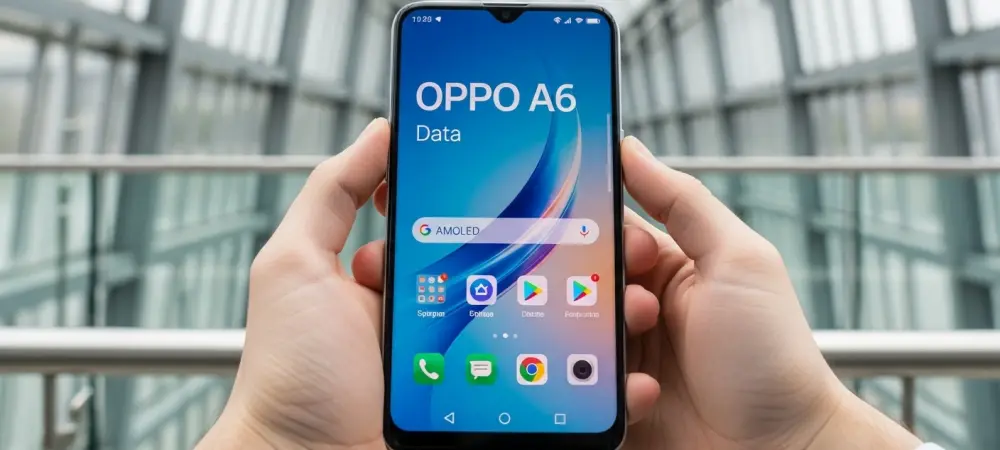
The modern consumer’s relationship with mobile technology has shifted from a desire for raw processing power toward a demand for unfailing reliability and extreme endurance. In a market often saturated with fragile flagship devices, the Oppo A6 Smartphone Series emerges as a pragmatic pivot, prioritizing structural integrity and massive energy reserves over superficial gimmicks. This review explores how Oppo has recalibrated its mid-range strategy to address the “battery anxiety” and durability concerns that plague the average user in 2026.
Understanding the Oppo A6 Series: Mid-Range Innovation
Oppo has introduced the A6, A6s, A6i+, and A6v as a multi-tiered response to the diversifying needs of the global mid-range market. While the naming convention initially appears complex, the core philosophy remains consistent across the lineup: providing a “marathon” user experience. By focusing on hardware that can withstand harsh environments and long days away from a power outlet, the series carves out a unique niche between entry-level utility and premium performance.
This emergence reflects a broader industry trend where the “specs race” in camera megapixels has slowed, giving way to a focus on the fundamental pillars of mobile utility. The A6 series is not trying to compete with professional-grade imaging tools; instead, it positions itself as a dependable companion for users who value a phone that stays functional under pressure, whether that pressure is environmental or purely a matter of heavy daily usage.
Technical Specifications and Hardware Architecture
Premium Hardware and AMOLED Integration
The flagship of this collection, the standard Oppo A6, stands out by utilizing a 6.57-inch 1080p+ AMOLED display. Unlike the LCD panels found in its more affordable siblings, this screen offers superior contrast ratios and deep blacks, which significantly enhances the visual experience during media consumption. The inclusion of an optical under-display fingerprint reader further elevates the device, providing a seamless biometric interface that feels notably more modern than side-mounted alternatives.
Under the hood, the integration of the MediaTek Dimensity 6300 chipset ensures that the hardware remains efficient. While this processor is not designed for high-end gaming, its architecture is optimized for thermal stability and consistent throughput. By pairing this silicon with up to 12GB of RAM in the top-tier configuration, Oppo ensures that multitasking remains fluid, preventing the stuttering often associated with mid-range devices under heavy load.
High-Capacity Battery Systems and Power Management
Perhaps the most striking technical achievement of the A6 series is the implementation of a 7,000mAh battery in the primary models. This capacity is nearly forty percent larger than the industry standard, effectively redefining what users should expect from a single charge. To manage such a massive reservoir, the A6 utilizes 80W SuperVOOC fast charging, a proprietary technology that mitigates the long wait times usually required to fill high-capacity cells.
The power management system is not just about raw size; it involves intelligent software layers that monitor background processes to prevent unnecessary drain. Even the entry-level A6v, which features a slightly smaller 6,500mAh cell, outperforms almost every competitor in its price bracket. This focus on “uptime” suggests that Oppo is targeting the workforce and travelers who cannot always rely on frequent access to charging infrastructure.
Emerging Trends in Smartphone Durability and Efficiency
The A6 series signals a significant shift toward ruggedization in consumer-grade electronics. With IP68 and IP69 ratings on the higher-end models, these devices are designed to survive not just a splash in a sink, but high-pressure water jets and total submersion. This level of protection was once reserved for niche “rugged” phones that were bulky and unattractive; Oppo has successfully integrated these protections into a sleek, mainstream aesthetic.
Moreover, the industry is seeing a move toward long-term hardware viability. By including microSD slots across the entire A6 family, Oppo acknowledges that digital storage needs grow over time. This trend toward “expandable longevity” contrasts sharply with the “planned obsolescence” strategies seen in higher price tiers, offering a more sustainable path for consumers who intend to keep their devices for several years.
Real-World Utility and Market Deployment
In practical application, the A6 series serves as a versatile tool for various sectors, particularly in logistics and field services. The high-brightness displays and extreme battery life make these phones ideal for delivery personnel or site inspectors who spend their entire day outdoors. The ability to record 1080p video and capture clear images remains sufficient for documentation tasks, even if it falls short of cinematic standards.
Furthermore, the market deployment of four distinct models allows Oppo to saturate different economic segments. By adjusting specific variables like charging speed or screen technology, they provide a tailored entry point for different regions. This granular approach ensures that a user in a developing market can access the same core durability and battery benefits as a premium buyer, albeit with a more modest display or camera array.
Technical Hurdles and Market Obstacles
Despite its strengths, the A6 series faces the hurdle of a crowded mid-range market where brand loyalty is often fickle. The decision to cap video recording at 1080p might alienate younger users who are increasingly focused on high-resolution social media content. While the Dimensity 6300 is efficient, it may struggle with the most demanding augmented reality applications that are beginning to enter the mainstream.
Additionally, the regulatory landscape regarding battery recycling and repairability poses a long-term challenge. As batteries grow in size and complexity, ensuring they can be safely replaced or recycled becomes more difficult. Oppo must continue to innovate in modular internal designs to ensure that these “marathon” devices do not become environmental liabilities once their long-lasting cells eventually reach the end of their life cycle.
Future Projections for the A-Series Ecosystem
The trajectory of the A-series suggests a future where “mid-range” no longer implies “compromised.” We are likely to see the 7,000mAh battery become the new baseline, with future iterations focusing on reducing the physical weight of these high-density cells. Breakthroughs in solid-state battery technology could eventually allow Oppo to maintain these capacities while significantly thinning the device profile, merging extreme endurance with flagship elegance.
Beyond hardware, the ecosystem will likely evolve toward deeper AI integration for energy conservation. Predictive algorithms could soon learn a user’s specific habits to throttle performance during periods of low activity, extending a two-day battery life into a three-day reality. This evolution will likely solidify the A-series as the gold standard for pragmatic mobile computing, influencing how competitors approach the balance between features and longevity.
Assessment of the Oppo A6 Series
The Oppo A6 Series successfully demonstrated that there is a profound market for smartphones that prioritize “the basics” executed at an elite level. By delivering exceptional battery life and unprecedented durability for the mid-range segment, the manufacturer addressed the most common pain points of modern mobile users. The technical trade-offs in camera resolution and processing speed were clearly calculated risks, designed to keep the hardware affordable while maximizing its utility in real-world environments. Moving forward, the industry took note of this shift, as the series proved that reliability is often a more valuable currency than experimental features. Designers and engineers in the mobile space now face the task of integrating these high-endurerance traits into even more compact forms to meet the rising expectations of a global audience.