

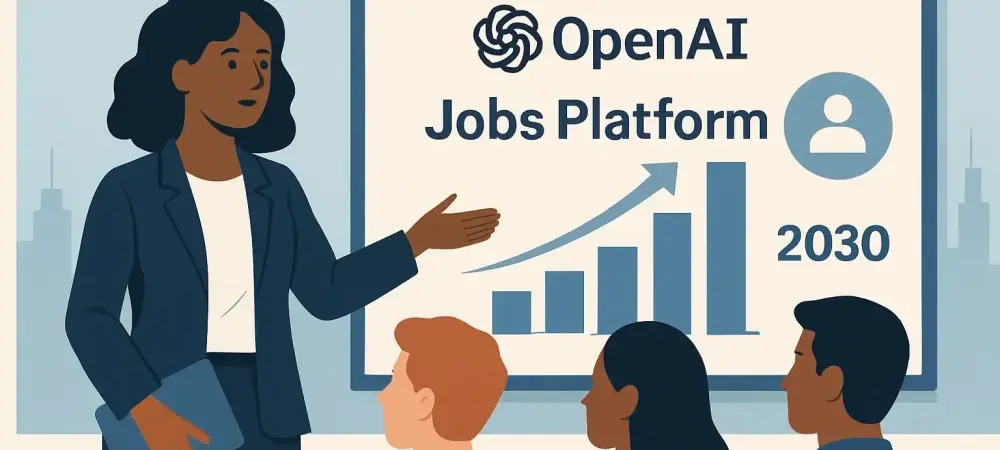
Imagine a world where millions of workers are left behind as artificial intelligence reshapes industries overnight, with a staggering skills gap costing the global economy trillions. This is the reality facing the United States today, where the demand for AI-savvy professionals far outstrips supply. Enter OpenAI, the innovator behind ChatGPT, which has launched an ambitious jobs platform and training initiative to equip 10 million Americans with critical AI skills by 2030. This roundup dives into diverse perspectives from industry leaders, analysts, and workforce experts to explore the potential, challenges, and implications of this transformative plan. The goal is to unpack varying opinions on how this initiative could redefine the talent landscape and address one of the most pressing economic challenges of the decade.
Unpacking the AI Skills Crisis: Industry Voices Weigh In
Diverse viewpoints converge on the urgency of the AI skills shortage, painting a picture of an economic barrier that threatens innovation across sectors. Many industry observers highlight the sheer scale of the problem, noting that research estimates a potential cost of $5.5 trillion to organizations by 2026 if the talent gap persists. This financial burden underscores a critical need for scalable solutions, with some analysts arguing that without intervention, entire industries risk stagnation.
Others focus on the human impact, emphasizing that automation could displace hundreds of millions of jobs globally in the coming years. A common sentiment among workforce strategists is that upskilling at an unprecedented pace is no longer optional but essential for economic stability. OpenAI’s target to train millions is seen as a bold response, though opinions differ on whether such a massive goal can be achieved within the set timeframe.
A third perspective questions the readiness of current systems to handle rapid technological change. Some experts express skepticism about whether training alone can keep pace with AI’s evolution, suggesting that the focus must extend beyond numbers to ensure depth in skill acquisition. This diversity in thought sets the stage for a deeper look into OpenAI’s strategy and its reception.
Exploring OpenAI’s Jobs Platform and Training Vision
Certifications as a Gateway: Promise or Pitfall?
OpenAI’s plan to integrate certifications and a jobs platform into its ecosystem has sparked a range of reactions from tech and education specialists. Many praise the seamless connection between training and employment, noting that embedding learning tools within ChatGPT could democratize access to AI education. This approach is often hailed as innovative, with some industry watchers predicting it could become a model for future tech-driven upskilling.
However, not all feedback is positive, as certain analysts caution against over-reliance on certifications. There’s a concern that credentials focusing on basic skills might not translate to real-world competency, especially in complex areas like AI governance or ethics. This critique suggests that while the platform offers opportunity, it must prioritize practical application to avoid producing superficially trained workers.
A balanced view emerges from corporate training leaders who see potential but urge caution. They argue that partnerships, such as the one with a major retailer planning to train 1.6 million employees, could validate the initiative if tailored to specific industry needs. The consensus here leans toward optimism, tempered by a call for rigorous standards to ensure certifications hold genuine value.
Lessons from Tech History: Can OpenAI Replicate Past Success?
Drawing parallels to earlier tech revolutions, many commentators reference the cloud computing era as a blueprint for OpenAI’s approach. Industry veterans point out that certification programs from major tech firms created loyal ecosystems of skilled professionals, driving widespread adoption of their tools. This historical success fuels optimism that a similar strategy could position OpenAI as a dominant force in AI talent development.
Contrasting opinions highlight regional disparities in workforce readiness as a potential hurdle. Some experts note that while urban centers may benefit quickly, rural or under-resourced areas might lag, risking an uneven impact. This concern suggests that OpenAI must adapt its platform to address accessibility challenges to mirror past tech training triumphs comprehensively.
Another angle comes from global market analysts who see an opportunity for OpenAI to set international standards. They argue that if the initiative scales effectively, it could influence training norms beyond the U.S., though this ambition must be balanced with localized strategies. These varied insights reflect both hope and pragmatic caution about replicating historical models in a new technological context.
Corporate Strategy Meets Social Impact: A Dual Mission?
OpenAI’s alignment with national AI literacy goals garners mixed reactions from policy and business circles. Supporters view this as a strategic move to build credibility, positioning the company as a partner in shaping workforce policies. This perspective often emphasizes the potential for public-private collaboration to amplify the initiative’s reach and societal benefits.
On the flip side, some critics question whether a market-driven entity can fully address ethical concerns like bias or privacy in training content. There’s a call for transparency in how these issues are handled, with certain thought leaders stressing that social responsibility must not be overshadowed by commercial goals. This tension reveals a broader debate about the role of tech giants in public welfare.
A middle ground emerges from nonprofit workforce advocates who see this dual focus as a chance to redefine corporate accountability. They suggest that embedding ethical training alongside technical skills could set a precedent for how companies tackle automation’s societal fallout. This blend of optimism and scrutiny underscores the complexity of balancing profit motives with broader human-centric outcomes.
Practical Insights for Navigating the AI Talent Landscape
Feedback from various stakeholders offers actionable takeaways for businesses, workers, and policymakers engaging with OpenAI’s platform. Corporate leaders are advised to integrate such training tools into their talent strategies, leveraging partnerships to gain early access to skilled candidates. This approach is seen as a competitive edge in an increasingly AI-dependent market.
For individuals, the emphasis is on prioritizing AI certifications as a pathway to career advancement, with many experts noting faster promotions for those with validated skills. Workers are encouraged to seek programs that combine theoretical learning with hands-on experience, ensuring relevance in dynamic job roles. This advice aims to empower personal growth amid technological shifts.
Policymakers, meanwhile, receive recommendations to support scalable upskilling through funding and infrastructure, drawing on OpenAI’s model as a potential framework. Analysts stress the importance of policies that bridge regional gaps, ensuring equitable access to training. These collective insights provide a roadmap for stakeholders to adapt and thrive in an AI-driven economy.
Reflecting on a Pivotal Moment in Workforce Development
Looking back, the discussions surrounding OpenAI’s commitment to train millions of Americans revealed a shared recognition of the AI skills gap as a defining economic challenge. Diverse perspectives from industry, policy, and education spheres highlighted both the promise of a jobs platform integrated with cutting-edge training and the pitfalls of scaling without depth. The historical parallels to tech certification successes offered hope, while ethical and accessibility concerns underscored the need for careful execution. Moving forward, the focus should shift to fostering collaborations that ensure training remains relevant and inclusive, addressing disparities in access and skill application. Stakeholders are encouraged to explore complementary initiatives that prioritize hands-on learning and ethical frameworks, building on the foundation OpenAI has laid. This moment serves as a call to action for continuous innovation in workforce development, ensuring that technology empowers rather than displaces in the evolving job market.