

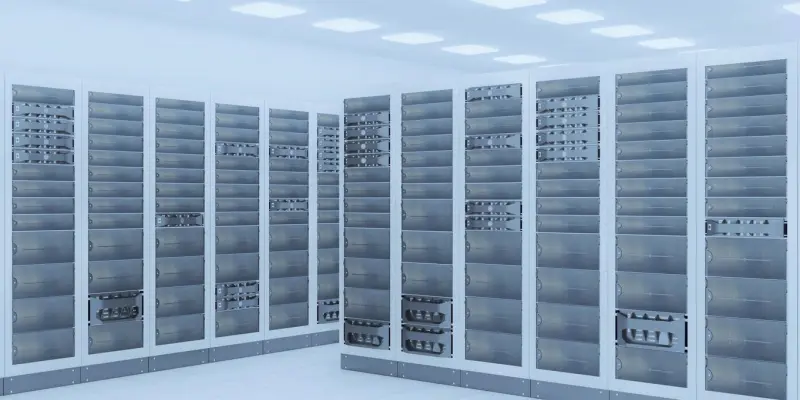
In an era where artificial intelligence models are growing in scale and complexity, conventional data center infrastructures are buckling under the rising computational demands. Nvidia, a dominant force in high-performance computing, introduced NVLink Fusion at Computex in Taiwan, marking a pivotal advancement in AI infrastructure capabilities. This innovative solution is set to revolutionize data center operations, integrating traditionally CPU-focused systems with specialized GPU-centric architectures. By presenting NVLink Fusion, Nvidia promises a shift toward more efficient computational paradigms, inviting collaboration across industry sectors to meet the needs of AI’s evolving landscape.
Transforming Data Centers with NVLink Fusion
A Shift to Dynamic Architectures
Central to Nvidia’s strategy is transforming traditional data center architectures, which have long been dominated by general-purpose CPUs, into systems specifically optimized for artificial intelligence workloads. The rising complexity and performance demands of AI models mean existing infrastructures often fall short. To combat this, Nvidia proposes leveraging its high-performance GPUs, particularly those based on the advanced Blackwell architecture. Alongside, the company integrates high-speed interconnect solutions born of previous strategic acquisitions, notably Mellanox, known for pioneering high-speed networking technologies. NVLink Fusion extends Nvidia’s proprietary NVLink technology, going beyond intra-node GPU communications to include third-party silicon solutions like custom CPUs and accelerators. This expansion opens the door to collaborations with leading industry players, ensuring Nvidia’s platform is not only adaptable but also at the forefront of innovation. Companies such as Qualcomm, MediaTek, Marvell, Fujitsu, Synopsys, and Cadence are primed to integrate their cutting-edge technologies with Nvidia’s ecosystem. This collaboration promises significant strides in energy-efficient AI computing, particularly in data center applications, aligning with Nvidia’s vision of a future-ready AI infrastructure.
Collaboration with Industry Leaders
Qualcomm’s partnership marks a pivotal transition from its mobile technology roots to a solid footing in the data center arena. This strategic move taps into Qualcomm’s expertise in power-optimized silicon, aligning seamlessly with Nvidia’s goal of efficient AI deployments. MediaTek, another significant collaborator, builds on its previous partnerships with Nvidia in the automotive sector. Now, it is expanding capacity to target hyperscale AI infrastructures, utilizing its ASIC and SoC competencies.
The contributions from Synopsys and Cadence are also noteworthy, as their tools and intellectual property facilitate a more seamless integration of NVLink Fusion into silicon designs. These collaborations make the transition more accessible for partners, streamlining the path to advanced AI implementations. Such collaborative efforts emphasize the strategic importance of a versatile, performance-oriented, and energy-efficient AI infrastructure that can adapt to diverse industry requirements.
Strategic Implications for the AI Ecosystem
Maintaining Competitive Advantage
In the ever-evolving AI landscape, Nvidia seeks to preserve its competitive edge by fostering an ‘open but owned’ model. This strategy encourages industry participation while maintaining Nvidia’s control over essential infrastructure elements. By adopting this model, Nvidia mirrors successful practices within the semiconductor industry, balancing openness with proprietary technology. This approach is critical as cloud service giants like AWS, Microsoft, and Google are exploring their custom silicon solutions. Nvidia offers a viable middle ground, allowing partners to develop unique chips while integrating within Nvidia’s robust infrastructure, thus reducing barriers for sectors dealing with AI scaling challenges. NVLink Fusion is positioned as a transformative force in AI infrastructure, advocating a modular and task-specific approach to computing power orchestration. This model invites industry collaboration with Nvidia, promoting a more flexible AI infrastructure that addresses diverse demands with efficiency. The strategy is expected to bolster Nvidia’s market presence as industries increasingly shift toward more flexible and powerful AI solutions.
Collaborative Ecosystem Development
The broader trends in AI demand infrastructures capable of adaptive and scalable performance. This needs cross-industry collaboration to produce platforms that are not only high-performance but also modular and tailored to specific computational tasks. Nvidia’s NVLink Fusion aligns with such trends, positioning Nvidia at a tactical advantage to significantly reshape AI infrastructure design and deployment practices. By encouraging industry participation within its framework, Nvidia consolidates its position as an indispensable part of the AI innovation narrative.
This strategic platform, built around Nvidia’s technology, extends beyond hardware to include insights from participating companies focusing on energy efficiency and customization in AI processes. Such contributions underscore the industry’s momentum toward a heterogeneous yet cohesive AI landscape, underlining Nvidia’s role in leading future innovations.
Future Directions and Industry Impact
Integration and Innovation
As Nvidia implements NVLink Fusion in its bid to transform AI infrastructure, the integration of partner technologies will play a vital role in expanding the potential applications of this platform. By allowing third-party silicon solutions and accelerators to seamlessly connect with Nvidia’s GPU technologies, the company fosters an ecosystem that encourages innovation while providing the reliability of established AI solutions. This seamless integration emphasizes Nvidia’s commitment to fostering a competitive yet cooperative environment, where diverse technological advancements are welcomed. The ongoing developments and open collaboration with industry leaders signal a promising future for AI data centers, where efficiency, customization, and scalability are paramount. As Nvidia and its collaborators continue to enhance the platform, the emphasis will likely remain on reducing AI deployment costs and complexities, thus making advanced AI capabilities accessible to a broader range of industries.
Adaptability and Future Prospects
In today’s world where artificial intelligence models are expanding rapidly in both size and complexity, traditional data center infrastructures are struggling to keep up with increasing computational demands. Nvidia, a leader in high-performance computing, unveiled NVLink Fusion at Computex in Taiwan, marking a pivotal advancement in AI infrastructure capabilities. This solution is set to revolutionize data center operations, integrating traditionally CPU-focused systems with specialized GPU-centric architectures. As organizations strive to harness the potential of AI, Nvidia’s NVLink Fusion offers a promising path forward, suggesting a future where AI tasks are managed through enhanced efficiency and integration, ensuring that data centers can meet the demands of tomorrow’s technology.