

Dominic Jainy is a veteran of the IT landscape, having spent years navigating the complex intersections of artificial intelligence, machine learning, and decentralized technologies. As data centers shift from general processing to specialized AI reasoning, Jainy provides a critical perspective on Nvidia’s latest hardware leap. We are looking at a future where CPUs are purpose-built for the “agentic” era—where chips do not just calculate but plan and execute tasks autonomously.
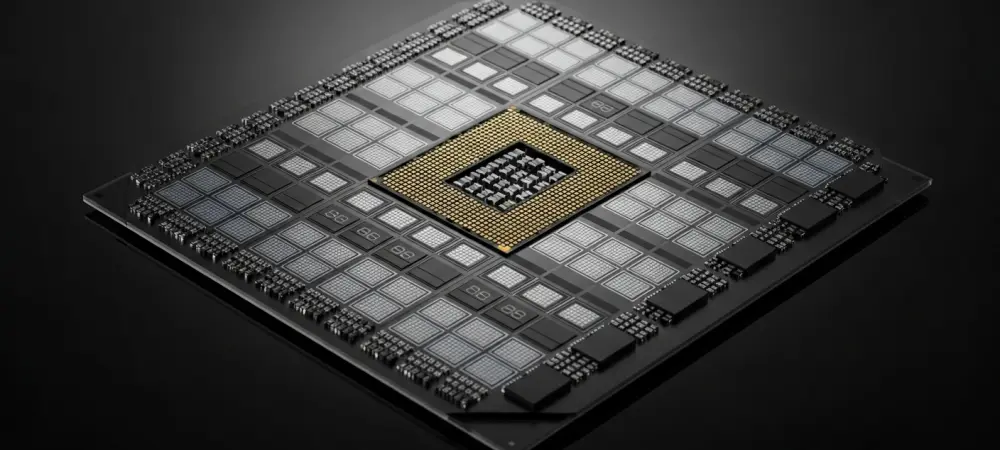
This conversation explores the architectural nuances of the Vera CPU, from its 88-core Olympus design to its specialized neural branch predictor. We analyze how Nvidia aims to dominate latency-sensitive workloads like reinforcement learning and scientific data processing while maintaining massive bandwidth through its Scalable Coherency Fabric and high-speed memory architecture.
The Vera CPU introduces 88 custom Olympus cores designed specifically for agentic AI; how do you see this architecture changing the way we handle complex reasoning and task planning?
The shift to 88 Olympus cores, providing a total of 176 physical threads, is a deliberate move to solve the “reasoning bottleneck” found in standard server environments. By integrating a 10-wide decode engine that can process up to ten fused instructions per cycle, Nvidia is ensuring the pipeline stays saturated with complex AI logic. I find the neural branch predictor particularly fascinating because it physically reduces the waste of wrong-path execution, which is a traditional enemy of performance in high-stakes reasoning. The sheer scale of the 164MB unified L3 cache ensures that these agents have the immediate data they need to act with a sense of digital intuition rather than waiting on distant memory calls.
Beyond raw core counts, the Vera platform emphasizes massive throughput through its Scalable Coherency Fabric—what does this mean for the physical limits of data movement in a modern data center?
When you look at the specs, like the 3.4 TB/s of on-die core-to-core bandwidth, you realize this isn’t just a chip; it’s a high-speed highway for information. The inclusion of 1.2 TB/s of aggregate SOCAMM2 LPDDR5X memory bandwidth allows the system to breathe even when handling the massive 1.5 TB memory capacity it supports. This level of connectivity, paired with 1.8 TB/s on NVLink-C2C and PCIe 6.4, creates a seamless environment where data flows with almost zero friction. It is an elegant solution to the fragmentation typically found in dual-socket systems, especially since Nvidia’s software-based approach presents both sockets as a clean two-NUMA-node topology.
Nvidia has made bold claims regarding performance, specifically citing a 1.8-fold advantage over AMD’s Epyc Turin; how should we interpret these benchmarks in the context of real-world AI deployment?
Seeing a 1.8x performance lead over a powerhouse like the AMD Epyc Turin 9755 in the 714.cpython_r test is a striking signal that generic server CPUs are reaching their limits for specific AI tasks. This benchmark targets agentic AI workloads, where the Olympus core’s ability to fetch 16 instructions per cycle provides a tangible edge in execution speed. While we must wait for independent verification, the internal data suggests that for reinforcement learning and scientific processing, the Vera CPU is optimized to handle the heavy lifting that usually bogs down traditional architectures. It’s not just about raw speed; it’s about the efficiency of the execution engine and its complex vector optimization that allows these specialized chips to pull ahead so drastically.
What is your forecast for the future of specialized AI CPUs?
I anticipate that the industry is moving toward a total “silicon specialization” where the general-purpose CPU becomes a secondary player to chips like Vera that are built from the ground up for cognitive tasks. Within the next few years, we will likely see data centers move away from trying to force-fit AI into standard architectures, instead adopting monolithic compute dies that can handle 48-instruction decode queues and high-bandwidth fabrics. This evolution will turn the data center into a living organism of agents, where the hardware itself is as much a part of the intelligence as the software running on it. The focus will shift entirely to minimizing “wrong-path” execution in every aspect of computing, from the branch predictor to the physical interconnects of the rack.