

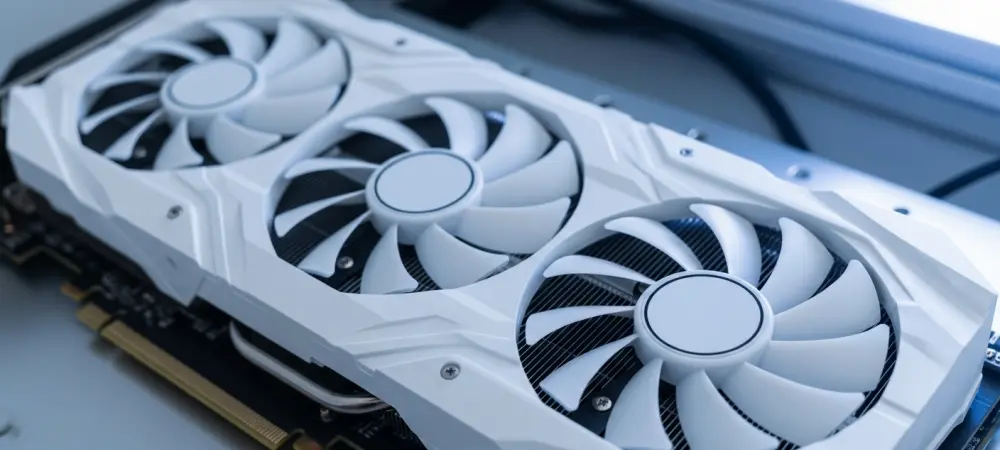
The high-end graphics card market remains one of the most volatile segments of the modern PC enthusiast world, requiring builders to track fluctuating price points meticulously to secure a meaningful investment. Recently, the ASUS Prime RX 9070 XT White OC Edition has undergone a significant retail price correction, reaching its lowest historical point across several major e-commerce platforms. This shift represents a growing opportunity for users to move into the 4K gaming tier without the astronomical costs typically associated with premium white-shrouded components. As stock levels stabilize and manufacturing efficiencies take hold, the barrier to entry for high-refresh-rate ultra-HD gaming has dropped, positioning this specific model as a primary candidate for those seeking a balance between raw processing power and visual appeal in 2026.
Performance Metrics and Cooling Architecture
Thermal Management: Engineering for Long-Term Stability
The engineering behind the ASUS Prime RX 9070 XT White OC Edition transcends simple visual appeal, focusing heavily on a robust thermal architecture designed to withstand sustained heavy workloads. This specific model utilizes a specialized 2.5-slot design, providing a substantial surface area for heat dissipation that remains more compact than many oversized flagship alternatives. At the heart of the cooling system are three Axial-tech fans, which feature smaller hubs to accommodate longer blades and a barrier ring to increase downward air pressure toward the heatsink. Dual ball bearings are integrated into each fan assembly, significantly extending the operational lifespan compared to traditional sleeve-bearing designs found in budget-tier cards. This mechanical durability is essential for enthusiasts who expect their hardware to remain functional and quiet throughout several years of intensive use. Furthermore, the vented backplate allows hot air to escape more efficiently toward chassis exhaust fans, preventing heat soak during intense gaming sessions.
ASUS employs Auto-Extreme Technology, a fully automated manufacturing process that completes all soldering in a single pass to reduce thermal strain on sensitive components and minimize environmental impact. This results in a cleaner board design and higher electrical reliability, which is particularly important when pushing the GPU to its overclocked limits. The inclusion of a physical protective guard on the rear of the card prevents accidental damage to the circuitry during installation, a common risk for novice builders. Additionally, the dual BIOS switch provides users with a hardware-level choice between performance and quiet modes, allowing for instant customization without needing complex software overlays. Such attention to detail ensures that the hardware remains resilient, offering a stable foundation for a high-tier computer build that demands consistent output.
Benchmarking Power: Handling Intensive 4K Workloads
When evaluating raw rendering capabilities, the RX 9070 XT proves to be a formidable contender in the 4K gaming space, capable of rivaling much more expensive enthusiast-grade options. The card features 16GB of high-speed VRAM and clock speeds that comfortably boost past the 3GHz threshold, providing the necessary bandwidth to handle resource-heavy textures and complex lighting models. In modern benchmarks, this hardware configuration consistently delivers smooth frame rates at 3840 x 2160 resolution across a variety of demanding titles, from open-world role-playing games to competitive shooters. The large memory buffer is not just a luxury; it serves as a critical asset for texture-heavy environments that would otherwise stutter on cards with lower capacity. By maintaining a high frame-time consistency, the card ensures that the visual experience remains fluid, even when graphical settings are pushed to their absolute maximum.
Beyond traditional gaming, the processing power of this ASUS model extends into the realm of content creation and simultaneous multitasking, catering to the modern streamer’s needs. The architecture is optimized to handle concurrent tasks such as high-definition streaming to platforms like YouTube or Twitch while maintaining high resolution gameplay locally. Because the hardware possesses a significant memory overhead, users rarely experience the frame rate drops or encoding lag that often plague less capable systems. This makes the card an excellent choice for creators who require a single-system setup for both production and entertainment. The integration of advanced hardware encoders allows for crisp video output without taxing the primary rendering cores, ensuring that the viewer experience matches the quality of the player’s display. Consequently, the card functions as a versatile tool for professionals and hobbyists alike, providing a level of utility that justifies its position in a premium build while managing diverse workloads.
Strategic Outcomes: Reliability and Connectivity Standards
The acquisition of an ASUS Prime RX 9070 XT White OC represented a strategic shift for builders who prioritized future-proofing through hardware standards and high-speed connectivity. By integrating the PCIe 5.0 interface and supporting DisplayPort 2.1, the card successfully anticipated the needs of next-generation high-refresh-rate monitors. This focus on modern connectivity ensured that users avoided the limitations of older display standards, which often capped performance on high-end displays. Builders who chose this model also benefited from the inclusion of a three-year warranty and a reinforced build quality, providing peace of mind during its operational life. Those who acted on the price corrections secured a high-value component that bridged the gap between enthusiast aesthetics and professional-grade performance while maintaining excellent thermal efficiency.
From that point on, enthusiasts were encouraged to monitor the ongoing integration of open-source upscaling technologies which further enhanced the longevity of the RX 9070 XT architecture. The decision to invest in a card with a 16GB VRAM buffer became an essential step for maintaining 4K compatibility as game textures reached new levels of complexity. Prospective buyers looked toward pairing this GPU with high-wattage, PCIe 5.0-compliant power supplies to ensure optimal power delivery and system stability. By focusing on raw rendering power rather than proprietary software locks, the hardware community fostered a more open ecosystem for performance optimization. Those who finalized their builds with this ASUS model established a high-performance benchmark that remained relevant throughout the current hardware cycle. The combination of price accessibility and top-tier build quality offered a blueprint for future component selections, where value was measured by sustained performance rather than brand premiums.