

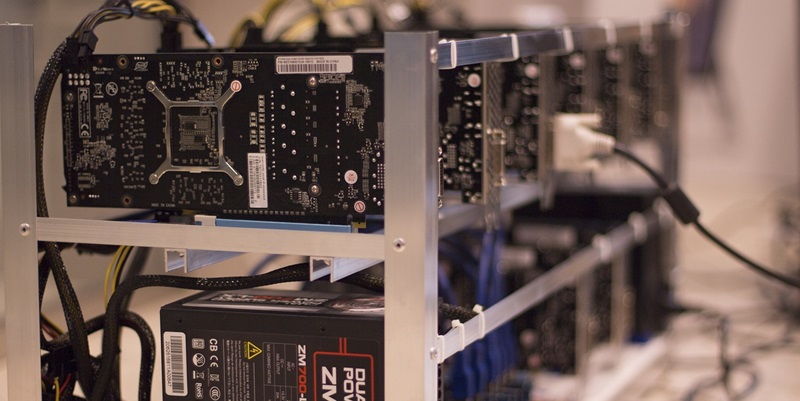
Meet the NVIDIA RTX 2000 Ada, a cutting-edge GPU that seamlessly blends affordability with high performance. Designed for the discerning entry-level prosumer, this GPU is part of NVIDIA’s celebrated lineup and stands out with its compact size. It’s equipped to handle AI-driven tasks with ease, making it ideal for both design and visualization projects that require sophisticated computation. The RTX 2000 Ada not only delivers potent graphics capabilities but also does so at a price point that doesn’t break the bank. NVIDIA’s commitment to innovation is evident in this new offering, which provides the power and reliability the brand is known for but catered toward those just stepping into professional-grade work. Whether you’re delving into intricate designs or complex 3D models, this GPU ensures that your creative and computational needs are met without compromise. As the market for adaptable and efficient graphics solutions grows, the NVIDIA RTX 2000 Ada is poised to become a staple for creators seeking a balance between cost and functionality, all wrapped in a space-conscious package.
Overview of the RTX 2000 Ada
Entry-Level Positioning with High-End Features
The RTX 2000 Ada presents a significant milestone for NVIDIA, integrating high-end features into an entry-level product. With a starting price of just $625, professionals and enthusiasts can now access technology that was previously reserved for high-tier offerings. This graphics card stands as a testament to NVIDIA’s dedication to bringing more value to the prosumer segment, where cost-conscious decision-making does not have to come at the sacrifice of performance or future-ready capabilities.
NVIDIA’s strategy with the RTX 2000 Ada is clear: providing a gateway to advanced computing for a broader audience. The card’s affordability means that small businesses, educational institutions, and independent professionals can now leverage the benefits of AI and real-time ray tracing. This democratization of technology is poised to spur innovation and productivity across a range of industries.
Technical Specifications and Performance
At the heart of the RTX 2000 Ada lies the AD107 GPU, packed with 2816 CUDA cores that cater to a wide spectrum of demanding applications. The balance of these cores with 22 RT Cores and 88 Tensor Cores puts forward an impressive performance profile, pushing the limits of what’s expected from an entry-level card. The AD107 GPU encapsulates the prowess of the RTX 2000 Ada, serving as the driving force behind its robust computational capabilities and positioning it as a powerhouse within its market segment.
The hardware ensemble propels the RTX 2000 Ada to deliver 12 TFLOPs of FP32, ideal for intricate 3D modeling and complex computations. Performance further extends to 27.7 TFLOPs for ray tracing and a staggering 191.9 TFLOPs with Tensor Core operations. Such specifications provide a glimpse into the GPU’s ability to handle AI-driven tasks, reflecting NVIDIA’s commitment to equipping professionals at all levels with the tools needed to tackle modern computing challenges.
Advanced AI and Rendering Capabilities
Third-Generation RT Cores and Ray Tracing
The third-generation RT Cores bring forth a 1.7x enhancement in ray-tracing capabilities, a leap that translates to more lifelike and natural illumination of scenes. These cores are specially designed to accelerate the computation of how light and sound travel in 3D environments, enabling photorealistic rendering that previously required significantly more time and resources. As a result, professionals in fields such as architectural visualization and digital content creation benefit from these improvements in real-time.
With the integration of these advanced RT Cores, the RTX 2000 Ada is not just accelerating the rendering process but also improving the quality of visuals achievable on an entry-level platform. Users can expect crisp, highly detailed images that enhance the realism of their projects, providing a competitive edge in presentations, simulations, and multimedia content production.
Fourth-Generation Tensor Cores and AI Throughput
The fourth-generation Tensor Cores offer a 1.8x improvement in AI throughput, thanks to the implementation of structured sparsity and FP8 precision. The increased AI performance steers the RTX 2000 Ada towards becoming an essential tool for professionals who rely on AI-augmented software. From machine learning model training to real-time AI-assisted features in creative applications, these Tensor Cores accelerate a variety of tasks, leading to a marked increase in workflow efficiency.
The Tensor Cores within the RTX 2000 Ada make it a formidable tool for tackling deep learning inference workloads. AI-driven applications, such as noise suppression, upscaling, and complex data analytics, can now be executed with greater speed and precision. This enhancement is particularly valuable for professionals in sectors that prioritize quick turnaround times and high accuracy, including research and development, design, and media production.
Efficient Design and Cutting-Edge Technology
Streamlined Physical Design
The RTX 2000 Ada epitomizes compact efficiency with its dual-slot, full-height, half-length form factor. This design ensures compatibility with a vast array of workstation configurations, from traditional tower cases to more space-constrained setups. Professionals seeking an upgrade or building a new system can rest assured that the RTX 2000 Ada will accommodate their needs without sacrificing precious workspace or necessitating a complete overhaul of their existing hardware.
The choice of four Mini DisplayPort 1.4a outputs on the RTX 2000 Ada highlights NVIDIA’s understanding of the professional market’s requirements. These display outputs support high-resolution monitors and are ideal for multi-display setups, allowing users to extend their digital workspace and enhance multitasking capabilities. Whether it’s for complex CAD applications, detailed medical imaging, or expansive digital canvases for artists, the RTX 2000 Ada’s physical design is purposefully crafted to meet professional demands.
DLSS 3 and Encoder Support
NVIDIA’s inclusion of DLSS 3 technology in the RTX 2000 Ada positions the GPU at the forefront of rendering innovation. DLSS, or Deep Learning Super Sampling, utilizes AI to upscale lower-resolution images in real-time, significantly boosting frame rates without degrading visual quality. This advancement is a game-changer for users who require fluid visual experiences, particularly in simulation and VR applications where maintaining a high frame rate is crucial for immersion and performance.
The RTX 2000 Ada also benefits from the eighth-generation NVIDIA Encoder, featuring support for the AV1 codec. This advanced codec enables higher efficiency in video encoding, offering up to 40% more compression than the H.264 standard. Streamers, content creators, and professionals in video conferencing will find this addition invaluable, allowing for crisper video quality at lower bandwidths, a critical factor in today’s remote and collaborative work environments.
Software Ecosystem and Driver Support
RTX Enterprise GPU Drivers
The RTX 2000 Ada enjoys enriched capabilities through seamless integration with RTX Enterprise GPU drivers, ensuring stability and peak performance for professional workloads. These drivers unlock new features such as Video Super Resolution and TrueHDR, enhancing visual fidelity for video content and providing a wider color spectrum for more accurate color representation. With these driver enhancements, the RTX 2000 Ada stands equipped to deliver exceptional multimedia experiences.
Software capabilities introduced by the RTX Enterprise GPU drivers expand the usability of the RTX 2000 Ada, making it a flexible tool that can adapt to a variety of professional scenarios. From precise video editing to data visualization and VR development, NVIDIA’s commitment to a robust driver ecosystem ensures that users have access to the latest features and optimizations, allowing professionals to remain at the cutting edge of technology.
AI Enhancements with TensorRT-LLM
With support for TensorRT-LLM, NVIDIA’s RTX 2000 Ada is geared to set new benchmarks in AI-powered computing constructs. TensorRT-LLM leverages the GPU’s Tensor Cores to substantially reduce the time required for deep learning model inference, providing an essential resource for developers and researchers engaged in AI and machine learning development. The inclusion of this support is emblematic of NVIDIA’s vision to embed advanced AI capabilities directly into the hardware.
This strategic enhancement through TensorRT-LLM indicates NVIDIA’s commitment to aligning its sophisticated hardware offerings with equally innovative software solutions. The integration aids a multitude of AI-focused tasks, from natural language processing to complex predictive analytics, underscoring the potential of the RTX 2000 Ada to transform how professionals from various industries can leverage AI in their workflows.
Market Availability and Industry Impact
Distribution and Partner Networks
Set for release in April 2024, the RTX 2000 Ada is poised for extensive reach through NVIDIA’s established distribution networks. Leading partners like Arrow Electronics, Ingram Micro, and PNY will play crucial roles in ensuring that the GPU is readily available across markets. Ensuring widespread accessibility is a strategic move that underlines the importance of NVIDIA’s partnerships in the delivery of cutting-edge technology to consumers.
Reputable PC manufacturers such as Dell Technologies, HP, and Lenovo are set to incorporate the RTX 2000 Ada into their product lineups. This partnership ensures that professionals can acquire pre-built systems that are optimized and ready to harness the full potential of the GPU. NVIDIA’s collaboration with top-tier manufacturers also guarantees that users will have access to comprehensive support and integration, simplifying their path towards advanced computing capabilities.
Democratizing Advanced Computing Technologies
NVIDIA’s introduction of the RTX 2000 Ada forms part of a broader strategy to democratize advanced computing technologies. By offering the potent Ada Lovelace architecture at an accessible price point, NVIDIA is paving the way for even the most budget-conscious users to benefit from AI and machine learning enhancements. This strategic move has significant implications for a diverse range of industries, from creative sectors to scientific research, where AI is becoming an integral component of innovation and growth.
The anticipated impact of the RTX 2000 Ada on industries reliant on AI and ML is considerable. By equipping a wider range of professionals with high-performance tools, NVIDIA is fostering an environment where advanced computing is no longer a privilege but a standard. The RTX 2000 Ada stands as an embodiment of this philosophy, promising to accelerate the adoption of AI technologies across various domains, ultimately driving progress and societal advancements.